
Dandruff is a common, usually chronic scalp condition caused by a mix of skin, immune, and environmental factors.
Key Takeaways:
- Dandruff doesn’t directly cause hair loss, but chronic inflammation and constant scratching can damage hair follicles over time.
- The yeast-like fungus Malassezia plays a central role in both dandruff and scalp inflammation.
- Conditions like seborrheic dermatitis and scalp psoriasis can accelerate hair thinning if left untreated.
- Most dandruff-related hair loss is temporary and treatable with the right shampoo, medication, or scalp care plan.
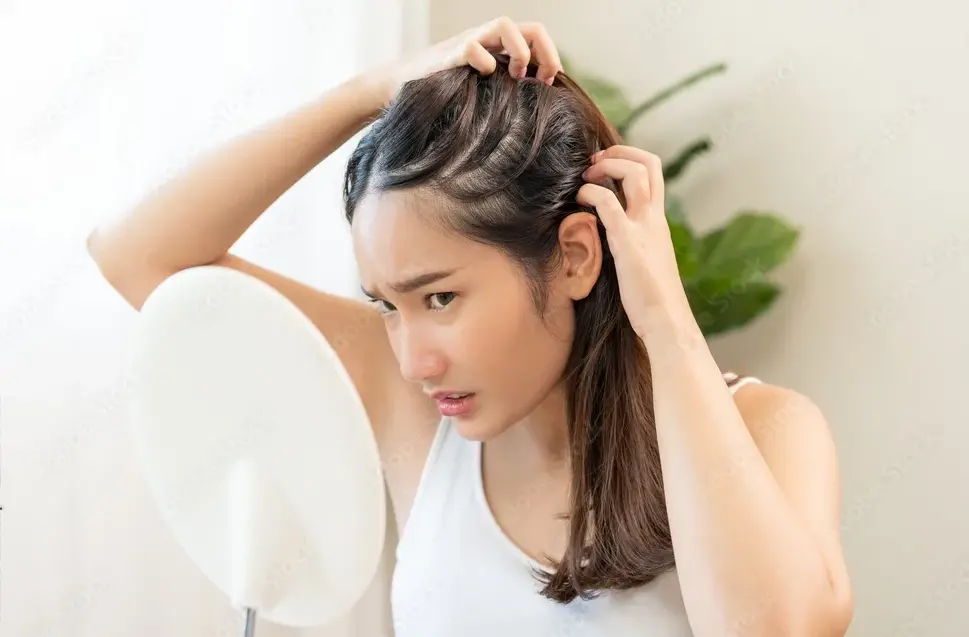
Noticing white flakes on your collar is frustrating enough. But when dandruff shows up around the same time as noticeable hair thinning or shedding, it’s natural to wonder whether the two are connected.
The short answer is that dandruff doesn’t directly cause hair loss in most cases. But the longer answer matters more. The inflammation, itching, and scalp disruption that come with chronic dandruff can create conditions that stress hair follicles and accelerate shedding. Understanding that distinction is what helps you actually do something useful about it.
What Dandruff Is and What Causes It
Dandruff is a common skin condition that causes the scalp to shed skin cells faster than usual, producing visible white flakes and often triggering itching and dryness. Dandruff is caused primarily by a reaction to Malassezia, a yeast-like fungus that lives naturally on the scalp of most adults. When Malassezia overgrowth occurs, it can inflame the scalp and speed up skin cell turnover, producing the flakes falling from the scalp that most people recognize.
Dandruff isn’t the same as a dry scalp, even though they look similar. Dry scalp tends to produce smaller, drier flakes and is usually tied to weather, dehydration, or hair products that strip moisture. Dandruff involves oiliness alongside the flaking, and the flakes are typically larger and greasier. The itch and scaly skin are common to both, but the underlying cause matters for how you treat it.
Dandruff is caused by a combination of natural Malassezia yeast presence, individual sensitivity to that yeast, scalp oiliness, and sometimes stress or hormonal fluctuations. It’s not caused by poor hygiene, though infrequent washing can allow buildup that worsens symptoms.
Does Dandruff Cause Hair Loss? The Direct Answer
Dandruff doesn’t directly cause hair loss as a standalone mechanism. That’s the honest starting point. But the connection between the two runs through inflammation, and that’s where things get more complicated.
Chronic scalp inflammation can disrupt the hair growth cycle. When the scalp is persistently inflamed, it can push follicles into the resting phase earlier than normal, contributing to increased shedding over time.
Constant scratching is the second pathway. When itching is persistent, the urge to scratch becomes difficult to resist. But repeated scratching can damage hair follicles directly. A scalp that’s repeatedly irritated or traumatized may produce thinner, weaker strands over time. In significant cases, sustained mechanical damage can inflame follicles enough to cause temporary hair thinning. This kind of dandruff-related hair loss is generally not permanent, but it does need to be addressed before it compounds.
So dandruff can cause hair loss indirectly, through inflammation and mechanical irritation, even if it doesn’t directly cause hair loss the way hormones or genetics do.
Scalp Conditions That Overlap With Dandruff and Hair Loss
Dandruff exists on a spectrum with more serious scalp conditions. Knowing which one you’re dealing with affects both the hair loss risk and the right treatment approach.
Seborrheic Dermatitis
Seborrheic dermatitis is a more intense, chronic version of dandruff. It causes red, scaly skin, significant flaking, and itchiness on the scalp and sometimes the face and chest. Like dandruff, it’s linked to Malassezia and oiliness, but the inflammation is more significant and persistent.
Seborrheic dermatitis can cause hair loss when severe or left untreated. The inflammation it creates around follicles leads to diffuse thinning. Treating the underlying condition consistently is what stops the cycle. Once scalp health is restored, hair can grow back in most cases.
Scalp Psoriasis
Scalp psoriasis is an autoimmune disease that causes the immune system to attack skin cells, triggering rapid cell turnover and thick, scaly skin buildup. It shares some visible overlap with severe dandruff but has a fundamentally different cause. Scalp psoriasis ranges from mild and barely noticeable to severe and widespread, and the scaly skin patches can extend beyond the hairline.
The thick scale and intense itching that psoriasis produces can lead to excessive hair loss, particularly when left untreated. Psoriasis typically requires a medicated shampoo or prescription medications to manage effectively. A dermatologist can confirm the diagnosis and recommend the appropriate treatment plan.
Alopecia Areata: A Different Condition Worth Knowing
Alopecia areata is an autoimmune condition that causes patches of hair loss and is sometimes confused with dandruff-related shedding because both can involve scalp inflammation. Unlike dandruff or seborrheic dermatitis, alopecia areata isn’t driven by a fungal infection. It’s an autoimmune disease in which the immune system attacks hair follicles directly. Alopecia areata affects an estimated 6.8 million people in the U.S. If you notice smooth, well-defined patches of sudden hair loss alongside scalp symptoms, a dermatologist can help rule this out.
Scalp Conditions Compared: A Quick Reference
| Condition | Key Symptoms | Hair Loss Risk | Treatment Approach |
|---|---|---|---|
| Common Dandruff | White flakes, mild itch, dryness or oiliness | Low if managed promptly | Antifungal or zinc pyrithione shampoo |
| Seborrheic Dermatitis | Red, scaly skin, oily flakes, inflamed scalp | Moderate if left untreated | Medicated shampoo; dermatologist for persistent cases |
| Scalp Psoriasis | Thick scaly patches, rash, intense itchiness | Higher if left untreated | Ketoconazole or salicylic acid shampoo; prescription medications |
| Alopecia Areata | Smooth hair loss patches, minimal flaking | Direct hair loss; autoimmune | Dermatologist required; steroid injections or topicals |
How to Treat Dandruff and Protect Your Hair
The good news is that dandruff is treatable, and so is most of the hair shedding it contributes to. The right approach depends on severity and whether an underlying skin condition is involved.
Choosing the Right Medicated Shampoo
Most dandruff cases respond well to a medicated shampoo used consistently. The main active ingredients that have clinical support are ketoconazole (antifungal), selenium sulfide (reduces Malassezia overgrowth), zinc pyrithione (antifungal and antibacterial properties), and salicylic acid (breaks down scaly buildup). These are available over-the-counter at most pharmacies.
Rotating between two different shampoos with different active ingredients can help prevent the fungus from adapting. Most dermatologists recommend leaving a medicated shampoo on the scalp for three to five minutes before rinsing to improve contact time.
For seborrheic dermatitis, more consistent long-term use is typically needed. If over-the-counter options don’t alleviate the symptoms after six to eight weeks of regular use, a dermatologist can prescribe stronger antifungal or corticosteroid treatments to reduce inflammation more effectively.
Habits That Help Prevent Hair Loss From Getting Worse
- Avoid hair products with heavy oils or strong fragrances, which can worsen oiliness and aggravate Malassezia overgrowth on the scalp
- Wash hair regularly enough to prevent oil and buildup on the scalp, even if daily washing seems like too much.
- Manage stress, which is a documented trigger for both dandruff flare-ups and hair shedding
- Resist scratching even during intense itchiness; constant scratching of the scalp can damage follicles and extend the hair loss cycle
When to See a Dermatologist
Mild dandruff usually doesn’t require a doctor visit. But if your scalp shows a rash, scaly skin that doesn’t respond to shampoo, or visible patches of hair loss, a dermatologist is the right next step. They can confirm whether you’re dealing with dandruff, seborrheic dermatitis, psoriasis, eczema, or another skin condition that needs a different treatment approach.
It’s also worth seeking professional guidance if you’ve managed dandruff for months but still see hair thinning progressing. Getting a proper diagnosis is more useful than continuing to treat the wrong condition
How HairClub Supports Scalp Health and Hair Loss Treatment
Dandruff and related scalp conditions are often one part of a larger picture. When scalp inflammation, follicle stress, and contributing factors like hormones or genetics all overlap, managing one without addressing the others limits how much progress is possible.
HairClub RX is a DNA-driven hair loss program that takes a personalized approach to identifying what’s actually driving hair loss in each individual. The program starts with a buccal cheek swab DNA analysis to determine which active ingredients and delivery methods are likely to be most effective based on individual biology. Compounded prescription medications are reviewed and prescribed by a licensed telehealth provider, with ingredients that can address both hair growth and scalp health depending on the individual’s needs.
The HairClub RX program also includes sulfate-free, paraffin-free shampoo and conditioner designed to support scalp health without stripping or irritating sensitive scalps, daily vegan supplements, in-center hair therapy sessions, and quarterly progress tracking with a certified HairClub hair loss specialist. It’s built for people who want a structured, monitored approach to hair loss treatments rather than another round of trial and error.
HairClub has served more than 500,000 clients since 1976, with 100+ in-person centers across the U.S., Canada, and Puerto Rico. HairClub RX is available at participating locations. All consultations are complimentary.
Frequently Asked Questions
Does dandruff cause hair loss?
Can hair grow back after dandruff-related hair loss?
What's the difference between dandruff and seborrheic dermatitis?
Which shampoo ingredients actually work against dandruff?
When should I see a dermatologist about dandruff and hair loss?
Is dandruff-related hair loss permanent?
Hair loss caused by dandruff or scalp inflammation is usually temporary. Once the skin condition is treated and follicle irritation reduced, most people see regrowth within a few months. Permanent loss is uncommon unless follicles have sustained long-term scarring damage, which is associated with specific scarring scalp conditions rather than typical dandruff.
The Bottom Line on Dandruff and Hair Loss
Dandruff and hair loss aren’t always connected, but they can be. Chronic scalp inflammation, persistent itching, and conditions like seborrheic dermatitis can stress hair follicles and contribute to shedding that builds slowly over time.
The most important thing is not to assume dandruff is the only thing going on. If you’re seeing consistent hair thinning alongside scalp symptoms, a provider who can look at the full picture is the most useful next step.
Talk to a HairClub specialist at no cost.
HairClub offers complimentary consultations at 100+ centers across the U.S., Canada, and Puerto Rico. A specialist can evaluate your hair and scalp health, walk you through your options, including HairClub RX, and help you understand what’s actually driving your hair loss.