


Hair Replacement for Thinning Hair
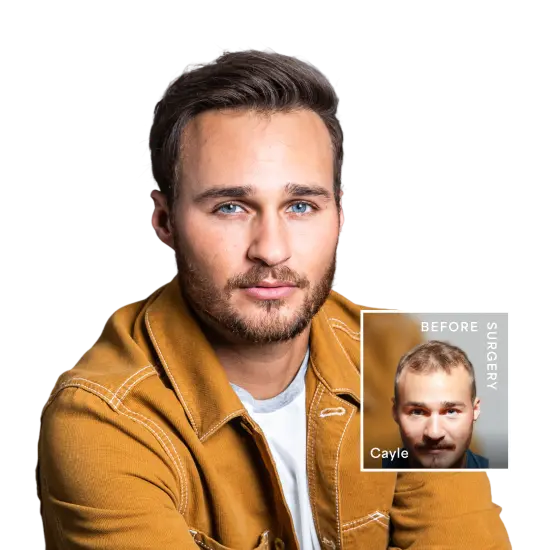
Millions of people deal with hair loss caused by genetics, hormonal changes, stress, alopecia, or certain medical conditions.
The good news is that today’s hair replacement, hair restoration, and hair transplant* options can help restore a fuller, more confident look.
At HairClub, we help you understand your options and choose the right solution based on your goals, lifestyle, and the cause of your hair loss. Whether you’re looking for non-surgical support, advanced treatments, or a more permanent option like hair transplant surgery*, we’re here to guide you.
Book your free consultation today to find out which solution may be right for you.
What Causes Thinning Hair and Hair Loss?
Not all hair loss looks the same. Some people notice gradual thinning on the crown or top of the head, while others see a receding hairline, a widening part, or patchy shedding.
Common causes of hair loss include:
- Male pattern baldness
- Female pattern thinning
- Pattern hair loss caused by genetics
- Stress or hormonal changes
- Alopecia
- Certain medications or medical conditions
- Permanent follicle damage or scarring
Because the cause matters, it’s important to get the right evaluation. A HairClub Certified Hair Loss Specialist can see what’s happening with your scalp and hair follicles to recommend the best next step.
If you’re noticing finer hair or visible thinning, acting early may give you more treatment options.
Hair Replacement for Thinning Hair: Main Treatment Options
There’s no one-size-fits-all fix for hair loss. The right solution depends on the cause, your scalp health, the amount of thinning, and whether you want a temporary or permanent option.
1. Non-Surgical Hair Replacement
For immediate cosmetic coverage, non-surgical hair replacement can create the appearance of fuller hair without surgery. These customized systems are designed to blend naturally with your existing hair and provide natural-looking coverage.
This may be a good option if you have:
- Early or advanced hair loss
- Diffuse thinning
- Medical-related alopecia
- A desire to avoid hair replacement surgery
2. Medical Treatments for Hair Loss
If your hair follicles are still active, some treatments may help slow hair loss, support hair growth, or improve overall density.
Common options include:
- Minoxidil
- Finasteride
- Low-level laser therapy
These treatments for hair loss are often used on their own or alongside other hair restoration solutions.
3. Hair Transplant and Surgical Hair Restoration
If you want a longer-term or more permanent solution, hair transplant* procedures may be recommended.
Surgical hair restoration may work well for:
- Male pattern baldness
- Some cases of female pattern thinning
- Stable pattern hair loss
- Receding hairline
- Thinning on the crown or top of the head
How Hair Transplant Surgery Works
A hair transplant is one of the most recognized forms of hair restoration for stable hair loss. During the procedure, healthy hair follicles are moved from one area of the scalp to a thinning or balding area.
The two main methods are:
FUE (Follicular Unit Extraction)
With FUE, individual follicular units are removed from the donor scalp and placed into the areas affected by hair loss. Each graft typically contains one to three hairs.
FUT (Follicular Unit Transplantation)
With FUT, a narrow strip of scalp is taken from the donor area, then divided into individual grafts for placement.
During hair transplant surgery*, the scalp is numbed with local anesthetic, and some patients may receive light sedation for comfort. The procedure length depends on the number of grafts needed and the size of the thinning area.
The goal is a natural-looking result that blends with your surrounding hair and follows your natural hairline.
Are You a Candidate for Hair Replacement or Hair Transplant?
You may be a good surgery candidate if you:
- Have stable hair loss
- Have enough donor hair on the scalp
- Want to improve a thinning crown or receding hairline
- Have realistic expectations
- Are dealing with male pattern baldness, female pattern thinning, or certain forms of alopecia
- Want either a permanent solution or long-term cosmetic support
A HairClub Certified Hair Specialist can evaluate your scalp, pattern of hair loss, and goals to help determine the best path forward for your stage of hair loss.
What to Expect After Hair Transplant Surgery
After hair transplant surgery, your provider will explain recovery and when to expect results.
In the first few days, you may notice:
- Mild tenderness in the scalp
- Some swelling or redness
- Temporary sensitivity in the donor or recipient area
Over the next few weeks:
- Some shedding is normal
- This does not mean the transplant failed
- The follicles settle before new hair begins to grow
Most people begin seeing new growth within a few months, with fuller results developing over time. In some cases, more than one session may be recommended depending on the extent of hair loss.
Hair Replacement vs. Hair Transplant for Thinning Hair
If you’re comparing hair replacement and hair transplant options, the right choice depends on your goals.
Choose Hair Replacement If You Want:
- Immediate cosmetic improvement
- No surgery
- Flexible styling
- Coverage for diffuse thinning
- A non-surgical option while deciding on long-term treatment
Choose Hair Transplant* If You Want:
- A more permanent solution
- To use your own follicles
- Improvement in a focused thinning area
- A longer-term hair restoration result
For some people, the best answer is a combination of both.
Why HairClub for Hair Loss and Hair Restoration?
At HairClub, we know hair loss affects more than appearance. It can impact confidence, comfort, and how you feel every day.
That’s why we take a personalized approach to hair restoration. We help you understand:
- Stage of your hair loss
- Whether non-surgical care or hair transplant treatment is a better fit
- How pattern baldness, heredity, and scalp health affect your options
- What realistic results may look like for your situation
Whether your hair loss is early-stage or more advanced, our goal is to help you find the right solution with expert support and realistic expectations.
Frequently Asked Questions
Can thinning hair be treated without surgery?
Yes. Depending on the cause of your hair loss, non-surgical hair replacement, a personalized hair regrowth compound, and low-level laser therapy can improve fullness and support hair growth.
Is a hair transplant good for thinning hair?
A hair transplant can be a strong option for stable hair loss, especially if you have healthy donor hair and want a longer-term solution.
Can a hair transplant reverse hair loss?
A hair transplant does not stop future hair loss, but it can improve density by moving healthy follicles into thinning or balding areas.
How do I know if my hair loss is temporary or permanent?
A proper evaluation of the scalp, health history, and the cause of your hair loss can help determine whether it may be temporary or permanent.
Should I see a hair loss specialist?
Every complimentary consultation at HairClub includes a scalp and hair health evaluation using state-of-the-art TrichoView®** technology by a HairClub Certified Hair Loss Specialist.
Take the First Step Toward Fuller-Looking Hair
If you’re noticing hair loss, a receding hairline, or visible thinning hair, now is the time to act. The earlier you address hair loss, the more options you may have.
Whether you’re exploring non-surgical hair replacement, comparing hair transplant* options, or looking for expert guidance on hair restoration, HairClub can help you build a plan that fits your goals.
Book your free HairClub consultation today and find out which solution may be right for you.
*Professional hair transplantation services provided by the affiliated physicians of Bosley Medical Group, P.C. (“BMG”). Please note that no procedures are performed at BMG until the patient has been examined, diagnosed and accepted for treatment by a BMG physician. Results may vary.
**TrichoView® is a registered trademark with the USPTO used with permission.