


Content
Male Pattern Baldness: Why It Happens and What You Can Do About It
Written By: Hairclub
Key Takeaways:
- Genetics + DHT are the main drivers of follicle shrinkage
- The predictable pattern starts at the temples or crown
- Not all hair loss is the same, it’s gradual and usually permanent
- Early treatment helps and provides you more options before advanced loss
You might have noticed your hairline sitting a little higher than it used to. Or maybe there’s more hair in the shower drain than feels normal. Male pattern baldness is one of the most common forms of hair loss in men, and for most guys, it starts earlier than they’d expect.
This isn’t a scare piece. It’s a straightforward look at what’s actually happening, why it happens, and what your options are if you decide you want to do something about it.
What Is Male Pattern Baldness?
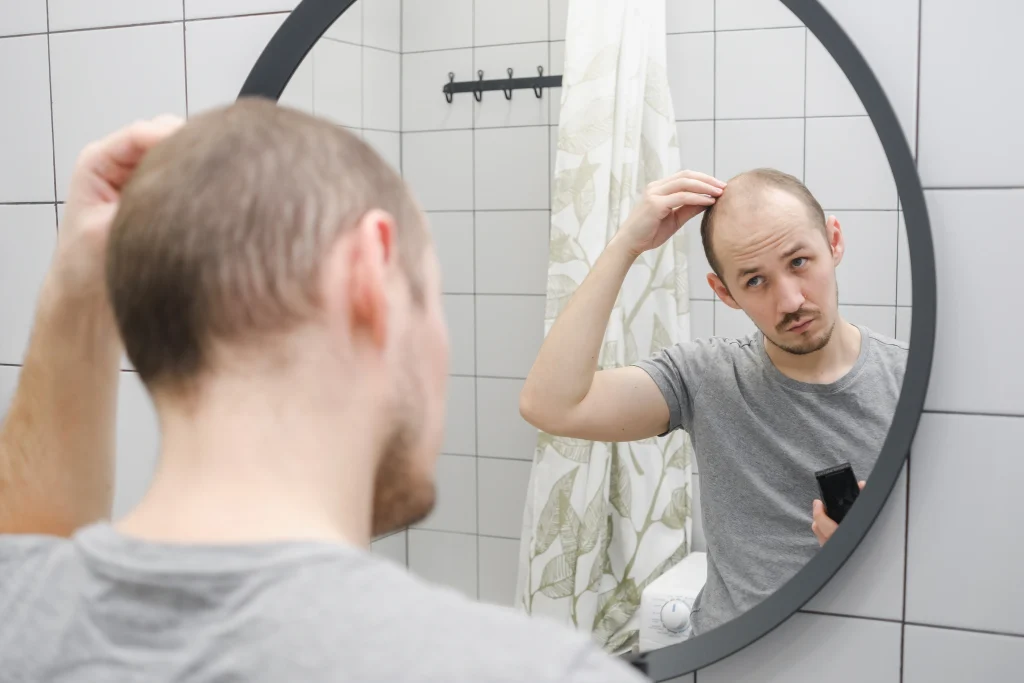
Male pattern baldness – also called androgenetic alopecia – is a hereditary condition that causes hair to gradually thin and recede in a specific pattern. It typically starts at the temples or the crown, often both. Over time, those thinning areas can expand until very little hair remains on top.
The medical name for it is androgenetic alopecia in men, and it’s the most common type of hair loss in men worldwide. By age 50, around half of all men show noticeable signs of it. By 70, that number climbs to about 80 percent. Early-onset androgenetic alopecia – which can begin in a man’s late teens or early twenties – is also more common than most people realize.
Androgenic alopecia follows a recognizable pattern of hair loss, which is part of what makes it identifiable early. The appearance and pattern differ from other conditions, and knowing what you’re dealing with makes the path forward a lot clearer.
What Causes Male Pattern Baldness?
The cause of male pattern baldness comes down to two main factors: genetics and a hormone called dihydrotestosterone, or DHT. DHT binds to receptors in certain hair follicles and causes them to shrink over time.
In each growth cycle, the individual hair that grows back becomes thinner and shorter. Eventually, the hair follicle stops producing visible hair altogether. That’s the core mechanism behind male androgenetic alopecia – not sudden shedding, but a slow, progressive miniaturization.
The baldness gene – more accurately, a genetic variation that creates DHT sensitivity – can come from either parent. The old idea that baldness comes only from your mother’s side isn’t accurate. If baldness runs in your family on either side, your own risk goes up.
Recognizing the Stages of Male Pattern Baldness
The stages of male pattern baldness are typically mapped using the Norwood Scale, which runs from Stage 1 (no visible hair loss) to Stage 7 (near-complete baldness on top, with hair remaining only around the sides and back). Understanding where you fall on that scale can help guide decisions about treatment.
The pattern of hair loss tends to follow a predictable path. Baldness begins at the temples, creates an M-shaped hairline, then progresses toward the crown. Hair around the sides and back usually stays, which is what creates the characteristic look of pattern balding. In some men, it starts at the crown instead and works outward.
A receding hairline is often the first thing men notice. Catching it at that stage is worthwhile, because most options for treating hair loss work better when there’s still active hair to work with – even if that hair is thin.
For men with early androgenetic alopecia, acting sooner rather than later generally means more options. Once areas of hair reach complete baldness, the path forward changes.
How Is It Different From Other Types of Hair Loss?
Male pattern hair loss is a specific type of hair loss, and it’s worth knowing how it differs from other conditions before deciding on a direction.
Alopecia areata causes patchy hair loss driven by the immune system, not hormones. It can affect hair around the scalp and body in unpredictable ways that look very different from the gradual thinning of androgenetic alopecia.
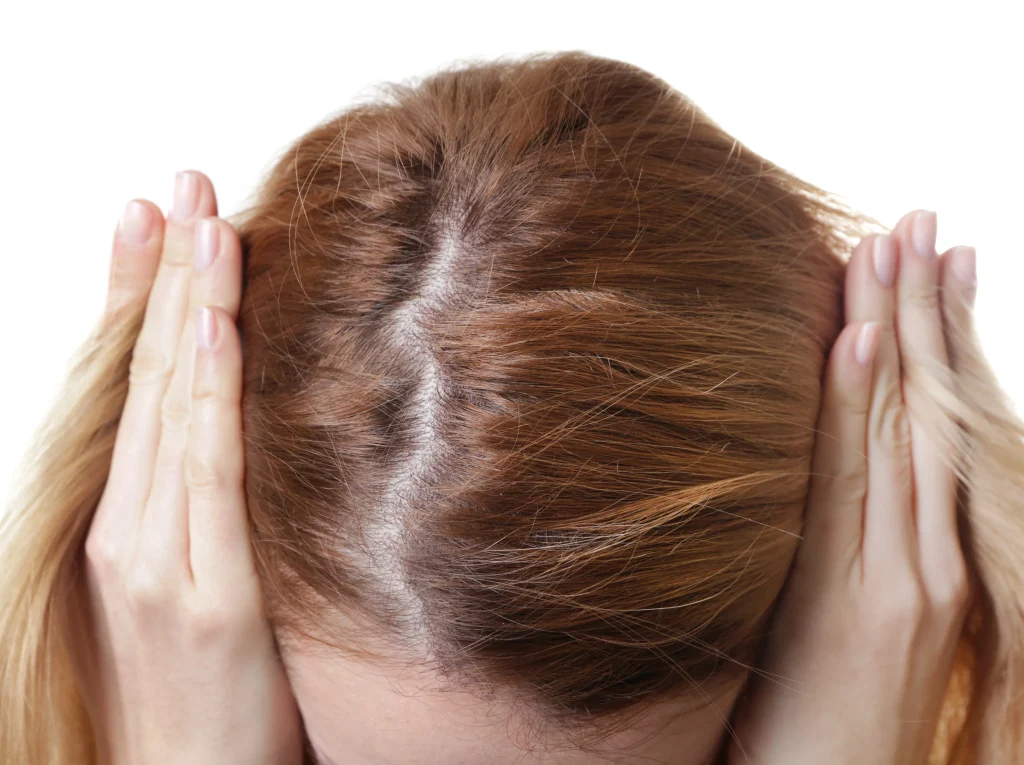
Female pattern hair loss – also known as androgenetic alopecia in women – follows a different pattern. Women with androgenetic alopecia typically experience diffuse thinning across the top of the scalp rather than a receding hairline. Hair loss in women is often harder to detect early because of this difference in presentation. Male and female pattern hair loss share the same underlying hormonal mechanism but look quite different in practice.
Hair thinning from stress, nutritional gaps, or medication is a separate category and is often temporary. That’s another reason why understanding the actual cause of hair loss matters – different causes call for different responses.
Treatment Options Worth Knowing About
There’s no shortage of products and promises when it comes to treating hair loss. Here’s a grounded look at what actually exists.
FDA-Approved Medical Treatments
Two medications are approved for the treatment of androgenetic alopecia: minoxidil3 and finasteride. These are the most widely used medical treatments for men with androgenetic alopecia.
Minoxidil is either applied to the scalp to stimulate hair growth or taken orally in pill form. It’s available over the counter and approved for use in androgenetic alopecia for both men and women. Results typically take several months, and hair regrowth is modest for most users. It needs to be used consistently – if you stop, so does the benefit.
Finasteride works by blocking DHT production, which can slow hair loss and support some regrowth in men with androgenic alopecia. It’s prescription-only and used specifically in the treatment of androgenic alopecia in male patients. Like minoxidil, ongoing use is required to maintain results.
These treatments for male pattern baldness can be effective, especially in earlier stages. A doctor can help determine whether they make sense for your situation and hair loss pattern.
Hair Transplant Surgery
Hair transplant surgery1 moves hair follicles from areas of the scalp with stable growth (typically the sides and back) to thinning or bald areas. For the right candidate, it can produce natural-looking results that last. Hair density, donor area availability, and the degree of alopecia all factor into whether it’s a realistic option. A consultation with a specialist can give you a clear picture of what’s possible.
Non-Surgical Hair Restoration
For men who aren’t surgical candidates, or who prefer a non-surgical path, hair restoration through a hair system is an option worth understanding. Modern hair replacement systems are designed to match natural hair in color, texture, and growth direction. The technology has changed significantly from what most people picture when they hear the term.
HairClub offers both surgical and non-surgical solutions for male pattern baldness. The right fit depends on your specific pattern of hair loss, your goals, and your lifestyle. It is not a one-size-fits-all recommendation.
What About the Research on Health Connections?
Some studies have examined the association between male pattern baldness and other health conditions. Research into baldness and coronary heart disease, as well as androgenetic alopecia and risk of prostate-related conditions, has turned up some statistical associations.
That doesn’t mean hair loss causes those conditions. Baldness affects many men with no related health issues at all. If you have concerns about cardiovascular or prostate health, that’s a conversation for your doctor. The hair loss itself isn’t a diagnosis.
What About the Research on Health Connections?
If you’re noticing changes and want to do something about it, here’s a reasonable starting point:
- Talk to a provider while there’s still hair to work with. Earlier is genuinely better for most treatment options.
- Get clarity on what type of hair loss you’re dealing with. Not all hair loss is androgenetic alopecia, and the approach should match the cause.
- Be skeptical of over-the-counter products that promise to stimulate hair growth without clinical backing.
- Understand that reducing hair loss is a realistic goal – total reversal often isn’t, depending on how far along things are.
Male pattern hair loss in men tends to progress gradually. That gradual pace is actually an advantage – it gives you time to make informed decisions rather than reactive ones.
Frequently Asked Questions
Does male pattern baldness skip generations?
It can seem that way, but the genetics are complex. Multiple genes are involved, and there’s no simple rule about which generation gets affected. Having a grandfather or father with significant hair loss increases the likelihood you’ll experience it too, but it’s not a guarantee.
Can you stop male pattern baldness completely?
Not permanently in most cases. Approved options for male pattern baldness treated early – like minoxidil and finasteride – can slow or reduce hair loss for some men. Hair transplant surgery can restore hair to thinning areas. Results vary by individual, and most treatments require ongoing use to maintain them.
At what age does male pattern baldness usually start?
For men with early-onset androgenetic alopecia, signs can appear in the late teens or early twenties. Most men who’ll experience it notice changes by their 30s. The rate of progression varies quite a bit from person to person.
How is hair loss in women different from hair loss in men?
Male pattern baldness typically starts at the hairline or crown and follows the Norwood Scale. Female pattern hair loss usually appears as diffuse thinning across the top of the scalp – not a receding hairline. The underlying mechanism is similar, but the visual pattern differs significantly.
Do supplements or special shampoos help with androgenetic alopecia?
Most over-the-counter supplements and shampoos don’t have strong clinical evidence for treating male pattern hair loss. Some may support a healthy scalp, but they’re unlikely to reverse hereditary hair loss on their own. Checking with a provider before spending money on unproven products is worth doing.
Is there a connection between male pattern baldness and other health risks?
Some research has looked at the association of androgenetic alopecia with cardiovascular and prostate health. Statistical associations exist, but that doesn’t mean hair loss causes those conditions. If you have health concerns beyond hair, that’s a conversation for your doctor.
Male pattern baldness is common, well-understood, and – for most men – manageable. Knowing the real cause of male pattern baldness takes a lot of the uncertainty out of it and makes it much easier to weigh your options clearly.
Whether you’re in the early stages or further along, there’s no single right answer for everyone. What matters is getting accurate information about your specific situation before making any decisions.
HairClub offers a free consultation with a Certified Hair Loss Specialist who can analyze your hair and scalp using state-of-the-art magnification and determine your stage of hair loss, then walk you through what solution is realistic for you. No pressure, no obligation, just a clear conversation about what’s possible.
Authors

HairClub
Hair Loss Specialist, Trichology Cert. | HairClub Content Team

Dr. Angela Phipps
Board-Certified Dermatologist | Medical Reviewer
Serves as HairClub’s medical advisor and hair restoration surgeon, specializing in both surgical and non-surgical treatments for hair loss in men and women.
Related Articles
Written By: Hairclub

Written By: Hairclub

Written By: Hairclub
Come see a Hair Loss Specialist to find out which of our cutting-edge solutions is right for you
or call 1-800-HAIRCLUB
Find the Right Solution Near You
From prevention to full restoration, we match you with the right approach at a center near you.

Prevention & Regrowth
Stop hair loss early with clinically proven therapies including laser therapy, topical treatments, and PRP.
Hair Replacement (Xtrands+)
Non-surgical, natural-looking hair that’s immediate and permanent. Custom-fitted at your local center.

Hair Transplant Surgery
The most advanced FUE and FUT procedures, performed by affiliated Bosley Medical Group physicians.