


Content
Hair Transplant & Restoration Before and After
Written By: Hairclub
Key Takeaways
- Results vary based on your hair loss and donor area.
- Full results typically take 12–18 months.
- Natural-looking hairlines depend on skilled technique.
- A personalized consultation is key to the right treatment plan.
Most people searching for hair transplant1 before and after photos are looking for one thing: proof. They want to know if the results are real, if the hairline will look natural, and whether going through the whole process is worth it. Those are fair questions, and they deserve honest answers.
The reality is that results vary quite a bit – depending on how many grafts are placed, what your donor area looks like, and how your body responds. But for the right candidate, the transformation can be genuinely significant. Some people go from a noticeably receding hairline or balding areas to a full, natural-looking head of hair.
This guide walks through what real transplant before and after transformations look like, what drives the differences in outcomes, and how to figure out whether this path makes sense for your specific situation.
What Before and After Photos Actually Show You
Looking at transplant before and after results is useful, but it’s easy to misread them. A few things worth knowing before you put too much weight on any one set of photos.
Most photos show results at 12 months or later – that’s when the full and final results become visible. What you see at 3 or 6 months looks quite different, and often much less dramatic.
The number of grafts matters enormously. A procedure covering a receding hairline might use 1,000 to 2,000 grafts. A more extensive hair restoration across a larger area of baldness can require 3,500 or more. The transformations that look the most dramatic almost always involve a higher amount of grafts placed across more of the scalp.
Lighting and angles in photos also affect how significant a change appears. That’s true across the industry. It doesn’t mean results aren’t real – it just means one photo isn’t the complete story.
The Factors That Drive the Best Results
Strong hair transplant results don’t happen by accident. A few things consistently show up when patients are happy with the results.
Healthy donor hair availability. Hair follicles from a donor area – typically the back and sides of the scalp – need to be dense enough to supply sufficient grafts. Patients with thin or limited donor areas have fewer follicles to work with, which affects what’s achievable in a single session.
A realistic graft plan. A hair restoration specialist should assess your hair loss patterns, your donor area, and your specific goals before recommending a specific number of grafts. The number of grafts isn’t something you pick from a list – it comes from a clinical evaluation.
The right technique. FUE hair transplant (follicular unit extraction) is widely used today because surgeons using this approach extract individual hair follicles from a donor area rather than removing a strip of scalp. This results in minimal scarring and a less visible scar overall. Each follicle is then placed carefully into thinning areas to restore density and coverage.
Stable hair loss. Hair transplantation tends to produce lasting results when current hair loss has stabilized. If you’re still actively losing hair, a transplant alone may not hold up well over time.
Month by Month: What the Recovery Actually Looks Like
This is where a lot of confusion lives. People see the before photo and the final after photo, but the middle part – the actual recovery – gets skipped over. Here’s an honest breakdown of what to expect after hair transplant surgery.
Weeks 1 to 4
The transplanted hair sheds. This is expected and doesn’t mean anything went wrong. The follicle itself stays intact – the hair is just cycling through. The scalp may look red or slightly irritated as it heals.
Months 2 to 4
Not much visible change. Some new hair growth may start, but it comes in fine and sparse at first. Most patients are not satisfied with what they see at this point, which is completely normal. This is the part that requires patience.
Months 5 to 7
Hair starts filling in more visibly. Texture and hair density are still developing. Results at 5-7 months can look noticeably different from the same patient at 12 months – so avoid judging the outcome too early.
Months 9 to 12
This is where most patients see significant change. Hair density improves, the hairline fills in, and the results start to resemble what was shown during the consultation.
12 to 18 Months After Surgery
Full results typically emerge here. Some patients continue seeing improvement beyond 12 months after surgery. The before-and-after comparison at this stage is usually striking compared to what the scalp looked like 6 months post-op.
What Makes a Restored Hairline Look Natural
One concern that comes up often: ‘Will it look natural?’ It’s completely reasonable to worry about that, especially after seeing older transplant results that looked obviously artificial.
A natural hairline isn’t perfectly straight or symmetrical – and a skilled surgeon knows that. The front hairline should follow a soft, slightly irregular pattern that reflects how hair naturally grows. The direction and angle of each follicle matters. Distribution across the scalp matters. Even tiny adjustments in placement affect how the final result reads.
When a restored hairline looks too obvious, it’s usually because the follicle placement was too dense in one spot, the angle was off, or the hairline design didn’t account for how hair loss patterns change with age. That’s why choosing the right surgeon and technique carries as much weight as the procedure itself.
How Many Grafts Do You Actually Need?
This is one of the most common questions, and one of the hardest to answer without a proper consultation. The number of grafts depends on several factors specific to you.
- How much of the scalp is affected – front hairline, crown, or the entire head
- The density and quality of your donor hair availability
- Your restoration goals and what coverage you want to achieve
- How your existing hair is currently distributed
- Your age for a hair transplant and whether hair loss has stabilized
Hair grafts for a hairline restoration might start around 1,000 to 1,500. For someone addressing a larger area – crown and front combined, or a more advanced stage of balding – the number of grafts could be 3,000 or more. There’s no standard number that applies to everyone.
A consultation is the only way to get an accurate answer. A hair restoration specialist can assess your donor area, map your hair loss patterns, and give you a realistic picture of what the number of grafts required would actually be for your goals.
How Many Grafts Do You Actually Need?
Not everyone is a candidate, and that’s worth saying plainly. Considering a hair transplant means thinking through a few things honestly.
Age for a hair transplant matters. Most specialists prefer waiting until hair loss has stabilized – often in the late 20s or 30s at minimum, though this varies by individual. Overall health plays a role, too, since transplant surgery is still a surgical procedure that requires healing.
If you’re exploring the option, here’s what a good consultation with a hair restoration specialist should cover:
- Your hair loss history and the stage of your current hair loss
- An honest assessment of donor hair availability and scalp condition
- Realistic graft counts and what coverage is achievable for your goals
- Recovery timeline and what months post-op typically look like
- Whether adding PRP or SMP could support long-term results
- Non-surgical options if transplant surgery isn’t the right fit
A consultation isn’t a commitment. It’s an information-gathering step. A good specialist gives you what you need to make an informed decision – not a sales pitch.
The Case for a Personalized Hair Restoration Plan
What’s harder to see from photos is the process behind them – the evaluation, the graft planning, the surgical expertise, and the follow-up care.
HairClub approaches hair restoration as a personalized process. Whether that means a hair transplant procedure through Bosley, scalp micropigmentation (SMP), a combination, or a non-surgical solution, the goal is to match the right approach to your actual situation. What works for one person’s donor area and hair loss stage may not be the right path for another.
Patients’ results vary, as they do across any provider. But consistently strong outcomes come from thorough evaluation, honest expectations, and world-class surgical expertise – not from a one-size-fits-all package.
What Patients Say About the Process
One testimonial we hear in different variations: ‘I didn’t think I was a candidate. My donor area seemed too thin. But the consultation changed what I understood about my options – and going through the process, I’m genuinely happy with the results.’
That’s a common arc. Uncertainty about whether a real hair transplant is even possible for your situation. A consultation with a specialist that clarifies what’s actually realistic. A process that requires patience. And – for the right person – life-changing, natural-looking results that help restore your confidence and give you a long-lasting solution.
If you’re balding or dealing with thinning areas and want to understand what might be possible, the best starting point isn’t a photo gallery. It’s a consultation.
Frequently Asked Questions
How long does it take to see full hair transplant results?
Most patients see significant improvement between 9 and 12 months. Full and final results typically emerge between 12 and 18 months after surgery. Improvement continues well past the first few months post-op, which is why it’s important not to judge outcomes too early.
How do I know how many grafts I'll need?
The only accurate way to determine the number of grafts is through an in-person consultation. A hair restoration specialist will assess your donor area, your hair loss stage, and your restoration goals before recommending a specific amount of grafts.
What's the difference between FUE and other transplant techniques?
FUE (follicular unit extraction) removes individual hair follicles from the donor area one by one rather than excising a strip of scalp. This results in minimal scarring, faster recovery, and no visible linear scar. It’s one of the most commonly used approaches in modern hair transplant surgery.
Will the transplanted hair look natural?
When hair implantation is performed by an experienced surgeon with proper technique, transplanted hair blends with existing hair and grows naturally. The keys are follicle placement angle, density distribution, and a hairline design that accounts for your natural growth pattern – including how hair loss patterns may continue to develop over time.
What's a realistic success rate for hair transplants?
Hair grafts that are properly extracted and placed typically have a high follicle survival rate – often in the 90 to 95% range. Overall transplant success in terms of density, coverage, and appearance depends on graft count, technique quality, and how the individual’s body responds.
Can I combine a hair transplant with other treatments?
Yes. Many patients combine transplant surgery with PRP therapy, a hair regrowth program like HairClub RX, or low-level laser therapy (LLLT) to support hair growth and help hair remain healthy during recovery, or add SMP to improve the visual impression of hair density. A consultation will help you understand which combination fits your restoration goals.
Take the Next Step Toward Your Restoration Goals
Hair transplant before and after photos show the destination. They don’t show the road. The full picture includes the consultation, the graft planning, the recovery months, and the patience required to let new hair growth develop fully.
The results – when the process is right for you – can be genuinely significant. Restored hair density. A natural hairline. The kind of outcome that feels like your original hair, not a procedure.
If you’re considering a hair transplant and want to understand what’s realistic for your specific situation, the best starting point is an honest conversation with a hair restoration specialist. Not to feel sold to, but to get personalized recommendations based on your actual donor hair availability, your hair loss stage, and what you want to achieve.
Schedule a free consultation at one of over 100+ HairClub locations across North America and get clarity on what your hair restoration options actually look like.
Authors

HairClub
Hair Loss Specialist, Trichology Cert. | HairClub Content Team

Dr. Angela Phipps
Board-Certified Dermatologist | Medical Reviewer
Serves as HairClub’s medical advisor and hair restoration surgeon, specializing in both surgical and non-surgical treatments for hair loss in men and women.
Related Articles
Written By: Hairclub
Written By: Hairclub

Written By: Hairclub
Come see a Hair Loss Specialist to find out which of our cutting-edge solutions is right for you
or call 1-800-HAIRCLUB
Find the Right Solution Near You
From prevention to full restoration, we match you with the right approach at a center near you.
Prevention & Regrowth
Stop hair loss early with clinically proven therapies including laser therapy, topical treatments, and PRP.
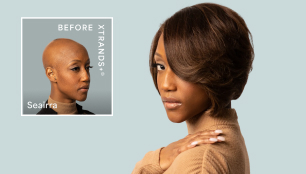
Hair Replacement (Xtrands+)
Non-surgical, natural-looking hair that’s immediate and permanent. Custom-fitted at your local center.
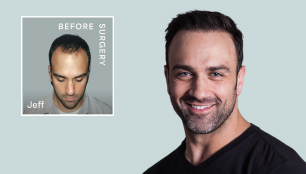
Hair Transplant Surgery
The most advanced FUE and FUT procedures, performed by affiliated Bosley Medical Group physicians.