


Content
Norwood Scale Hair Loss Stages 1-7: What Each Stage Really Means
Written By: Hairclub
Key Takeaways:
- Hair loss follows a common pattern, typically beginning at the temples or crown due to DHT-sensitive follicles.
- Earlier stages focus on prevention, mid stages on restoration, and later stages on managing limited donor hair.
- Hair density, texture, and scalp condition can make the same stage look very different between people.
Is your hairline creeping back, or is a thinning spot forming at the crown? You’ve probably started Googling, and somewhere in that search, the Norwood Scale came up. It’s the most widely used classification system for male pattern baldness, and it does something simple but genuinely useful; it turns a vague, frustrating experience into something you can map and understand.
Knowing your Norwood stage helps you understand where you stand in the progression of hair loss, what to realistically expect, and what hair loss treatments may make sense for your situation.
Let’s walk you through all seven stages of the Norwood scale hair loss stages, plain and practical, so you can start thinking about your next step with a clearer picture.
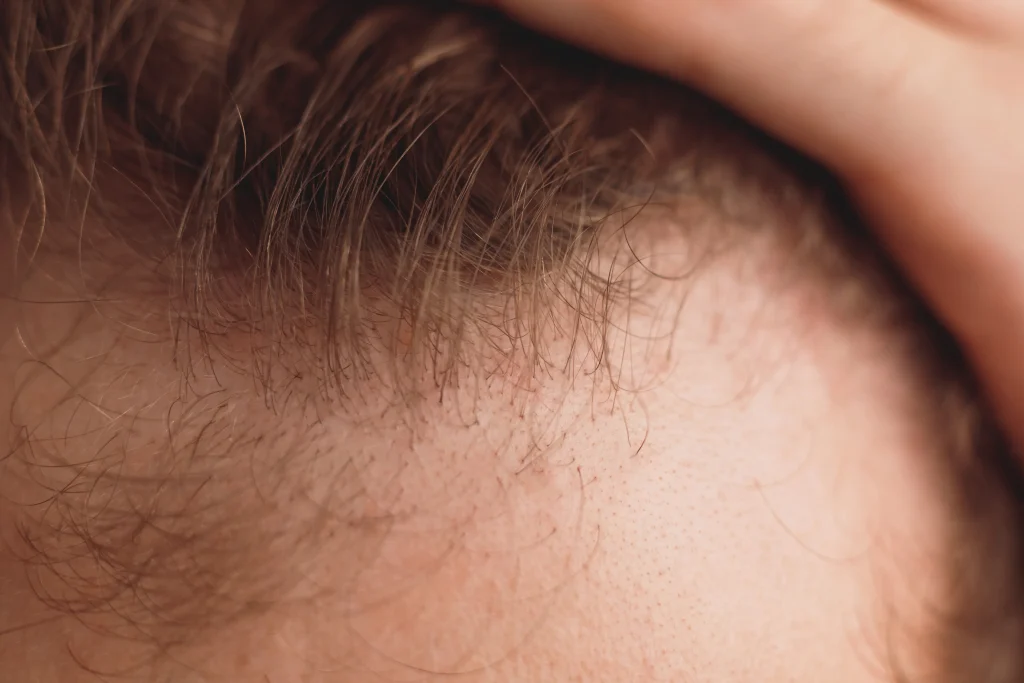
What Is the Norwood Scale?
The Norwood Scale, also called the Hamilton-Norwood Scale, is a classification system that maps male pattern hair loss into seven distinct stages. It was first developed by James Hamilton in the 1950s and later revised and expanded by O’Tar Norwood, which is why you’ll see both names attached to it. Today, it’s the standard tool that hair restoration specialists and dermatologists use to describe and document hair loss severity.
The scale classifies hair loss based on where and how much recession has occurred, from a full head of hair with no visible thinning all the way through the most severe and extensive loss.
What makes the scale genuinely helpful is that it gives both patients and providers a shared language. When a specialist says you’re at Norwood Stage 4, they’re pointing to a specific pattern of hair loss that carries real meaning for treatment planning.
The scale is also used alongside other tools. The Ludwig Scale, for example, is more commonly used for hair loss in women. For understanding male hair loss, the Norwood Scale remains the primary reference.
The Seven Stages of Male Pattern Baldness
Here's what each of the 7 stages looks like in practice, and what's actually happening at the level of the hair follicle.
|
Norwood 1 |
Minimal or no hairline recession. A full, healthy head of hair. Most men at this stage aren't experiencing active hair loss. Hair follicles are unaffected, and the hair growth cycle is running normally. |
|
Stage 2 |
The hairline begins to recede slightly at the temples, forming a subtle triangular shape. Hair remaining across the scalp is still dense. This is often the first visible sign of androgenetic alopecia, and it's the stage where many men first start paying attention. |
|
Stage 3 |
Deeper recession at the temples creates a more defined M-shape. Hair loss becomes difficult to conceal without deliberate styling. Hair follicles in the affected zones are beginning to miniaturize due to DHT sensitivity. Many men explore treatment options at Stage 3. |
|
Stage 3 Vertex |
A variation of Stage 3 where thinning is concentrated at the crown rather than primarily at the temples. The hairline may look relatively intact from the front, but a visible bald spot is forming at the top of the head. |
|
Stage 4 |
Significant hair loss at both the hairline and the crown. A band of hair separating the two thinning areas is still present. The hair on the sides and back remains relatively dense. This band of hair is important for hair transplant planning, as donor hair from the sides is what makes transplanting at this stage viable. |
|
Stage 5 |
Similar to Stage 4, but the bridge of hair between the front and crown has narrowed considerably. Hair remaining around the sides forms a horseshoe-shaped band of hair, but the top of the scalp is largely exposed. The thin band of hair is starting to disappear. |
|
Stage 6 |
The band of hair separating the temple and crown areas is gone. Extensive hair loss has merged the two zones into one. Sparse hair may still exist across the top, but visible hair density is low. Hair remaining on the sides and back is the main coverage that remains. |
|
Stage 7 (Norwood 7) |
The most severe classification on the scale. This represents the most extensive stage of male pattern baldness. The only hair remaining is a horseshoe-shaped band of hair running along the sides and back. Hair follicles across the scalp's top have largely stopped producing visible hair. Hair restoration surgery1at this stage requires careful donor planning, since the available donor hair must cover a much larger area. |
Why Hair Loss Follows This Pattern
Understanding male pattern hair loss comes down to two things: genetics and a hormone called dihydrotestosterone, or DHT. DHT is a byproduct of testosterone, and in men who are genetically predisposed, it binds to hair follicles on the top and front of the scalp and causes them to shrink. This process is known as follicular miniaturization.
As each hair growth cycle completes, the affected follicle produces a slightly thinner, shorter hair. Eventually, the hair growth cycle shortens so much that the follicle can no longer produce visible hair at all. This is what causes male pattern baldness to follow the Norwood pattern rather than happening evenly across the entire scalp.
Hair on the sides and back is more resistant to DHT, which is why hair typically survives there even in later stages of androgenetic alopecia.
That DHT resistance is also why hair on the sides and back is used as donor hair in hair transplantation. It carries less genetic sensitivity to DHT, which means transplanted follicles in a new location are less likely to miniaturize over time.
Hair color, hair caliber, and density all vary between individuals, which is part of why two men at the same Norwood stage can look quite different from one another. Hair loss patterns aren’t always perfectly symmetrical or textbook, either. That’s one reason why the scale is a starting point rather than the whole picture.
How Specialists Use the Norwood Scale for Treatment Planning
Hair restoration specialists use the Norwood scale as a foundation for any serious conversation about treatment. It doesn’t tell the whole story, but it sets the frame for realistic expectations and appropriate options.
For men at earlier Norwood stages, there’s often more flexibility. Hair loss treatments may include medication-based options to slow progression, alongside monitoring to see how things develop over time. For men at Stage 4 or Stage 5, a hair transplant may be a realistic path if the donor hair supply is adequate. Hair transplant surgery at these stages can often restore a natural-looking hairline and address crown thinning simultaneously.
For Stage 6 and Stage 7, hair restoration surgery is still possible for some people, but donor hair is a more limited resource relative to the area that needs coverage. Transplanting at this stage requires careful evaluation of donor density and realistic expectations about final results.
Providers also look beyond the Norwood class. Scalp health, miniaturization levels under magnification, hair density in the donor zone, and individual goals all play a role in treatment planning. The scale provides an important reference, but it’s part of a larger picture that a specialist can help assess in person.
Frequently Asked Questions
What does the Norwood Scale measure?
The Norwood Scale classifies the different stages of male pattern baldness based on the extent and location of hair loss. It uses a 7-stage system, where Stage 1 represents a full hairline with no recession and Stage 7 represents the most extensive hair loss. Specialists use it to guide conversations about hair loss severity and treatment options.
Is the Norwood Scale the same as the Hamilton-Norwood Scale?
Yes. James Hamilton in the 1950s created the original classification system for male pattern hair loss, and O’Tar Norwood later refined it. Today the terms Norwood Scale and Hamilton-Norwood Scale refer to the same tool. It’s the most widely used hair loss classification system for men in clinical and hair restoration settings.
Can you stop progressing through the Norwood stages?
Hair loss progression can sometimes be slowed with treatment, but it’s difficult to predict how quickly or how far any individual will progress. Some men stabilize at an early stage for years. Others move through different stages faster. A consultation with a hair restoration specialist can help you understand your individual situation and what options may be available.
Is a hair transplant an option at every Norwood stage?
Not necessarily. Earlier stages often have more donor hair available and a smaller area to address, which can make a hair transplant more straightforward for the right candidate. At Stage 7, available donor hair has to stretch further to cover a larger surface area, which requires careful planning. A specialist can evaluate your donor density and realistic outcomes based on your specific stage.
Does the Norwood Scale apply to women?
The Norwood Scale was developed specifically to classify hair loss in men. Women experience hair loss in different patterns, and the Ludwig Scale is the more commonly used hair loss classification system for female pattern hair loss.
At what Norwood stage should I see a specialist?
You don’t need to wait until hair loss is severe. Many people find that addressing it at Stage 2 or Stage 3 gives them more options to work with. If you’ve noticed your hairline shifting or new thinning at the crown, a consultation can help you understand what’s happening and what treatment options may make sense for your goals.
In Summary
The Norwood Scale turns something that can feel overwhelming and uncertain into something concrete. Whether you’ve just noticed a hairline change at Stage 2 or you’ve been living with more significant hair loss for years, knowing your stage is a useful first step in thinking clearly about your options.
Hair restoration options have come a long way. From non-surgical hair loss treatments to hair transplant surgery, there’s a range of approaches that can be tailored to different stages of hair loss and different goals. What works for one person may not be the right fit for another, which is why personalized guidance matters.
If you’d like to understand your stage and explore what may be realistic for you, HairClub offers consultations with Certified Hair Loss Specialists, who can evaluate your hair loss pattern and walk you through your options. It starts with one conversation.
Schedule a free consultation today at one of over 100+ HairClub locations across North America.
Authors

HairClub
Hair Loss Specialist, Trichology Cert. | HairClub Content Team

Dr. Angela Phipps
Board-Certified Dermatologist | Medical Reviewer
Serves as HairClub’s medical advisor and hair restoration surgeon, specializing in both surgical and non-surgical treatments for hair loss in men and women.
Related Articles
Written By: Hairclub
Written By: Hairclub

Written By: Hairclub
Come see a Hair Loss Specialist to find out which of our cutting-edge solutions is right for you
or call 1-800-HAIRCLUB
Find the Right Solution Near You
From prevention to full restoration, we match you with the right approach at a center near you.

Prevention & Regrowth
Stop hair loss early with clinically proven therapies including laser therapy, topical treatments, and PRP.
Hair Replacement (Xtrands+)
Non-surgical, natural-looking hair that’s immediate and permanent. Custom-fitted at your local center.
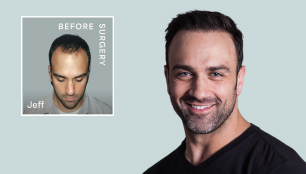
Hair Transplant Surgery
The most advanced FUE and FUT procedures, performed by affiliated Bosley Medical Group physicians.