


Content
Types of Hair Loss: What’s Behind It and What Can Help
Written By: Hairclub
Key Takeaways:
- Hair loss has multiple causes, and each type behaves differently.
- Some forms are reversible, while others can be permanent without early treatment.
- Early diagnosis improves treatment options and results.
- The right solution depends entirely on the underlying cause.
Hair loss can feel alarming, especially when it seems to happen quickly. But not all hair loss is the same. Understanding what type you’re dealing with is the first real step toward figuring out what to do about it.
There are many different types of hair loss, each with its own causes, patterns, and potential responses. This breakdown covers the most common ones, what drives them, and what treating hair loss typically looks like for each.
Why Identifying the Type Matters
The different types of hair loss don’t all behave the same way. Some respond well to early treatment. Others cause permanent hair loss if you wait too long. A few will clear up on their own. Hair loss can be permanent in certain situations and fully reversible in others, and the deciding factor is usually the type, not just the severity.
The common cause of hair loss that most people think of is genetics. That’s often a factor, but it’s far from the whole picture. Stress, hormones, styling habits, certain medications, and fungal infections of the scalp can all cause hair to fall in very different ways.
An accurate diagnosis of hair loss matters because it shapes every decision that follows, including whether to treat, how, and with what.
Androgenetic Alopecia (Pattern Hair Loss)
This is the most common type of hair loss overall. You’ll recognize it by its more familiar names: male pattern hair loss and female pattern hair loss, collectively called pattern hair loss or pattern baldness. It’s driven by genetics and a sensitivity to DHT, a hormone derived from testosterone that gradually shrinks the hair follicle until it can no longer produce visible hair.
Male Pattern Hair Loss
Male pattern hair loss usually starts with a receding hairline, thinning at the crown of the scalp, or both. Over time, those two areas can connect and expand. Baldness progresses slowly in most cases, but the timeline varies significantly. Hair loss usually develops over years, sometimes decades, which is partly why many men don’t seek help until significant thinning has already occurred.
Female Pattern Hair Loss
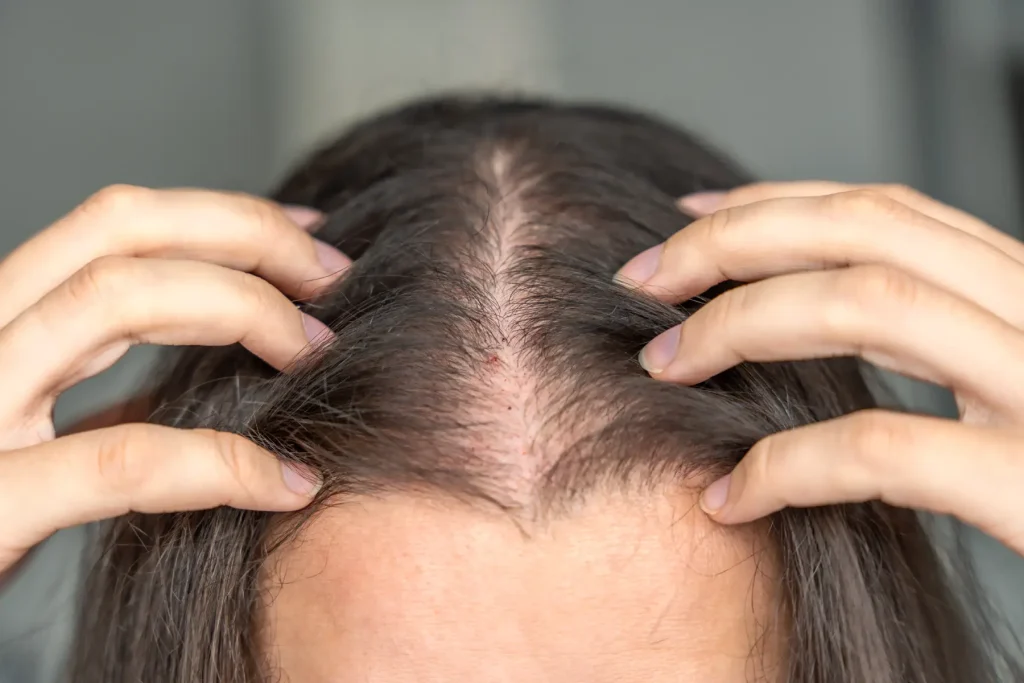
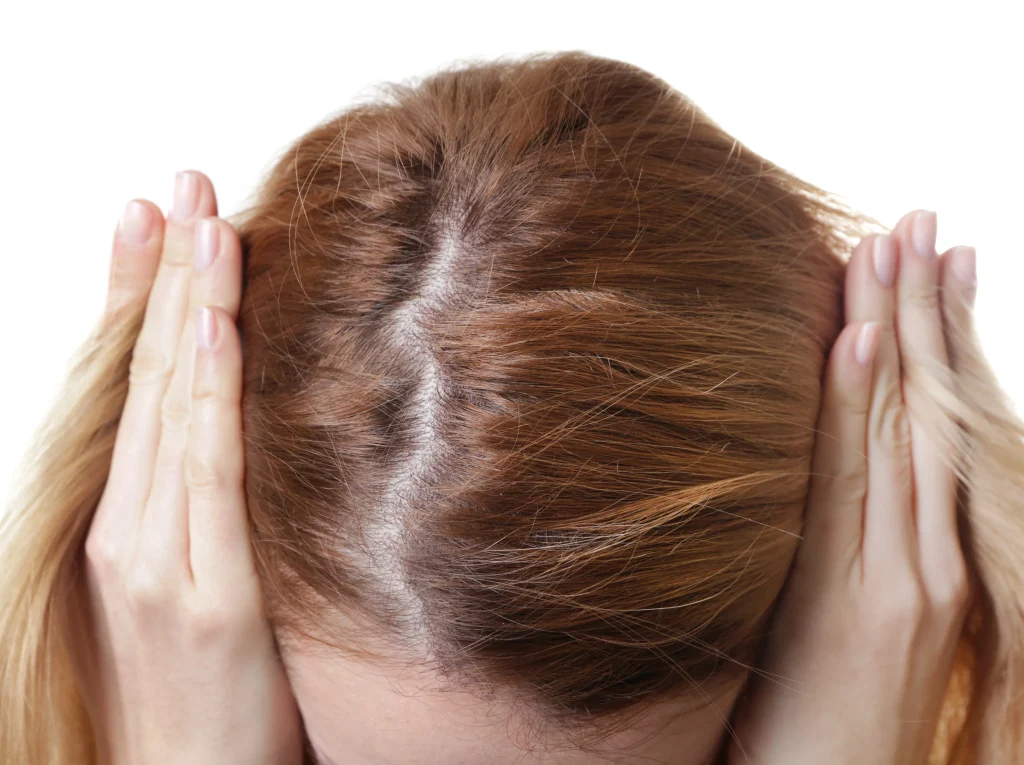
Female pattern hair loss looks different. Rather than a receding hairline, women typically notice a widening part or diffuse thinning of hair across the top of the scalp. Complete hair loss in women is less common than in men, but the impact on confidence and daily life can be just as significant.
Both forms are slow hair loss that builds gradually. That slow pace is actually one of the reasons people wait, and waiting can narrow what’s available to help.
Alopecia Areata
Alopecia areata is a type of hair loss where the immune system attacks hair follicles, usually causing patchy hair loss on the scalp. Most people notice it as one or more smooth, coin-sized bald spots.
In some cases, alopecia areata can spread to involve more of the scalp or even hair elsewhere on the body. But for many people, hair usually grows back on its own over time, even without intervention. Hair loss may last several months or longer in others, and some people experience recurring episodes.
This type of hair loss is not caused by anything the person did. It’s an autoimmune response, and a dermatologist can help evaluate how widespread it is and whether treatment makes sense.
Telogen Effluvium
Telogen effluvium is one of the more misunderstood forms of hair loss. It happens when a large number of hair follicles shift into the resting phase of the hair growth cycle all at once, causing widespread shedding a few months later.
What causes hair to fall out this way? Common triggers include physical or emotional stress, illness, childbirth, surgery, rapid weight loss, or a nutritional deficiency. Hair loss is also a known side effect of certain medications, including some blood thinners, antidepressants, and retinoids. Loss can be a side effect that people don’t connect back to a prescription they started months earlier.
The tricky part is timing. The hair falling out often appears weeks after the original trigger, so the connection isn’t always obvious. Hair loss usually resolves once the underlying cause is addressed, and normal hair growth often returns within six to twelve months, though that varies by person.
Telogen effluvium is one of the more treatable types. Hair usually grows back once the trigger is identified and managed.
Traction Alopecia
Traction alopecia is a type of hair loss called exactly that because it’s caused by repeated tension. Tight ponytails, braids, extensions, and weaves apply constant pull on the hair shaft at the hairline and temples. Over time, that tension damages the hair follicle at the root.
Hair loss called traction alopecia typically starts subtly: a few broken hairs near the front, thinning hair along the edges, or small receding patches at the temples. If the tension continues long enough, permanent damage can set in.
This is one of the more preventable types. Varying hairstyles, avoiding very tight styles for extended periods, and giving the scalp regular breaks can slow or stop the process. Caught early enough, hair usually grows back once the tension is removed.
Scarring Alopecias
Some types of hair loss are caused by inflammation that permanently destroys the hair follicle, leaving scar tissue in its place. These are called cicatricial or scarring alopecias. Two of the more notable ones are central centrifugal cicatricial alopecia and frontal fibrosing alopecia.
Central Centrifugal Cicatricial Alopecia
Central centrifugal cicatricial alopecia starts at the crown of the scalp and spreads outward in a circular pattern. It’s most common among Black women and is linked to a combination of genetic factors and certain hair care practices. Hair loss is caused by chronic inflammation that damages and scars the follicle. Because the damage is permanent, early evaluation and treatment are important.
Frontal Fibrosing Alopecia
Frontal fibrosing alopecia causes a slow, progressive recession of the hairline at the front and sides of the scalp. It often also affects the eyebrows and eyelashes. It’s seen most often in post-menopausal women, though it can occur in others as well.
Both of these conditions are examples where catching hair and scalp disorders early is critical. Once follicles are scarred, they can’t regenerate.
Other Causes Worth Knowing
Fungal Infections
A fungal infection of the scalp, known as tinea capitis, can cause patchy hair loss, particularly in younger people. Hair loss in children is more commonly associated with this condition than in adults. Antifungal treatment typically clears the infection, and hair usually grows back fully afterward.
Trichotillomania
This is a compulsive urge to pull your hair out, which results in irregular patchy hair loss across the scalp or elsewhere. It’s classified as a mental health condition and is best addressed with a mental health professional alongside any hair-related care.
Medication-Related Hair Loss
Certain medications, including chemotherapy drugs, blood thinners, and some antidepressants, are known to cause hair loss as a side effect. If you’ve recently started a new prescription and are noticing rapid hair loss or unusual shedding, it’s worth bringing it up with your prescribing provider. This type of hair loss usually improves after the medication is adjusted or stopped, but always talk to a doctor before making changes.
Other Causes Worth Knowing
There’s no single treatment for hair loss that works for everyone, because the right approach depends on the cause of your hair loss, how long it’s been happening, and how your hair follicles have responded.
Minoxidil3 is one of the most widely used treatment options for androgenetic alopecia. It’s applied topically to the scalp or taken orally and can support hair regrowth for some people, particularly when started early. Minoxidil works by extending the active phase of the hair growth cycle, which helps the hair follicle produce visible hair for longer. It’s not a permanent fix, and results vary.
For scarring alopecias, hair loss treatments tend to focus on stopping further damage rather than regrowing what’s already been lost. For alopecia areata, options can range from topical steroids to JAK inhibitor medications, depending on how widespread it is.
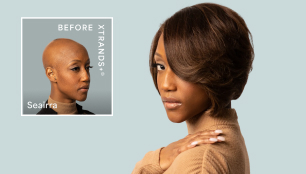
Non-surgical hair replacement is another path worth knowing about. For people whose hair loss has progressed significantly, or for whom other treatment options haven’t delivered results, a high-quality hair system can restore a fully natural appearance. For the right candidate, this can be a meaningful option that works alongside or independently of medical treatment.
Hair regrowth is possible for many people, particularly when treatment starts early. But even when regrowth isn’t realistic, there are options designed to help people feel like themselves again.
Common hair loss questions often come down to one thing: is this reversible? The honest answer is that it depends on the type and how quickly you act.
Frequently Asked Questions
What's the most common type of hair loss?
Androgenetic alopecia, often called pattern hair loss or pattern baldness, is the most widespread. It affects both men and women and is primarily driven by genetics and hormones.
Can hair loss be reversed?
It depends on the cause of your hair loss. Types like telogen effluvium often resolve on their own. Scarring alopecias cause permanent damage to the hair follicle. Early evaluation typically gives you the most options.
Is sudden hair loss always a sign of something serious?
Sudden hair loss can be alarming, but it’s not always serious. It’s often linked to telogen effluvium triggered by stress or illness. That said, rapid hair loss is worth evaluating with a dermatologist to rule out other causes.
Does minoxidil work for all types of hair loss?
Minoxidil is most effective for androgenetic alopecia and some cases of telogen effluvium. It generally isn’t used for scarring alopecias or traction alopecia. A specialist can help determine whether it makes sense for your situation.
What causes hair loss in women specifically?
Female pattern hair loss is the most common cause, but women also lose hair from telogen effluvium (often triggered by pregnancy, thyroid changes, or stress), traction alopecia, and frontal fibrosing alopecia. Hormonal shifts play a role across many of these types.
When should I see a specialist about hair loss?
If you’re noticing thinning hair, patchy spots, or loss that seems to be accelerating, it’s worth getting a professional opinion. Earlier evaluation means more options and a better chance of preserving what you have.
In Summary
Hair loss means something different to everyone. For some people, it’s a slow shift that builds over years without much notice. For others, it’s a sudden change that feels impossible to ignore.
What matters most is understanding what’s actually driving it. The different types of hair loss respond differently to treatment, and the window for the most effective options doesn’t stay open forever.
At HairClub, we offer complimentary consultations designed to help you understand your stage of hair loss and which hair restoration or hair regrowth solutions make sense for your specific situation. No pressure, no guesswork. Just a real conversation with someone who can actually help.
Book a free consultation at one of over 100+ HairClub locations across North America and get personalized guidance for your stage of hair loss and a solution that fits your needs, lifestyle, and budget.
Authors

HairClub
Hair Loss Specialist, Trichology Cert. | HairClub Content Team

Dr. Angela Phipps
Board-Certified Dermatologist | Medical Reviewer
Serves as HairClub’s medical advisor and hair restoration surgeon, specializing in both surgical and non-surgical treatments for hair loss in men and women.
Related Articles
Written By: Hairclub

Written By: Hairclub

Written By: Hairclub
Come see a Hair Loss Specialist to find out which of our cutting-edge solutions is right for you
or call 1-800-HAIRCLUB
Find the Right Solution Near You
From prevention to full restoration, we match you with the right approach at a center near you.

Prevention & Regrowth
Stop hair loss early with clinically proven therapies including laser therapy, topical treatments, and PRP.
Hair Replacement (Xtrands+)
Non-surgical, natural-looking hair that’s immediate and permanent. Custom-fitted at your local center.
Hair Transplant Surgery
The most advanced FUE and FUT procedures, performed by affiliated Bosley Medical Group physicians.