
QUICK REFERENCE
- Most hair loss is hereditary (androgenetic alopecia). The two strongest treatments are oral/topical minoxidil and, for men, oral/topical finasteride or dutasteride (prescription).
- The right treatment depends on the cause and type of your hair loss, so an accurate diagnosis comes first.
- Options range from over-the-counter products and prescription medications. Or in-office procedures, laser therapy, non-surgical hair systems, and hair transplant surgery.
- Starting early gives you the best chance to slow hair loss and keep the hair you have.
- A hands-on scalp and hair analysis with a specialist is the best way to match a treatment to your situation.

Hair loss is common, and for most people it is treatable, but there is no single best hair loss treatment that fits everyone. What works depends on why you are losing hair, how far it has progressed, and your goals. For hereditary thinning, oral/topical minoxidil and, in men, oral/topical finasteride or dutasteride remain the most proven medications.
Other options, including laser therapy, platelet-rich plasma, non-surgical hair systems, scalp micropigmentation, and hair transplant surgery, address different needs and stages.
This guide walks through every category, what the evidence shows, what results to expect, and how to choose.
Start With the Cause: Why Diagnosis Comes First
Hair loss, known medically as alopecia, has many causes. The most effective treatment for one type can do little for another. That is why a dermatologist or hair loss specialist works to diagnose the cause before recommending a plan. Losing up to around 100 hairs a day is normal shedding. Persistent thinning, a widening part, a receding hairline, or patches that do not fill back in are signs worth having assessed.
Understanding your type of hair loss also sets realistic expectations. Some causes are temporary and resolve on their own. Others, such as hereditary hair loss, are progressive and respond best to early, ongoing treatment.
The most common types of hair loss
- Androgenetic alopecia (male and female pattern hair loss): The most common cause. It is hereditary and driven in large part by dihydrotestosterone (DHT), a hormone that gradually shrinks sensitive hair follicles in a process called miniaturization. Follicles produce finer, weaker hairs until they stop growing. In men, this often shows as a receding hairline and thinning at the crown or top of the head. In women, female pattern hair loss usually appears as diffuse thinning across the scalp while the frontal hairline is preserved. Hereditary hair loss affects tens of millions of men and women in the United States.
- Telogen effluvium: A temporary shift that pushes more follicles into the resting phase of the hair growth cycle, causing noticeable shedding a few months after a trigger such as illness, surgery, childbirth, rapid weight loss, or significant stress. It usually improves once the trigger passes.
- Alopecia areata: An autoimmune condition in which the immune system attacks hair follicles, causing round patches of hair loss that can sometimes become extensive. It is treated very differently from hereditary hair loss.
- Scarring alopecias: Conditions such as central centrifugal cicatricial alopecia and Frontal Fibrosing Alopecia can permanently damage follicles and need prompt medical attention to limit loss.
Is your hair loss temporary or lasting?
Many causes of hair thinning and loss are not permanent and may not need formal treatment. As your body adjusts, hair often grows back without treatment. Common temporary causes include:
- Childbirth: Postpartum shedding from hormonal shifts usually settles within a few months as levels stabilize.
- Hormonal changes: Puberty, menopause, and thyroid conditions can disrupt the hair growth cycle until hormones rebalance.
- Post-surgery recovery: The stress of a procedure, or general anesthesia if used, can trigger temporary shedding that resolves as you heal.
- Cancer treatment: Chemotherapy and radiation can cause hair loss, with regrowth typically beginning after treatment ends.
- Rapid weight loss: A sudden nutritional or physical stress can prompt shedding that eases as the body stabilizes.
- Stress: Physical or emotional stress can push hair into shedding, and managing it supports recovery.
If you are not sure whether your hair loss is temporary or lasting, a specialist can assess your scalp and help identify the cause so you treat the right problem.
Over-the-Counter Hair Loss Treatments
Over-the-counter treatments are usually the first step for early hereditary thinning. They are widely available and do not require a prescription, though they work best with consistent, long-term use.
Minoxidil (Rogaine)
Topical minoxidil, sold as Rogaine and in generic liquid or foam, is the only over-the-counter medication approved by the Food and Drug Administration for hair regrowth in both men and women. Originally developed as a high blood pressure medication, it was found to promote hair growth as a side effect. Applied to the scalp, it is thought to widen blood vessels and extend the growth (anagen) phase of the hair cycle, helping follicles produce thicker hairs.
What to expect: Studies suggest topical minoxidil helps roughly two out of three men, and it tends to work best when started early, before extensive hair loss. It will not restore a fully bald area, and results take time. Most people apply it twice daily and need three to six months of consistent use before seeing change. If you stop, the gains gradually reverse.
Possible side effects are usually mild and can include scalp itching, dryness, or irritation, more often with the 5% strength. A low-dose oral minoxidil is also prescribed off-label by some clinicians for pattern hair loss, and it should only be used under medical supervision.
Supplements
Supplements are popular, but the evidence is mixed. Biotin is essential for healthy hair, yet unless you are deficient, extra biotin has not been shown to regrow hair. Multi-ingredient hair supplements such as Viviscal and Nutrafol have some supportive research, but they are best seen as an adjunct, not a replacement for proven medical treatment. If shedding is significant, a blood test can check for issues like low iron or vitamin D that can contribute to hair loss.
Prescription Hair Loss Treatments
When over-the-counter options are not enough, or when hair loss is more extensive, a healthcare provider or dermatologist may recommend prescription treatment.
Finasteride (Propecia)
Finasteride is an oral prescription medication for male pattern baldness. It works by blocking the enzyme that converts testosterone into DHT, lowering the hormone that drives follicle miniaturization. By reducing DHT, it can slow hair loss, help prevent further hair loss, and many men regrow some hair. Research indicates finasteride slows or stops hair loss in the large majority of men who take it, with some also seeing regrowth.
Finasteride is not FDA-approved for women and is unsafe during pregnancy. Side effects are uncommon but can include sexual side effects, which typically resolve after stopping the medication. A conversation with a provider helps weigh the benefits and risks for your situation.
Dutasteride and spironolactone
Dutasteride is a related, stronger DHT-blocker sometimes used off-label for more extensive loss. For women, spironolactone is an oral anti-androgen that can help with hormone-driven thinning. Both require a prescription and medical oversight.
Compounded, personalized prescriptions
Some clinicians tailor treatment by combining active ingredients into a single compounded formula matched to the individual. This approach is central to HairClub RX, covered in more detail below. Compounded medications are prepared by a pharmacy for a specific person. While individual ingredients may be FDA-approved, a compounded combination is not FDA-approved, and the FDA does not evaluate the safety or effectiveness of compounded drugs.
Treatments for alopecia areata
Hereditary hair loss and alopecia areata are treated differently. For alopecia areata, the FDA has approved oral JAK inhibitor medications, including baricitinib (Olumiant), ritlecitinib (Litfulo), and deuruxolitinib (Leqselvi), which calm the immune response that attacks follicles. These are prescription drugs with their own risks and are managed by a physician. If you have patchy hair loss, see a dermatologist for an accurate diagnosis.
In-Office and Device-Based Treatments
Beyond topical and oral medication, several treatments are delivered in a clinic or with a device at home.
Low-level laser therapy (LLLT)
Low-level laser therapy, also called red light therapy or cold laser therapy, uses laser light to stimulate hair follicles and is available as an in-office treatment or as at-home devices such as laser caps. The light is thought to improve blood flow to the scalp and support cellular activity. Some studies show modest benefit for pattern hair loss, while others are less conclusive, so laser therapy is often used alongside other treatments rather than on its own. It is generally low-risk and painless.
Platelet-rich plasma (PRP)
Platelet-rich plasma injections use a sample of your own blood, which is spun in a centrifuge to concentrate the platelets, then injected into the scalp to stimulate hair follicles. PRP is an in-office procedure, usually done in a series, and research suggests it may help improve density for some people with thinning hair, though results vary.
Scalp micropigmentation (HairClub SMP)
Scalp micropigmentation is a non-surgical cosmetic treatment that deposits tiny pigment dots on the scalp to mimic the look of hair follicles. It can create the appearance of density in thinning areas, define a hairline on a closely shaved style, or camouflage scars. HairClub SMP is HairClub’s scalp micropigmentation service. It does not regrow hair, but it can be an effective way to improve the look of coverage for missing hair.
Non-Surgical Hair Replacement
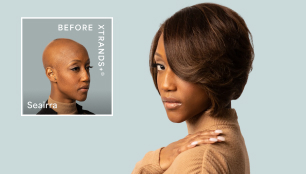
Not everyone wants medication or surgery, and some people want fuller hair right away. Non-surgical hair replacement adds hair to your existing hair for immediate coverage. HairClub’s Xtrands+ is a custom-fitted system that uses real human hair matched to your color, texture, and density, then blended with your own hair to add thickness and fullness. Because it is applied rather than grown, results are immediate, and the system is maintained over time. It is a practical option for more extensive hair loss, or for anyone who wants a full look without waiting for regrowth.
Hair Transplant Surgery
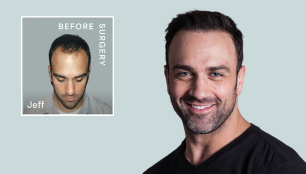
A hair transplant is a surgical option that moves hair follicles from a donor area, usually the back or sides of the scalp, to thinning or balding areas. Two main techniques are used: follicular unit transplantation (FUT), which removes a strip of scalp, and follicular unit excision (FUE), which harvests individual follicles. A transplant can provide long-lasting, natural-looking density, but it does not stop hair loss elsewhere, so many people continue medical treatment to protect the surrounding hair. Hair transplant surgery is best evaluated in a consultation, where a specialist can confirm whether you are a suitable candidate. At HairClub, hair transplant procedures are provided through affiliated physicians of Bosley Medical Group and are available at select locations. Results depend on the individual, so a personal assessment is the right starting point.
A Personalized, DNA-Informed Approach: HairClub RX
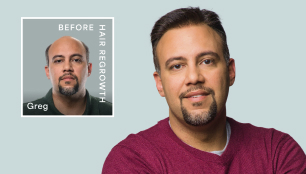
Most hair loss treatments follow a one-size-fits-all approach. HairClub RX is a personalized hair loss treatment program designed to help address hair loss at the follicle level using insights from your own biology. Rather than guessing which product might work, it starts with information about how your body may respond to different treatment options.
How it works:
You begin with a free consultation and a simple, self-administered cheek swab that collects a DNA sample. The sample is analyzed to help inform which active ingredients and delivery methods may suit you. A licensed telehealth provider reviews your medical history and the recommended formula and, when appropriate, prescribes a custom compounded medication. Your program can also include daily supplements, sulfate-free and paraffin-free shampoo and conditioner, in-center hair therapy, and an optional laser cap. A HairClub specialist establishes a baseline with a high-magnification hair and scalp analysis, then tracks your progress over time and adjusts the plan as needed.
What it may support:
Over time, a personalized strategy may help support healthier hair growth, improve hair density, reduce shedding, preserve existing hair, and improve overall scalp health. As with any regrowth therapy, results vary and take time, often three to six months for visible change and up to twelve months for the fuller effect.
A few important notes:
HairClub RX is available at participating locations. The DNA test used in the program was developed by an outside laboratory and has not been cleared or approved by the FDA. Compounded medications are personalized for the individual. While individual ingredients may be FDA-approved, a compounded combination is not, and the FDA does not evaluate the safety or effectiveness of compounded drugs. A HairClub specialist can explain what the program involves and whether it fits your goals.
Learn more about HairClub RX or book a free consultation to see whether a personalized plan is right for you.
Supporting Your Hair at Home
Can you regrow thinning hair and stop hair loss naturally, without treatment? For hereditary hair loss, home care alone will not reverse the process, but healthy habits support your hair and can complement medical treatment. Steps that help include:
- Balanced diet: Eat enough protein, iron, and vitamins from foods like lean proteins, vegetables, fruits, whole grains, and healthy fats to give hair the building blocks it needs.
- Gentle hair care: Avoid harsh chemical treatments, tight hairstyles, and excessive heat that can damage the hair shaft and worsen thinning.
- Scalp massage: Massaging the scalp may improve circulation to hair follicles and is a low-risk habit to add.
- Stress management: Exercise, meditation, and adequate sleep help, since stress can push hair into shedding.
- Avoid smoking: Smoking is linked to hair loss and reduced circulation to the scalp.
These steps support scalp and hair health, but they are not a substitute for proven treatment. If thinning continues, talk with a specialist.
What to Expect: Timelines and Sticking With Treatment
Hair loss treatment rewards patience and consistency. Most treatments need several months of regular use before results are visible. On average, expect three to six months before you notice meaningful change in growth and thickness, and longer for the full effect. Non-surgical hair replacement is the exception, offering immediate coverage.
Because hereditary hair loss is progressive, ongoing treatment protects your results. If you stop a medication like minoxidil or finasteride, the hair it preserved will gradually be lost. During treatment, avoid harsh dyes, relaxers, and straighteners that can undermine your progress, and follow your provider’s instructions closely. Regular check-ins, ideally with hands-on scalp analysis, let a specialist measure progress and adjust your plan.
How to Choose the Right Hair Loss Treatment
The best treatment for you depends on the cause of your hair loss, your sex, the stage of loss, and your goals. A few general guidelines:
- Match the treatment to the cause. Hereditary thinning responds to minoxidil, finasteride, and related medical treatments; alopecia areata needs different, physician-managed care; temporary shedding often resolves on its own.
- Start early. Treatments that slow hair loss and protect existing follicles work best before loss becomes extensive.
- Consider your goals. Medical treatment aims to keep and regrow your own hair over time, hair systems and scalp micropigmentation change the look of coverage right away, and a transplant restores density in a defined area.
- Get a proper diagnosis. A hands-on scalp and hair analysis is the most reliable way to match a treatment to your situation.
| Treatment | Best for | How it works | Time to results | Type |
|---|---|---|---|---|
| Minoxidil (topical) | Early pattern thinning, men and women | Extends the growth phase | 3 to 6 months | OTC |
| Finasteride | Male pattern hair loss | Lowers DHT | 3 to 6 months | Prescription |
| Low-level laser therapy | Mild to moderate thinning | Light stimulates follicles | 3 to 6 months | OTC / in-office |
| Platelet-rich plasma | Added density in thinning areas | Concentrated platelets injected | Series over months | In-office |
| Scalp micropigmentation | Look of density, camouflage | Pigment mimics follicles | Immediate look | Cosmetic |
| Non-surgical system (Xtrands+) | Extensive loss, instant fullness | Real hair added to your hair | Immediate | Cosmetic |
| Hair transplant | Long-term density, defined areas | Follicles relocated | 9 to 12 months | Surgical |
| HairClub RX | Personalized medical regrowth | DNA-informed compounded plan | 3 to 12 months | Program |
Frequently Asked Questions
What is the best hair loss treatment for thinning hair?
Can hair loss be reversed, or is it permanent?
It depends on the cause. Temporary hair loss, such as postpartum or stress-related shedding, often grows back on its own. Hereditary hair loss is progressive and cannot be cured, but treatment can slow it and regrow some hair. Scarring types can cause permanent loss, so early care matters.
Which hair loss treatments are FDA-approved?
Topical minoxidil is FDA-approved for men and women, and oral finasteride is FDA-approved for men. For alopecia areata, several JAK inhibitor medications are FDA-approved. Many other treatments, including laser devices, are cleared for marketing or used off-label, which a provider can explain.
Do hair loss treatments work for women?
How long before I see results?
Most treatments take three to six months of consistent use before visible change, and up to a year for the fuller effect. Non-surgical hair replacement is immediate. Patience and consistency are essential, since stopping treatment usually reverses the gains.
What is the difference between hair regrowth and hair replacement?
Hair regrowth focuses on stimulating your own follicles with medications, laser therapy, and related methods. Hair replacement uses non-surgical cosmetic systems to add volume and a full look right away. Many people combine approaches.
When should I see a specialist about hair loss?
Take the Next Step
Hair loss is common, and for most people it is manageable with the right approach. The sooner you understand the cause, the more options you have to slow hair loss and protect the hair you have. With 100-plus locations across the United States, Canada, and Puerto Rico, HairClub gives you access to a full range of solutions and a hands-on scalp analysis to match you with a plan.
To take the next step, learn about HairClub RX for a personalized, DNA-informed program, or book a free consultation with a hair loss specialist.