

Cotton pillowcases can quietly cause hair breakage, frizz, and tangles while you sleep. A silk or satin pillowcase may help.
Key Takeaways:
- Cotton pillowcases create friction that can lead to hair breakage, frizz, and tangles overnight.
- Silk and satin pillowcases are gentler on hair, helping it retain moisture and glide instead of catching.
- Going to bed with wet hair adds extra friction and can make frizz worse by morning.
- Ongoing thinning or shedding is usually about more than your pillowcase and is worth discussing with a specialist.
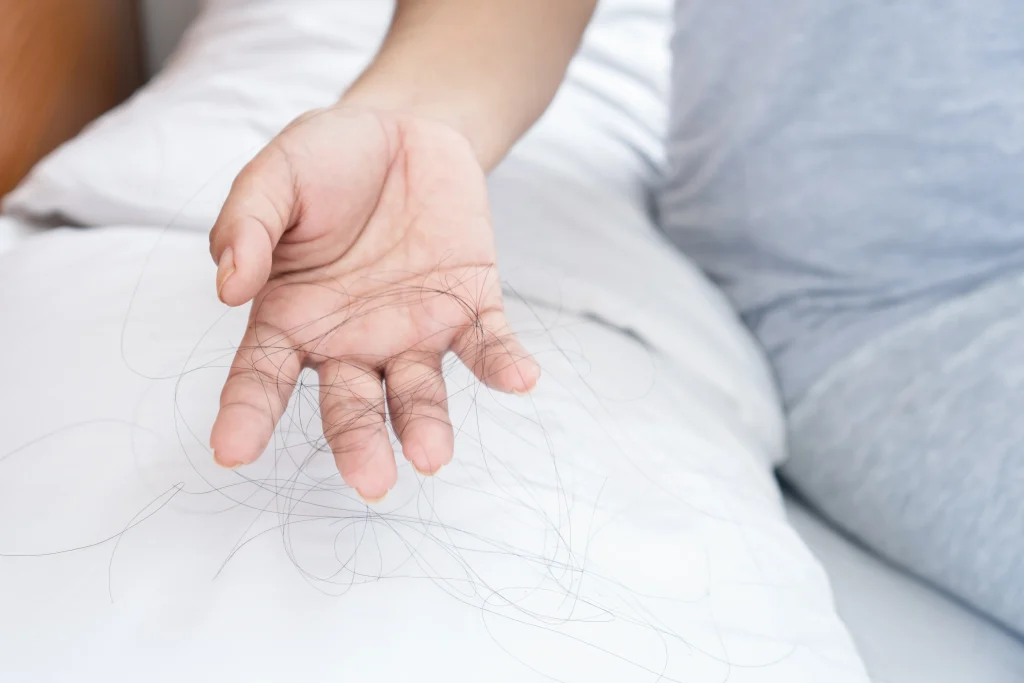
If you’re waking up with frizzy, dry, or tangled hair, your pillowcase could be part of the problem. Most people sleep on a cotton pillowcase without a second thought, but that fabric can cause friction, dryness, and breakage over time.
Good hair care doesn’t stop when you go to sleep. The fabric you rest your head on every night plays a real role in how healthy, smooth, and strong your hair looks the next morning.
How Your Pillowcase Causes Hair Damage
Here’s what’s actually happening on the fabric level while you sleep, and why the wrong pillowcase can undo the good habits you already practice during the day.
Friction Against Your Hair
Cotton is a coarse, woven fiber. Compared to smooth filament fabrics like silk, its surface is uneven, and that unevenness is what catches your hair instead of letting it glide. Every time you shift positions at night, your hair rubs against those rough cotton fibers. That friction against your hair can lead to breakage and frizz, especially if you have fine, curly, or chemically treated hair, since those hair types tend to have a more fragile outer layer to begin with.
The effect builds over time. Because hair grows in overlapping layers, friction near the root can travel down the shaft, showing up first as split ends and, months later, as shorter, uneven strands framing your face. It’s rarely one bad night of sleep. It’s hundreds of nights of the same low-grade friction adding up.
Tangles and Knots
Hair’s outer layer, the cuticle, is made of overlapping scales, similar to shingles on a roof. Smooth fabric lets those scales lie flat and slide past each other. Cotton catches them instead, so you wake up with tangles and knots, especially at the ends where hair has been exposed to the most wear. Brushing those out, particularly when hair is still dry and knotted, can cause more breakage and split ends than the tangling itself. The longer or more textured your hair, the more this effect tends to show up.
Dry, Brittle Hair
Cotton is absorbent, which is exactly what you want in a towel and exactly what you don’t want in a pillowcase. It pulls moisture and natural oils away from your strands and scalp while you sleep, and hair that dries out overnight becomes more brittle and more likely to snap under normal styling or brushing. This tends to be more noticeable if your hair is already color-treated, heat-styled, or naturally on the drier side, since there’s less moisture reserve to lose in the first place.
Frizz From Sleeping on Wet Hair
Going to bed with wet hair makes all of this worse. Hair is more elastic and more prone to stretching or snapping when it’s wet, and the extra moisture adds even more friction against a cotton pillowcase. That combination is a common reason people wake up frizzier than when they went to sleep. If you shower at night, letting hair air-dry most of the way, or loosely braiding it before bed, can take some of that friction out of the equation.
Better Pillowcase Options to Help Prevent Breakage
The type of pillowcase you sleep on matters more than most people realize. Silk and satin pillowcases are both designed to be gentler on hair than cotton, and either one may help reduce hair breakage and keep strands smoother overnight. The two aren’t identical, though, and knowing the difference can help you pick the one that fits your hair, budget, and sleep habits.
Silk Pillowcase
A pillowcase made from pure mulberry silk is smooth and gentle, and it helps hair retain moisture instead of pulling it away. Silk is less absorbent than cotton, so it won’t strip your natural oils overnight. Part of what makes silk work is sericin, a natural protein in silk fibers that helps the fabric stay smooth against your hair instead of catching it.
Quality varies a lot by weight, measured in momme. Lighter silk (under 19 momme) tends to wear thin and snag faster, while pillowcases in the roughly 19 to 25 momme range hold up better over repeated washes and offer more cushioning against friction. Silk also sleeps cooler than cotton, since it doesn’t trap heat the same way, which is worth factoring in if you tend to overheat at night.
The benefits of silk go beyond shine. A silk pillowcase can help reduce hair breakage, control frizz, and protect against split ends, while helping keep your scalp balanced. The tradeoff is care and cost: silk usually needs a gentle wash cycle or hand-washing, and it typically costs more than satin.
Satin Pillowcase
If silk is out of budget, a satin pillowcase is a solid alternative. Satin isn’t a fiber; it’s a weave, most often made from polyester or a silk-and-polyester blend, using a sateen weave that creates a glossy face and a duller back. The effect on your hair is similar to silk: strands glide instead of catching, which means fewer tangles and less breakage than cotton.
Satin has a few practical advantages. It’s generally machine-washable, more durable under regular washing, and less expensive than pure silk, which makes it an easier daily-use option for a lot of people. It won’t retain moisture quite as well as silk does, and it doesn’t sleep as cool, but both silk and satin pillowcases can help keep hair smoother, softer, and more tangle-free by morning compared to cotton.
Silk vs. Satin vs. Cotton at a Glance
| Silk | Satin | Cotton | |
|---|---|---|---|
| Feel on hair | Smoothest, least friction | Smooth, slightly more grip than silk | Coarsest, most friction |
| Moisture retention | Helps hair retain natural oils | Moderate, better than cotton | Absorbs moisture and oils away from hair |
| Cooling | Best cooling, breathable | Warmer than silk | Traps heat, less breathable |
| Care | Gentle wash or hand-wash | Usually machine-washable | Machine-washable, most durable |
| Typical cost | Highest | Mid-range | Lowest |
| Best for | Fine, curly, or color-treated hair prone to breakage | Budget-friendly daily use | Not recommended for breakage-prone hair |
When to Consider Other Hair Care Options
If your hair is still thinning or shedding even after switching to a silk or satin pillowcase, the pillowcase probably isn’t the main cause. A pillowcase can contribute to breakage, but it doesn’t cause hair loss on its own. Hair loss typically traces back to one or more of these factors instead:
- Genetics, which is the most common cause of pattern hair loss in both men and women
- Hormonal changes, including pregnancy, menopause, or thyroid conditions
- Ongoing stress or a major physical event, which can trigger temporary shedding
- Styling practices, like tight hairstyles or frequent heat and chemical treatments
- Certain medications or underlying illnesses
A pillowcase swap won’t address any of those. If breakage or shedding continues past a few weeks of gentler sleep habits, that’s when it’s worth talking to a specialist rather than continuing to troubleshoot fabric choices on your own.
Why HairClub Is the Expert
HairClub has worked with more than 500,000 clients for over 50 years, helping them address hair loss and rebuild confidence at every stage. Our approach starts well before any specific product or treatment gets mentioned.
It begins with a free, private consultation with a Certified Hair Loss Specialist to talk through your goals, your hair history, and what’s actually been happening, whether that’s breakage from a pillowcase or something more. From there, we do a hands-on hair and scalp analysis using a microscopic, high-resolution imaging tool, which lets a specialist see the difference between healthy follicles and ones that are thinning or inactive, instead of guessing from the surface.
That analysis becomes the basis for a personalized plan, built around your hair, your lifestyle, and your goals, not a generic checklist.
That plan might be as simple as a few hair care adjustments, like changing your pillowcase or how you dry your hair. For hair loss that goes beyond that, it might include our prevention and regrowth programs, non-surgical hair replacement, scalp micropigmentation, or hair transplant surgery, delivered in person at one of our 100+ centers across the U.S., Canada, and Puerto Rico. Every recommendation gets matched to the individual, not the other way around.
Frequently Asked Questions
Can my pillowcase cause hair breakage?
Yes. A rough cotton pillowcase can cause hair damage by creating friction, which can lead to breakage and frizz over time.
What's better, a silk or a satin pillowcase?
Both are gentle on hair. A silk pillowcase is generally more breathable and helps hair retain its natural oils, while a satin pillowcase is a budget-friendly option that can also help prevent breakage..
Will sleeping on a silk pillowcase prevent hair loss?
A silk pillowcase may help reduce breakage, but it won’t treat hair loss. If you’re noticing excess shedding, HairClub can help you look into solutions built around your specific situation.
How do I care for a silk pillowcase?
Wash it gently with a mild detergent and let it air dry. That helps the fabric keep its smooth texture and protects the quality of the silk over time.
How often should I wash a silk or satin pillowcase?
Once a week is a good baseline, since natural oils and hair products can build up on the fabric. Wash more often if you use a lot of styling products, so the pillowcase can keep doing its job.
Final Thoughts
Your pillowcase affects more than bedhead. Over time, the wrong fabric can contribute to breakage and make thinning hair more noticeable. Switching to silk or satin is a small change that may help reduce friction, prevent hair breakage, and keep your hair soft and smooth night after night.
Ready to go beyond pillowcases and sheets for healthier hair? Schedule a free, private consultation with a HairClub Certified Hair Loss Specialist to talk through options built around you.