
The rosemary oil vs. minoxidil study is widely cited—but the full story is more nuanced than most headlines suggest.
Key Takeaways:
- A 2015 randomized comparative trial found no significant difference in hair count between the rosemary oil and minoxidil 2% groups at six months.
- Scalp itching was more frequent in the minoxidil group, while rosemary oil produced fewer reported side effects.
- The study compared oil vs minoxidil 2% only, it did not test rosemary oil against the 5% strength or oral minoxidil.
- Using rosemary oil and minoxidil together is an approach some people take, with no known interaction concerns.
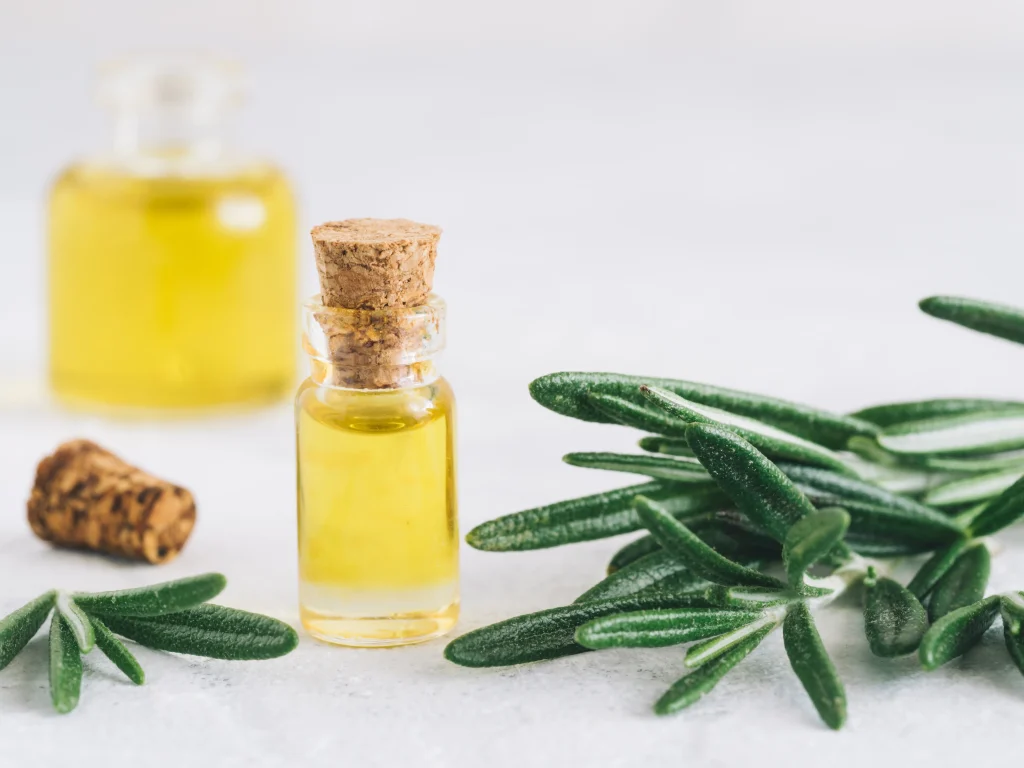
A study compared rosemary oil vs minoxidil 2% in people with androgenetic alopecia over six months. Both groups showed a significant increase in hair count by the end of the study, and no significant difference was found between the study groups regarding hair count. That’s a real finding, and it’s why rosemary oil for hair growth has earned a legitimate spot in the conversation.
But most of what circulates online about this study strips out the context. The comparison was with minoxidil 2%, not the 5% formulation. It was a single study with 100 participants. And rosemary oil is not a substitute for a full hair loss evaluation.
Understanding what the research on rosemary actually shows makes it easier to decide how it fits into your plan.
What the Randomized Comparative Trial Actually Tested
The hair growth study was conducted by Panahi et al. and published in SKINmed in January 2015. It enrolled 100 participants with male pattern hair loss or female pattern hair loss consistent with androgenetic alopecia. Half used topical rosemary oil; half used a minoxidil solution at 2% concentration. Both groups applied their treatment twice daily for six months.
Participants in the rosemary group received a formulation containing rosemary leaf extract. They were instructed to apply it to the scalp and massage the oil in consistently, twice per day. The minoxidil group followed the same protocol with a standard 2% topical minoxidil solution.
At six months, researchers measured mean hair count using standardized photography in a defined scalp area. Both groups showed improvement from baseline. Critically, no significant difference was found between the study groups regarding hair count at the six-month mark. The hair count at the 6-month measurement point was the primary outcome, and both groups met it comparably.
One finding that stood out: scalp itching was more frequent in the minoxidil group than in the rosemary oil group. This is consistent with what many people experience with propylene glycol-containing minoxidil solutions, which can irritate sensitive scalps.
| Metric | Rosemary Oil Group | Minoxidil 2% Group |
|---|---|---|
| Treatment duration | 6 months | 6 months |
| Application | Twice daily, topical | Twice daily, topical |
| Hair count outcome | Significant increase | Significant increase |
| Group difference | No significant difference found between study groups | |
| Scalp itching | Less common | More frequent in the minoxidil group |
What the Results Mean and Where the Study's Limits Are
The efficacy of rosemary oil shown in this trial is genuine. A significant hair increase in the oil group, matching minoxidil 2% over six months, is meaningful. The researchers used objective measurement, and the results held up. It’s fair to say rosemary oil works for hair loss due to androgenetic alopecia, based on this data.
But it’s equally important to be clear about what the study doesn’t prove. This was a single trial with 100 participants. It only compared the two treatments within the types of hair loss that fall under androgenetic alopecia. And the rosemary oil and topical minoxidil comparison used the 2% strength, not minoxidil 5%, which is the more widely used and stronger formulation.
The rosemary oil vs minoxidil conversation that’s popular online tends to treat this study as a knockout. It isn’t. What it does is establish that the properties of rosemary oil are real, that the effects of rosemary oil on hair follicle activity are measurable, and that rosemary oil is a legitimate supporting tool for people managing pattern hair loss. It doesn’t prove that rosemary oil alone is sufficient for everyone experiencing hair loss.
How Rosemary Oil Works for Hair
Rosemary oil is a natural essential oil extracted from the rosemary plant. It’s been used in various traditional health contexts for generations, but the interest in rosemary oil for hair growth is now backed by specific biological evidence.
The properties of rosemary that matter most for hair health include its ability to improve blood circulation in the scalp. Better blood flow means more oxygen and nutrients reaching each hair follicle, which supports the hair growth cycle directly. It was noted that the mechanism behind rosemary oil’s effects may partly involve inhibition of 5-alpha-reductase, the same enzyme that finasteride and minoxidil affect in the treatment of androgenetic alopecia.
Rosemary extract also contains carnosic acid and ursolic acid, both of which show anti-inflammatory activity in lab settings. Chronic low-grade scalp inflammation is associated with follicle miniaturization, so reducing it may help slow hair loss over time.
Rosemary essential oil is too concentrated to apply directly to most scalps. The standard guidance is to dilute the rosemary oil in a carrier oil, like jojoba, argan, or coconut, before applying it to the scalp. Typically, a few drops of essential oil per tablespoon of carrier oil are sufficient. The concentration of rosemary used in the clinical trial was a standardized formulation, which may differ from off-the-shelf serums containing rosemary oil.
That said, a number of commercial hair serums and shampoos containing rosemary oil are now available. Not all are formulated to the same concentration, and the research on rosemary is specifically tied to scalp application, not oral supplementation or rinse-off products.
Minoxidil: Still the Clinical Benchmark
Minoxidil remains the most extensively studied hair loss treatment available without a prescription. It’s FDA-approved for androgenetic alopecia in both men and women, and it has decades of clinical data behind it.
Topical minoxidil promotes hair growth by widening blood vessels near the scalp, improving follicle circulation and extending the growth phase of the hair growth cycle. The topical minoxidil formulations most used today include minoxidil 5% foam and solution for men, and 2% or 5% foam for women. Some providers now also prescribe oral minoxidil at low doses, which acts systemically to reach all follicles rather than only the areas where you apply it.
The randomized comparative trial that compared rosemary oil and minoxidil used minoxidil 2%, not the 5% version. That’s a meaningful distinction. Minoxidil 5% typically produces stronger outcomes than 2%, so the oil vs minoxidil 2% comparison doesn’t tell us how rosemary oil would perform versus the higher concentration. It also doesn’t compare rosemary oil to prescription hair loss options like finasteride and minoxidil used in combination, which represent a more intensive treatment standard.
For people who experience scalp irritation with topical minoxidil solutions, rosemary oil is a meaningful alternative or addition. For people with progressive androgenetic alopecia, minoxidil, particularly at higher concentrations or in oral form, still represents the stronger evidence base.
Can You Use Rosemary Oil and Minoxidil Together?
This comes up constantly, and the answer is that there’s no clinical evidence suggesting any harm in using rosemary oil and minoxidil together. Many people who use minoxidil and rosemary oil as part of the same routine report no issues, and some clinicians have recommended rosemary oil as a complementary addition, particularly for people who find minoxidil solutions cause scalp dryness or irritation.
The practical question with using rosemary oil and minoxidil together is timing. Applying both at exactly the same time could affect how each absorbs. Most people who use both products space them out, applying rosemary oil at one time of day and minoxidil at another, or alternating morning and evening. Using rosemary oil and topical minoxidil in the same routine, with some timing separation, is the most common approach.
What doesn’t yet exist is a well-powered clinical study on using rosemary oil and minoxidil together to see if the combination outperforms either treatment alone. The minoxidil and rosemary oil research exists in parallel tracks rather than as a combined study. That gap may close as interest in natural and complementary hair loss approaches continues to grow.
Where Rosemary Oil Fits in a Personalized Hair Loss Plan
For most people, rosemary oil works best as a supporting element in a broader plan rather than as a standalone treatment. It can contribute meaningfully to scalp health and hair growth, and the research on rosemary for androgenetic alopecia is credible. But rosemary oil alone is unlikely to be sufficient for someone with significant or progressing hair loss.
The more useful question isn’t whether to use rosemary oil or minoxidil, but which combination of approaches best addresses the specific type and cause of your hair loss. Androgenetic alopecia driven by DHT sensitivity responds to different interventions than stress-related hair loss or an autoimmune condition. And within androgenetic alopecia, the right combination of treatments varies from person to person based on genetics, hormone profile, and how far the loss has progressed.
HairClub RXTM is built on that personalization principle. Rather than choosing between whether to use rosemary oil for hair or minoxidil, HairClub RX starts with a DNA6 analysis, a simple buccal (cheek) swab, to identify which active ingredients and delivery methods are most likely to produce real results for your biology.
A licensed telehealth9 provider reviews your results and medical history before prescribing a compounded medication that may include minoxidil among other targeted ingredients. Each prescription is matched to the individual, which means the dose of minoxidil, and whether other agents are added, is based on your specific profile rather than a generic formula.
The program also includes sulfate-free, premium hair care products, daily supplements, in-center hair therapy sessions, and quarterly progress tracking with a certified HairClub specialist. For people who want a more systematic approach to hair regrowth than a single ingredient can provide, that kind of structured plan offers a clearer path forward.
Frequently Asked Questions
Does rosemary oil really work for hair loss?
Yes, it can. The study found a significant increase in hair count in participants who used rosemary oil over six months, matching the minoxidil 2% group. The efficacy of rosemary oil in that study was real and measurable for androgenetic alopecia. It’s one trial, but it’s well-designed and frequently cited. Rosemary oil works for hair, particularly as a supporting treatment for early-stage pattern hair loss.
Is rosemary oil better than minoxidil?
The hair growth study found no significant difference between the study groups when comparing rosemary oil to minoxidil 2% at six months. Rosemary oil also caused fewer side effects, with scalp itching more frequent in the minoxidil group. But “better” isn’t a clean answer. For significant or advancing hair loss, minoxidil, especially at higher concentrations, has a stronger overall evidence base.
How do you use rosemary oil on your scalp?
Most protocols recommend diluting the rosemary oil in a carrier oil before applying it to the scalp. Use a few drops of essential oil per tablespoon of carrier oil (jojoba and coconut oil are common choices). Apply to the scalp and massage the oil in gently, once or twice daily. The concentration of rosemary in the clinical trial used a standardized formulation, commercial serums containing rosemary oil may vary in potency, so results aren’t always directly comparable.
Can you use minoxidil and rosemary oil together?
Yes, and many people do. There’s no evidence that using rosemary oil and topical minoxidil together is harmful or reduces the effectiveness of either. Spacing the applications, rosemary oil at one time of day, minoxidil at another, allows each to absorb properly. Whether minoxidil and rosemary oil together outperform either treatment alone hasn’t been studied directly, but the combination is widely used without reported issues.
Is rosemary oil a substitute for prescription hair loss treatment?
For most people, no. Rosemary oil works best as a supportive element alongside other treatments rather than as a replacement for prescription hair loss options. Finasteride and minoxidil work through well-established mechanisms that rosemary oil may not fully replicate, especially for moderate or progressing androgenetic alopecia. A hair loss specialist can help determine where rosemary oil fits within a plan that addresses the actual cause and stage of your loss.
The Takeaway on Rosemary Oil vs. Minoxidil
The rosemary oil vs. minoxidil study gave us something genuinely useful: real clinical evidence that a natural essential oil can produce measurable hair growth outcomes. Rosemary oil is a natural ingredient worth taking seriously, especially for people who experience side effects from topical minoxidil or who want to build a routine around supporting scalp health and hair growth alongside other treatments.
What it doesn’t do is settle the broader question of how to treat hair loss. Whether you’re considering rosemary oil, minoxidil, finasteride and minoxidil in combination, or a DNA-personalized program like HairClub RX, the most useful starting point is knowing your stage of hair loss and which approach fits your goals.
Get a personalized plan, not a generic answer.
HairClub offers complimentary consultations where a Certified Hair Loss Specialist evaluates your scalp and hair using innovative technology and walks you through the options that fit your situation. There’s a starting point for every type of hair loss.
©2026 HairClub. All rights reserved. Results may vary.