
Itchy scalp and hair loss can show up together, but they don’t always stem from the same cause. Identifying what’s behind both is the key to finding the right treatment.
Key Takeaways:
- An itchy scalp doesn’t directly cause hair loss, but the scalp conditions behind the itch often affect hair follicles.
- The most common causes include seborrheic dermatitis, scalp psoriasis, tinea capitis, alopecia areata, and contact dermatitis.
- Most hair loss tied to scalp inflammation is temporary when treated early.
- Left untreated, some conditions can lead to permanent hair loss through follicle scarring.
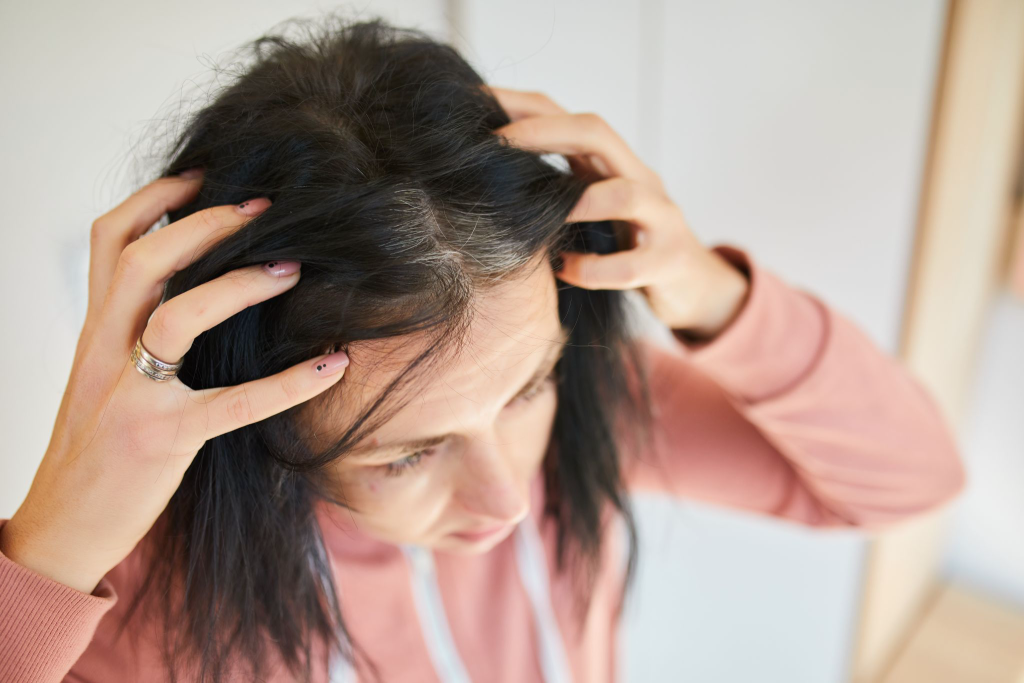
An itchy scalp is uncomfortable enough on its own. Combine it with noticeable hair shedding, and most people understandably want answers fast. The connection between itchy scalp and hair loss is real, but it’s not always straightforward.
Sometimes the itch and the hair loss share the same root cause. Sometimes they’re two separate things happening at the same time. What matters is figuring out which situation you’re dealing with, because hair loss due to a scalp condition responds very differently to treatment than hair loss from other causes.
Here’s a clear look at what causes itching and hair loss together, when it becomes a serious concern, and what actually helps.
Does an Itchy Scalp Actually Cause Hair Loss?
Not directly. The itching itself isn’t what makes hair fall out. But scratching your scalp repeatedly can physically damage the hair shaft and the follicle opening, especially when there’s already inflammation beneath the surface. And several conditions that cause an itchy scalp also interfere with the hair follicle in ways that slow hair growth or trigger shedding.
The underlying cause is what matters most. Some scalp conditions create temporary hair loss that resolves once the scalp inflammation clears. Others, left untreated long enough, can lead to damage to hair follicles that’s much harder to reverse.
Hair loss and itchy scalp happening at the same time deserve a proper look, not an alarm, but a real evaluation of what’s going on at the scalp and hair follicle level.
The Main Causes of an Itchy Scalp and Hair Loss
A range of scalp conditions can cause both itching and hair loss. Some are common, some less so. Here’s a quick reference before the full breakdown:
| Condition | Key Symptoms | Hair Loss Type | Reversible? |
|---|---|---|---|
| Seborrheic Dermatitis | Oily, flaky scalp; itching; redness | Mild, diffuse thinning | Usually yes |
| Scalp Psoriasis | Thick scaly plaques; intense itching | Patchy, around plaques | Usually yes |
| Tinea Capitis | Itchy bumps; scaling; hair breakage | Patches with scaling | Yes, with treatment |
| Alopecia Areata | Smooth round patches; scalp tingling | Patchy hair loss | Often, varies |
| Contact Dermatitis | Redness; itchy skin; reaction to products | Diffuse shedding | Yes, once resolved |
| Folliculitis | Inflamed red bumps; scalp itching | Can scar if chronic | Early: yes. Late: risk of permanent loss |
Seborrheic Dermatitis and Dandruff
Seborrheic dermatitis is one of the most common causes of a persistently itchy, flaky scalp. It produces a flaky scalp with redness and often a greasy texture, triggered by an inflammatory reaction to Malassezia, a yeast that lives naturally on the skin, including the scalp. Dandruff is the milder, non-inflamed version of the same underlying process.
Both can create enough scalp inflammation to disrupt the hair growth cycle over time. Most people with seborrheic dermatitis don’t lose significant amounts of hair from the condition alone, but chronic inflammation near the hair follicle can contribute to mild thinning of hair in affected areas. The good news is that this is usually reversible with consistent treatment.
Scalp Psoriasis
Psoriasis is a chronic autoimmune condition that affects skin and hair across the body, including the scalp. People who develop scalp psoriasis typically experience thick, silvery-white plaques on the skin on the scalp alongside intense itching. According to the National Psoriasis Foundation, roughly half of all people with psoriasis develop scalp involvement at some point.
Treatments for scalp psoriasis focus on reducing plaque buildup and scalp inflammation. These often include a medicated shampoo, topical corticosteroids, or coal tar formulas. Hair loss from psoriasis is typically temporary, but heavy scratching or picking at scalp plaques can physically damage hair follicles in those areas, causing patches of hair loss that may take longer to recover.
Tinea Capitis (Scalp Ringworm)
Ringworm of the scalp, also called tinea capitis or scalp ringworm, is a fungal infection affecting the scalp and hair shafts. Despite the name, there’s no actual worm involved. It’s a condition that causes patches of hair loss alongside itchy bumps, scaling, and redness. Hair may break off close to the scalp, leaving behind circular patches of hair loss with a rough or scaly texture.
Tinea capitis is more common in children but does affect adults. Without treatment, the infection can spread and cause more extensive shedding. The standard treatment is oral antifungal medication; topical treatments alone typically don’t penetrate the scalp and hair follicle deeply enough to clear the infection. Prompt treatment usually allows for full hair regrowth.
Alopecia Areata
Alopecia areata produces smooth, round patches of hair loss on the scalp, and while it doesn’t always cause intense itching, many people report scalp tingling, burning, or itching before the patches appear. Alopecia areata is an autoimmune condition that can range from a few small temporary patches to more widespread hair loss across the scalp.
Treatment options depend on the extent and duration of the hair loss. Some people recover fully on their own; others have recurrent episodes. A specialist can evaluate whether alopecia areata is the underlying cause and discuss what treatment options are realistic for the individual case.
Contact Dermatitis
Contact dermatitis occurs when the scalp reacts to something applied to it. Hair dyes are a common trigger, the ingredient para-phenylenediamine (PPD) in many permanent hair dyes causes reactions in a significant number of people. Hair care products, fragranced shampoos, and preservatives can also cause an itchy scalp reaction. The result is redness, itchy skin, and sometimes small bumps across the scalp.
Mild contact dermatitis usually clears up after removing the offending product. But if the reaction is strong or goes on for weeks, the resulting scalp inflammation can disrupt the hair growth cycle and contribute to hair shedding. If you’ve recently changed hair products and developed both scalp itching and hair loss at the same time, contact dermatitis is a reasonable place to start.
Folliculitis
Folliculitis is inflammation of the hair follicles, usually from a bacterial or fungal infection. It shows up as red, itchy bumps on the scalp, sometimes with a small amount of pus at the follicle openings. Mild cases often clear on their own or with a basic scalp care routine. More persistent cases need treatment with antibiotics or antifungal medication.
When folliculitis becomes chronic or is left untreated, inflammation of the hair follicles can cause hair follicles to become damaged. This may eventually lead to scarring, and once scarring occurs, that hair loss can become irreversible. It’s one of the clearer cases where catching the problem early makes a real difference.
When Itching and Hair Loss Become a Serious Concern
Most scalp conditions that cause both itching and hair loss produce temporary hair loss that responds well to treatment. But some situations carry a real risk of permanent hair loss and knowing the difference matters.
Scarring alopecias, a group of conditions including lichen planopilaris, frontal fibrosing alopecia, and discoid lupus, cause irreversible hair loss by replacing the hair follicle with fibrous scar tissue. These conditions often begin with scalp inflammation, redness, and itching around the follicle openings before progressing. Once the follicle structure is replaced by scar tissue, hair loss in that area typically won’t recover.
The difference between temporary and irreversible hair loss often comes down to how quickly the cause is identified and treated. If you’re seeing patches of hair loss, an inflamed scalp that isn’t clearing up, burning or tenderness around the hairline, or severe hair loss that developed quickly, those are signals to have someone properly examine your scalp rather than wait it out.
How to Treat an Itchy Scalp and Support Hair Regrowth
The right treatment option starts with identifying the underlying cause. There’s no single effective treatment that covers every cause of itchy scalp and hair loss, the approach for seborrheic dermatitis looks different from the approach for alopecia areata or tinea capitis.
Shampoo and Scalp Care
For seborrheic dermatitis and dandruff, a medicated shampoo containing zinc pyrithione, ketoconazole, coal tar, or salicylic acid is usually the first step. These target the yeast or buildup driving the scalp inflammation. Most people see improvement within four to eight weeks of consistent use.
For mild general irritation or dry scalp, switching to a gentle shampoo free of sulfates, heavy fragrances, and harsh preservatives can reduce irritation while keeping the scalp clean. Keeping the scalp clean consistently matters, product buildup near the follicle opening can contribute to inflammation and slow hair growth. Good scalp care doesn’t need to be complicated; the goal is supporting a healthy environment for hair to grow. Look for formulas specifically designed for scalp health rather than generic hair care products.
Scalp Treatments and Medical Options
For more persistent or inflammatory scalp conditions, scalp treatments go beyond what a shampoo alone can do. Topical corticosteroids reduce inflammation in psoriasis and severe dermatitis. Antifungal medications, both topical and oral, address fungal causes. For alopecia areata, treatment options include corticosteroid injections, topical immunotherapy, and JAK inhibitors — the right choice depends on how extensive the hair loss is and how long it’s been present.
Treating hair loss that’s connected to a scalp condition means treating the scalp condition first. Hair regrowth, when it does happen, follows once the underlying inflammation or infection is controlled. The skin and hair are connected — what affects one often affects the other.
Where HairClub RX Fits In
For people who’ve managed a scalp condition but are still seeing pattern hair loss, thinning hair, or want a more personalized treatment plan, HairClub RX™ offers a DNA6-based approach to hair loss treatment. It starts with a cheek swab to analyze genetic markers related to hair and scalp response. A licensed telehealth9 provider then reviews your DNA results alongside your medical history to determine which combination of active ingredients is most appropriate for your biology.
Compounded medications may include ingredients that support scalp health, reduce scalp inflammation as part of a broader treatment approach, and promote hair growth in ways tailored to your individual genetics. The program also includes in-center hair and scalp analysis using a high-magnification tool, quarterly progress tracking, and a premium hair care products designed to work with the program cohesively.
HairClub RX is available at participating HairClub locations. A complimentary consultation is the starting point to see whether the program fits your situation.
Common Mistakes That Make Itching and Hair Loss Worse
A few patterns consistently make both conditions harder to address:
- Scratching without investigating. Scratching your scalp may relieve itching for a moment, but it physically damages the hair shaft, irritates the skin on the scalp further, and can introduce infection. It also does nothing to address the cause.
- Using the wrong products. Some people layer on more oils, serums, and styling products in response to an itchy scalp. This can worsen buildup and inflammation, particularly if the scalp is already reacting to hair care products. Simpler is usually better until the cause is identified.
- Assuming it’s just dandruff. Dandruff is a common cause of scalp itching, but it’s not the only one. Treating a flaky scalp only with an over-the-counter anti-dandruff shampoo can delay effective treatment for scalp ringworm, psoriasis, or folliculitis, all of which need different approaches.
- Waiting too long. Most scalp conditions that cause temporary hair loss respond well to early treatment. The longer inflammation persists around the scalp and hair follicles, the greater the risk that shedding becomes more significant, or that follicle damage starts to become irreversible.
Frequently Asked Questions
Does an itchy scalp always mean hair loss is coming?
No. An itchy scalp on its own doesn’t cause permanent hair loss. But several scalp conditions that cause itching, like seborrheic dermatitis, scalp psoriasis, and tinea capitis, can also affect hair follicles in ways that lead to hair loss if left untreated. Whether hair loss follows depends on the underlying cause and how quickly it’s addressed.
Is hair loss from scalp conditions permanent?
Most hair loss tied to scalp inflammation is temporary and improves with treatment. Permanent hair loss becomes a real risk when conditions that cause scarring, like folliculitis or lichen planopilaris, go untreated long enough to damage the follicle structure. The earlier the scalp condition is treated, the better the chances of full hair regrowth.
What's the difference between dandruff and seborrheic dermatitis?
Dandruff is the milder version, flaking without significant redness or inflammation. Seborrheic dermatitis involves more visible redness, scaling, and sometimes oiliness on the scalp. Both share a similar cause (Malassezia yeast) and often respond to similar medicated shampoo treatments, but seborrheic dermatitis may require a longer or stronger treatment approach.
How do I know if my hair loss is from a scalp condition or something else?
Scalp-related hair loss usually comes with visible signs on the scalp itself; redness, flaking, scaling, itchy bumps, or patches of hair loss with changes to the skin on the scalp. If your hair loss is more diffuse with no visible scalp changes, or follows a predictable pattern without itching, it may be pattern hair loss or another systemic cause rather than a scalp condition. A proper evaluation can determine which situation applies to you.
Should I see a doctor for hair loss and itchy scalp?
Yes, particularly if the itching persists, hair loss is noticeable, you have patches of hair loss with scaling or inflammation, or standard over-the-counter treatments aren’t helping. A dermatologist or hair loss specialist can examine your scalp, identify the cause, and build a treatment plan specific to your situation. Waiting and hoping it resolves on its own is the approach most likely to make both problems worse.
What shampoo is best for an itchy scalp with hair loss?
The best shampoo depends on the cause. For dandruff or seborrheic dermatitis, shampoos with ketoconazole, zinc pyrithione, or salicylic acid are commonly recommended. For mild scalp irritation, a gentle shampoo without sulfates and heavy fragrance is a sensible starting point. For psoriasis or scalp ringworm, medicated shampoo is part of the treatment plan but usually not enough on its own. If you’re not sure what’s causing your scalp condition, getting a proper evaluation before picking a remedy is more useful than cycling through products.
Getting the Right Answer for Your Scalp
An itchy scalp and hair loss happening at the same time can feel alarming, but the causes are usually identifiable and, in most cases, treatable. The key is understanding what’s actually driving the combination, because that determines everything about how to approach it effectively.
Whether you’re dealing with a scalp condition that’s affecting your hair, managing ongoing hair loss alongside scalp issues, or simply trying to understand what’s going on, getting a proper evaluation is the most useful first step.
Not sure where your scalp issues are coming from?
If you are experiencing hair loss, HairClub offers complimentary consultations to determine your stage of hair loss and offer solutions based on your lifestyle and budget.
Book a complimentary consultation at one of over 100+ locations in North America today.