
Custom Hair Systems: How They're Made, Fitted, and Cared For
Everything you need to know about how a custom hair system is designed, built, and fitted, from your first measurement to ongoing care.
Key Takeaways:
- A custom hair system is built around your scalp, hair color, density, and texture, not a stock size or shape.
- The process runs from consultation and measurement through design, crafting, and a final fitting and styling appointment, typically taking about 4 to 6 weeks.
- Base material and hair type (human, synthetic, or a blend) affect how natural a system looks and how you’ll care for it.
- How long a system lasts depends on materials, wear, and maintenance. Your hair specialist will walk you through a care and reattachment schedule built around your system.
If you’re looking into hair replacement, you’ve probably noticed the same question keeps coming up: Is a custom hair system actually different from the stock wigs and pieces sold online, or is that just marketing? It’s a fair question, and the answer is that the difference comes down to how the system is built and who it’s built for.
This guide walks through what a custom hair system actually is, how it’s designed and made, what it’s made of, and what to expect from the process, so you know exactly what you’re signing up for before you book a consultation.
What Is a Custom Hair System?
A custom hair system is a personalized hair replacement system built to match your individual scalp shape, hair pattern, texture, and overall look. That’s the core difference between a custom and a stock hair system: stock hair systems are pre-made to fit a wide range of people reasonably well, while a custom system is made specifically for you.
It can be tailored across several dimensions, including hair color, hair density, hair length, hair type, texture or curl pattern, the amount of gray if needed, and the shape and size of the area being covered. A hair system can be made with human hair, synthetic hair, or a blend of both. Human hair systems tend to move more naturally and can give a softer, more realistic finish, though they typically cost more and require more upkeep than synthetic systems.
Custom vs. Stock: Why the Difference Matters
You can find wigs and hair systems online in a handful of standard sizes, colors, and lengths. That can work for temporary or occasional use, but it usually shows: an off-the-shelf cap size, a slightly-off color match, or a hairline that doesn’t quite sit right with your natural growth pattern.
Going custom matters most if you need a precise cap size and circumference, want a specific custom color, prefer a particular texture or length, need a secure fit for daily wear, or want the most realistic hairline possible. A custom hair system is created around your measurements and goals from the start, instead of asking you to fit a generic template.
How the Process Works: From Consultation to Delivery
Getting a custom hair system follows a consistent process, though the exact timeline depends on complexity, your chosen color and density, and material availability.
1. Consultation and measurement
Your journey starts with a private consultation. A HairClub Specialist assesses your current hair, discusses the type of system you want, reviews your requirements and preferences, and takes precise measurements, including head circumference, to determine the correct cap size. If you still have some of your own hair, your Specialist will also discuss how to prepare it so your new system sits smoothly underneath.
2. Design and customization
Once measurements are complete, you’ll select your preferred color (matching your natural shade or going for a deliberate change), choose length, pick a style, decide on density, and confirm your preferred base construction.
3. Crafting your system
Every custom system is handcrafted. Your measurements are used to order and build your system, a natural-looking hairline is created, and internal elastic, comb, or tape support options are set up so it can be attached securely.
4. Timeline and shipping
A custom hair system is typically ordered and crafted in about 4 to 6 weeks, though this varies with complexity, color, and material availability. Your specialist will walk you through the estimated timeline and how your system will be securely shipped and protected in transit.
5. Fitting and styling
Once your system arrives, you’ll come in for a fitting appointment. Your specialist ensures the fit is right, adjusts the hairline, performs light cutting if needed, and shows you how to wash, style, and care for your new system.
What a Hair System Is Made Of: Base and Hair
A hair system has two main parts: the base and the hair attached to it.
The base. The system base sits directly against your scalp, so the material affects comfort, breathability, and how natural the final result looks. Common base options include lace (lightweight and breathable), thin skin bases (smooth and close to the scalp, sometimes described as a second layer of skin), and hybrid designs that combine materials for a balance between durability and a natural appearance.
The hair. The hair used can be human, synthetic, or a blend of both. Real human hair strands tend to make it easier to match your personal hair and mimic natural hair growth, while synthetic or blended options can offer a lower-maintenance, more budget-friendly alternative. High-quality hair and carefully matched hair specifications are what make the final result look and move like your own hair.
How a Hair System Is Attached and Cared For
A hair system is usually attached using professional-grade adhesive or tape. Which method is used depends on your base type, your skin, and how long you want the system to stay secure between appointments. The attachment method affects comfort, hold, scalp sensitivity, wear time, and how much maintenance the system needs.
Wearing a system day to day comes with a maintenance routine that your specialist will set up with you, generally including regular cleaning, periodic reattachment, styling touch-ups, and care for the base to protect the delicate area underneath.
Will a Custom Hair System Look Natural?
Yes. When it’s made and fitted properly, a custom hair system can look and move very naturally. Modern base materials and attachment methods are designed to sit closer to the scalp, move more like real hair, and create the appearance of a full head of hair without looking bulky or obvious.
How Long Does a Hair System Last?
How long a hair system lasts depends on several factors: the base material, whether it’s made with human or synthetic hair, your day-to-day routine, how often you wear it, and how well it’s maintained. Because these factors vary so much from person to person, your specialist will give you a maintenance schedule and expected wear timeline specific to your system during your consultation and fitting, rather than a single number that applies to everyone.
Ongoing care, including cleaning, reattachment, styling, and protecting delicate areas of the base, plays a significant role in how long your system continues to look and perform well.
What Does a Custom Hair System Cost?
Your hair system cost depends on the level of customization involved. A custom hair system typically costs more than a stock hair system because it’s made specifically for you and often includes more detailed fitting, matching, and styling work.
Factors that affect the cost of a hair system include the size of the area being covered, the base material used, human hair versus synthetic hair, chosen density, the level of styling and blending needed, and ongoing maintenance and follow-up appointments. Many clients see it as a worthwhile hair loss solution because it offers fast, visible results without surgery. Your specialist will review specific pricing with you and disclose costs before you leave your initial consultation.
Custom Hair System vs. Other Hair Loss Solutions
A hair transplant* uses your own hair follicles, moved from one area of the scalp to another, and is a permanent, surgical solution. A custom hair system is a non-surgical option that gives you immediate coverage once it’s ready. A hair system may be the better fit if you want fast results, no surgery, more flexibility, help with thinning or patchy areas, or a solution to use alongside other treatments while you wait to see results elsewhere.
A custom hair system isn’t the only non-surgical path, either. If you’re in the early stages of thinning and want to work on regrowing and strengthening your own hair, HairClub’s prevention and regrowth programs are worth exploring as a complement or an alternative. If you want the look of added density without a full system, scalp micropigmentation is another non-surgical option some clients choose instead, or alongside a hair system. A consultation is the best way to compare these paths against your specific goals.
There’s no single right answer for everyone. The best choice depends on your hair loss pattern, hair type, budget, timeline, and personal style goals. A HairClub specialist will assess your scalp and hair and recommend an option, or combination of options, based on your goals during your consultation.
Why HairClub Is the Expert
HairClub has served more than 500,000 clients for over 50 years, with 100+ centers across the U.S., Canada, and Puerto Rico. That means your custom hair system isn’t designed from a photo or an online form. It’s built around an in-person consultation and hands-on hair and scalp analysis with a Certified Hair Loss Specialist, so your plan reflects your actual scalp, hair, and goals, not a generic template.
If you’re still comparing your options or ready to move forward, a HairClub Specialist can help you find a personalized hair replacement solution that looks natural and fits your lifestyle.
Frequently Asked Questions
What's the difference between a wig and a hair system?
A wig usually covers the full head, while a hair system focuses on one thinning or bald area and is designed to blend with the hair you still have.
Are hair systems made from real human hair?
Some are. A hair system can be made using human hair, synthetic hair, or a blend of both. If you want the most natural look and movement, real human hair is often preferred, though it typically costs more.
Can a hair system match gray hair?
Yes. A custom hair system can be designed to include gray hair and matched carefully to your existing shade and overall look.
Can I wear a hair system if I still have some of my own hair?
Yes. Many systems are designed specifically to blend with existing hair, especially around the sides and back.
Can a hair system be cut and styled like real hair?
Yes. After professional installation, a stylist gives you a haircut that blends the hair system with your natural hair. Systems using human hair can also be colored, bleached, and heat-styled. Synthetic hair has some heat limitations, but can still be worked into most hairstyles.
How long does it take to get a custom hair system?
From your initial consultation and measurement to a fitted, styled result, the process typically takes about 4 to 6 weeks, depending on complexity, color, and material availability.
Ready to Find Your Solution?
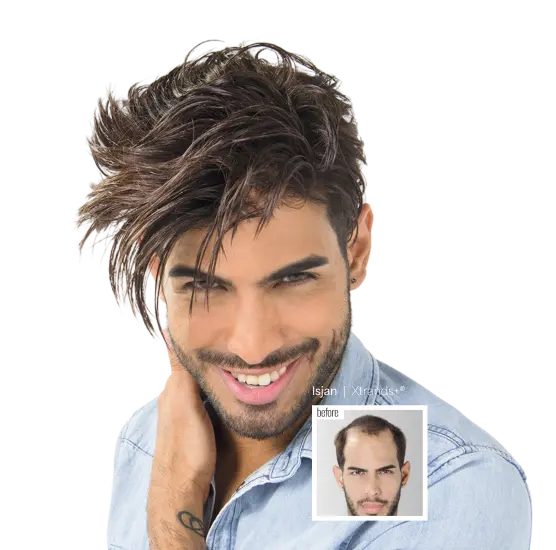
At HairClub, our Xtrands+ hair system is designed to do more than just cover an area. It’s created to suit your life, your look, and your goals. Whether you’re still comparing your options or you’re ready to move forward, book a complimentary consultation today and see how a custom hair system can help you move forward with confidence.
Book your complimentary consultation to get started.
*Professional hair transplantation services provided by the affiliated physicians of Bosley Medical Group, P.C. (“BMG”). Please note that no procedures are performed at BMG until candidacy has been examined, diagnosed, and accepted for treatment by a BMG physician. Results may vary. [Legal to confirm whether the standard disclaimer wording, which includes the word “patient,” must be used verbatim — see Conflict Log #6 in Document 1.]