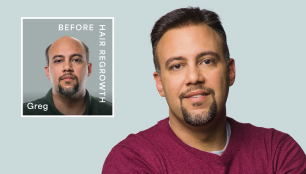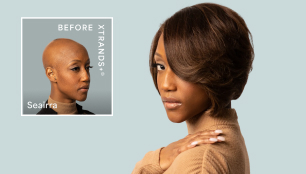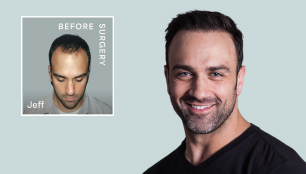

Not all hair loss is the same—and neither is the treatment. Here’s your guide to see how they differ.
Key Takeaways:
- Alopecia is a broad term for hair loss of any kind. Baldness is one specific form of it.
- Androgenetic alopecia is the most common type affecting both men and women.
- Not all alopecia is genetic. Some types are autoimmune, stress-related, or caused by physical strain on the hair.
- The right treatment depends on the type and cause of your hair loss, not just how much hair you’ve lost.
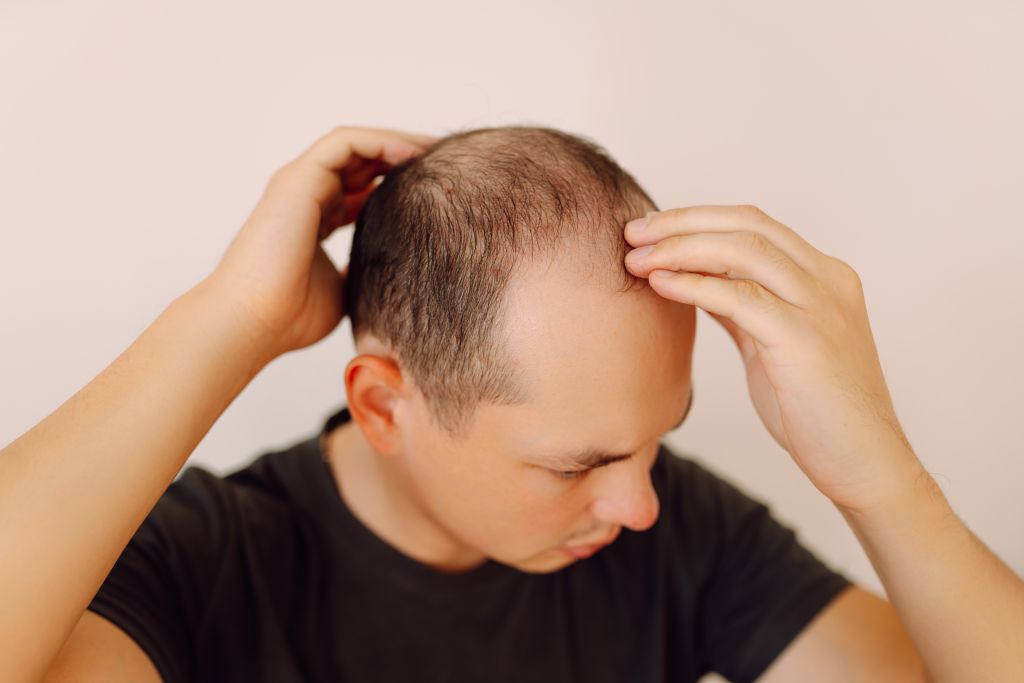
Alopecia and baldness often get used interchangeably, but they don’t mean the same thing. And that distinction matters, because understanding which type of hair loss you’re dealing with is what points you toward the right treatment.
Alopecia is a broad term that covers all types of hair loss; from thinning hair along the crown, to patchy hair loss, to complete scalp or body hair loss. Baldness usually refers to one specific and very common form of alopecia: the hereditary type that follows a predictable pattern. Most people searching for answers are somewhere in this space, trying to figure out what’s normal, what’s treatable, and what to do next.
Alopecia Is a Broad Term. Baldness Is One Type.
The word alopecia comes from the Greek word for fox, a nod to the seasonal fur shedding foxes were observed doing. Today, it’s a clinical umbrella term used to describe any condition involving the loss of hair from the scalp or body. According to the American Academy of Dermatology, there are dozens of conditions that fall under this label.
Baldness, specifically androgenetic alopecia, is the most common type of hair loss in both men and women. It’s hereditary, hormone-driven, and follows predictable patterns over time. When most people picture balding, this is what they mean: a receding hairline in men, or a widening center part and generalized diffuse thinning hair in women.
But alopecia doesn’t stop there. Several other forms of alopecia look very different from pattern baldness and respond to different treatments. Knowing which category you’re in is the starting point for taking any useful action about it.
The Most Common Type: Androgenetic Alopecia (Pattern Hair Loss)
Androgenetic alopecia affects roughly 50 million men and 30 million women in the United States, according to the NIH National Library of Medicine. It’s driven by a combination of genetics and hormones, specifically dihydrotestosterone (DHT), which causes hair follicles to shrink over time until they stop producing hair.
Male Pattern Baldness
Male-pattern baldness, the most recognized form of androgenetic alopecia in men, typically starts with a receding hairline at the temples and thinning at the crown. Over time, these bald areas can merge into near-total baldness. By age 35, about two-thirds of American men will have some degree of hair loss, and by age 50, about 85% will have significantly thinning hair.
The pattern of hair loss in men follows the Norwood-Hamilton scale, which tracks progression from a slightly receding hairline to a large bald area. Genetics play the biggest role in how quickly and aggressively this happens. A family history of hair loss on either parent’s side increases your risk.
Female Pattern Hair Loss
Female pattern baldness is less talked about, but it’s far from rare. Female pattern hair loss affects roughly 30 million women in the U.S. alone. Women with androgenetic alopecia typically experience a widening of the center part and/or diffuse thinning across the top of the scalp rather than a receding hairline. Total baldness is uncommon in women with this condition, but the loss of volume and density can be significant.
Hormonal shifts play a strong role here, too. The drop in estrogen around menopause can accelerate hair thinning in women who are genetically predisposed. This is why many women first notice female pattern hair loss in their 40s and 50s, though it can start earlier.
Other Types of Alopecia That Aren't Pattern Baldness
Not all hair loss follows the hereditary, hormone-driven pattern of androgenetic alopecia. Several other forms of alopecia have very different causes, symptoms, and treatment paths. Here’s a clear breakdown of the main ones:
| Type of Alopecia | What It Looks Like | Primary Cause |
|---|---|---|
| Alopecia areata | Patchy hair loss, usually round or oval-shaped | Autoimmune; immune cells attack hair follicles |
| Alopecia totalis | Total hair loss across the scalp | Autoimmune, a more severe form of alopecia areata |
| Alopecia universalis | Complete hair loss on the scalp and body | Autoimmune, the most extensive form |
| Traction alopecia | Thinning or bald patches at tension points | Repeated tension from hairstyles, extensions, or tight styling |
| Cicatricial alopecia | Patchy loss with scalp scarring; permanent without treatment | Inflammatory conditions that destroy follicles |
| Telogen effluvium | Diffuse, sudden shedding across the scalp | Physical or emotional stress, illness, or nutritional deficiency |
Alopecia Areata: The Autoimmune Type
Alopecia areata is another form of alopecia that often gets confused with pattern baldness because it can appear on the scalp. But the cause and the course of treatment is completely different. Alopecia areata affects about 6.8 million people in the U.S. It occurs when the immune system mistakenly attacks hair follicles, causing patchy hair loss that can appear suddenly.
In more severe cases, it can progress to alopecia totalis (total baldness on the scalp) or alopecia universalis (complete total hair loss on both scalp and body). Unlike androgenetic alopecia, alopecia areata can affect people of any age, including children, and doesn’t follow a predictable pattern of hair loss.
There is also a diffuse pattern type of alopecia areata that can mimic male or female pattern hair loss. This just re-iterates the need to see a hair loss specialist to help determine the cause of your hair loss.
Traction Alopecia: The Preventable Type
Traction alopecia is caused by sustained physical tension on the hair, from tight braids, extensions, weaves, or certain styling habits. It typically appears as thinning along the hairline or in balding areas where the tension is greatest. The good news: caught early, it’s largely reversible. Left untreated, it can cause permanent damage to the hair follicle.
Cicatricial Alopecia: Scarring Hair Loss
Cicatricial alopecia, also called scarring alopecia, is a rarer but more serious condition where inflammation destroys the hair follicle and replaces it with scar tissue. This results in permanent hair loss in the affected areas. It requires prompt medical attention and appropriate treatment to stop progression.
Alopecia vs. Baldness: The Key Differences
The simplest way to frame this: baldness (androgenetic alopecia) is a type of alopecia. But alopecia includes many other conditions that don’t look or behave like male or female pattern baldness. Here’s where they diverge:
| Pattern Baldness (Androgenetic Alopecia) | Other Forms of Alopecia | |
|---|---|---|
| Cause | Genetics + DHT (dihydrotestosterone) | Autoimmune, physical trauma, inflammation, or traction |
| Pattern | Predictable: temples, crown, top of scalp | Varies: patchy, diffuse, or total scalp/body |
| Who It Affects | Mostly adults; more common with age | Can affect anyone at any age |
| Progression | Usually gradual over years | Can be sudden (areata) or slow (cicatricial) |
| Reversible? | Manageable; harder to reverse without treatment | Depends on type; areata can regrow, scarring is permanent |
| Treatment | DHT blockers, minoxidil3, hair transplant1, hair systems | Varies by type; often requires specialist evaluation |
What Actually Causes Hair Loss: Genetics, Hormones, and More
For androgenetic alopecia, the cause of hair loss comes down to two things: genetics and DHT. DHT, short for dihydrotestosterone, is a hormone derived from testosterone. In people genetically predisposed to hair loss, DHT binds to receptors in hair follicles and causes them to shrink. Over time, these follicles produce thinner, shorter hairs until they stop producing hair entirely. This process is called miniaturization of the hair follicle, and it’s the defining feature of androgenetic alopecia in men and women.
The genetics of androgenetic alopecia are complex and polygenic, meaning multiple genes from both parents contribute. Despite the old belief that baldness is inherited only from the mother’s side, research confirms that a family history of hair loss on either side increases your risk.
For other types of alopecia, the causes look very different. Alopecia areata is autoimmune, the body’s own immune system attacks the hair follicle. Telogen effluvium is typically triggered by physical or emotional stress, illness, surgery, or hormonal shifts like postpartum changes. Traction alopecia is purely mechanical. These distinct causes mean what works for one type of hair loss often doesn’t work for another, which is exactly why identifying the specific type matters before choosing a treatment path.
Treatment Options Depend on Your Specific Type of Hair Loss
There’s no single course of treatment that works across all types of alopecia. The most effective treatment for pattern hair loss, androgenetic alopecia, targets DHT and the hair growth cycle. Other forms require different approaches entirely.
For Androgenetic Alopecia: Targeted Regrowth Programs
For people experiencing genetic hair loss, evidence-based treatments include FDA-approved medications like minoxidil and finasteride, as well as custom, compounded prescriptions built around individual biology. HairClub RX™ is a DNA6-driven program based on science and designed for men and women suffering from hair thinning and hair loss.
It starts with a cheek swab, DNA test to determine which active ingredients, including minoxidil, finasteride, dutasteride, and others, are most likely to produce results for your specific biology. A licensed, telehealth9 provider reviews the results and, if appropriate, prescribes a compounded prescription tailored to you.
On top of the prescription, the program includes daily supplements, sulfate-free, premium hair care products, in-center hair and scalp therapeutic sessions, and quarterly progress monitoring. For many people with androgenetic alopecia who want to improve hair growth without guessing at products, this kind of personalized approach addresses the problem more directly than online providers or over-the-counter options.
Hair Replacement for Pattern Baldness
For people with more significant pattern hair loss who want an immediate, non-surgical result, hair replacement is a well-established option. A custom hair system can match your natural hair color, texture, and scalp profile. Hair replacement techniques today are far more natural-looking than the hair replacement options of past decades.
Hair Transplant for the Right Candidates
A hair transplant1 is a surgical option for people with androgenetic alopecia who want a more permanent approach. It works by relocating hair follicles from areas of the scalp that aren’t affected by DHT (typically the back and sides) to balding areas. Results develop gradually over several months. A hair transplant is most effective for people with stable pattern hair loss and sufficient donor hair.
For Non-Androgenetic Types: Specialist Evaluation First
If your hair loss appears to be alopecia areata, cicatricial alopecia, or another autoimmune or inflammatory type, the treatment path is different. These conditions often require dermatological evaluation and treatments like corticosteroids, JAK inhibitors, or other medications that target the underlying immune or inflammatory response. Trying standard pattern baldness treatments on these conditions typically doesn’t produce the same outcome. A specialist can help determine the right starting point.
Frequently Asked Questions
What is the difference between alopecia and regular baldness?
Alopecia is a broad term covering all types of hair loss. Baldness, specifically, androgenetic alopecia or male or female pattern baldness, is one type of alopecia. The key differences lie in the cause: pattern baldness is genetic and hormonal (driven by DHT), while other forms of alopecia can be autoimmune, inflammatory, stress-related, or caused by physical tension. Not all alopecia is balding, and not all balding is alopecia in the broader clinical sense.
Can alopecia cause total baldness?
Yes, in some cases. Alopecia totalis causes total hair loss across the scalp, while alopecia universalis results in complete hair loss on both scalp and body. These are severe forms of alopecia areata and account for a small percentage of cases. Pattern baldness rarely leads to total baldness; most people with androgenetic alopecia retain hair around the sides and back of the scalp even as the top becomes thin or bald.
Is hair loss in women different from hair loss in men?
Yes, in pattern and presentation. Male-pattern baldness typically starts with a receding hairline and progresses to thinning at the crown. Female pattern hair loss more often appears as a widening of the center part or diffuse thinning across the top of the scalp without a receding hairline. Both are driven by genetics and DHT, but estrogen in women provides some protection, which is why hair loss often accelerates after menopause. Women experiencing hair loss should seek treatment early, as available options work better when addressed before significant follicle damage occurs.
Does alopecia areata always come back after treatment?
Alopecia areata can be unpredictable. Some people experience a single episode of patchy hair loss and then regrow their hair without recurrence. Others have repeated episodes. Hair regrowth is possible in many cases of alopecia areata, but the condition can also progress to more extensive loss.
How do I know if I have androgenetic alopecia or another type of alopecia?
The pattern matters. Androgenetic alopecia in men follows a predictable progression at the temples and crown. In women, it’s a widening of the center part or more diffuse thinning on the top of the scalp. Alopecia areata tends to appear as distinct round or oval patchy hair loss areas. Traction alopecia shows up near the hairline where tension is applied. Alopecia should be diagnosed by a licensed medical professional.
Can you treat alopecia at home, or do you need a specialist?
It depends on the type. Mild androgenetic alopecia can be managed at home with OTC treatments like minoxidil, but these work better with guidance and monitoring. More effective treatment for pattern hair loss typically involves prescription medications, which require a licensed provider. Other forms of alopecia, particularly alopecia areata, cicatricial alopecia, and hormonal types need a specialist to identify the correct diagnosis and an effective treatment. Treating the wrong type with the wrong approach delays results and can allow the condition to progress.
Understanding Your Hair Loss Is the First Step
Alopecia and baldness aren’t interchangeable terms and treating them as if they are can lead many people down the wrong path. Pattern hair loss is genetic and hormone driven. Other forms of alopecia are autoimmune, stress-related, or caused by physical factors. Each responds to different approaches.
If you’re losing your hair and trying to figure out what’s actually happening, a real evaluation with a specialist is more useful than any amount of online research. Understanding your specific type of hair loss is what makes the difference between a treatment that works and one that doesn’t.
Talk to a HairClub Specialist.
HairClub offers complimentary consultations with a Certified Hair Loss Specialist who can identify your stage of hair loss and walk you through the treatment options that make sense for your situation.
Whether you’re just starting to notice changes or have been experiencing hair loss for years, the right starting point is a clear picture of what’s actually happening.