
Hair Transplant Questions Answered by a Surgeon

Key Takeaways
- Candidacy is decided by your donor supply measured against your goals, not by whether you are healthy enough for surgery.
- The safe donor area at the back and sides of the scalp is a fixed, non-renewable resource, and how a surgeon spends it now determines what is possible in ten years.
- FUE and FUT produce comparable results once the grafts are placed, so the real choice is about scarring, shaving, and lifetime graft yield.
- Final results take close to twelve months, and judging the outcome at six months is premature.
- A transplant does not stop ongoing hair loss, so the hair you still have needs a plan of its own.
- The single most useful question to ask a clinic is who physically performs the extraction and the incisions.
- When there is not enough donor hair, non-surgical options can outperform a thin transplant.
Overview
This article is drawn from a recorded webinar with Dr. Jason Dudas, the physician at the Boca Raton location of Bosley HairClub. Dr. Dudas is a board-certified plastic surgeon with additional training in facial plastic surgery that includes hair transplantation, and he holds certification from the American Board of Hair Restoration Surgery. He has been in practice for about fifteen years.
Over roughly thirty-five minutes, he answered the questions patients ask most often: who is actually a candidate, how donor supply is measured, what makes a result look natural or fake, how FUE and FUT differ, what recovery is really like, what it costs, and what to do when a transplant is not the right answer. His responses are edited for length and organized here by topic rather than by running order.
Individual results vary. Nothing here replaces an in-person evaluation.
Facts and Figures
The numbers that came up most often, with their sources.
| Item | Figure | Source |
|---|---|---|
| Time to final result | About 12 months | Dr. Dudas |
| Socially visible recovery window | About 1 week | Dr. Dudas |
| Post-operative cleansing regimen | About 1 week | Dr. Dudas |
| Return to light or moderate activity | Within a few days | Dr. Dudas |
| Return to nearly all activity | About 2 weeks | Dr. Dudas |
| Underwater swimming | Avoid for about 1 month | Dr. Dudas |
| FUE compared with FUT | Equivalent results once grafts are placed | Dr. Dudas |
| Dr. Dudas in practice | About 15 years | Dr. Dudas |
| ISHRS membership | More than 1,100 surgeons across 70 countries | ISHRS |
Who Is Actually a Candidate, and Why It Is Rarely About Health
Most people clear the medical bar without difficulty. The procedure is done in the office under local anesthesia, so unless someone has significant medical issues, they are a candidate from a health standpoint.
The real question is different. As Dr. Dudas puts it, candidacy is about aligning a patient’s goals with what they actually have to work with. That is what the consultation is for. He reviews medical history, identifies the underlying cause of the hair loss, establishes which direction it is heading, and asks what has already been tried. Only then does the plan take shape.
When the plan is likely to be surgical, the conversation narrows to specifics: where the hairline should sit, which areas need better coverage, and whether there is enough donor material to reach that point. Sometimes there is not, and the goal has to be renegotiated. A surgeon willing to have that conversation early is telling you something useful about how they practice.
How a Surgeon Measures Whether You Have Enough Donor Hair
The back and sides of the scalp form what specialists call the safe donor area, the zone that resists pattern loss. Hair taken from there keeps its original identity after it is moved, which is why transplanted hair in a new location behaves the way it did in the old one.
Measuring that zone is a defined process rather than a guess. There are reliable dimensions specialists know to measure on the back of the head, which establishes the working area. Density within that area is then assessed: how many follicles, or grafts, sit in a given segment. Multiply the two, and you have the raw supply.
Hair quality is the third variable, and the one patients rarely think about. Transplanting fine, wispy hair is a different proposition from transplanting coarse, thick, curly hair, because coarser hair covers more scalp per graft. Dr. Dudas describes the difference as angel hair pasta versus linguine. Two patients with identical graft counts can end up with visibly different coverage for that reason alone.
Can a Transplant Look Natural, and What Makes One Look Fake?
The short answer is yes, it can look completely natural, with conditions attached. It has to be led by an expert physician working with a well-trained team, because the procedure has many components and each one has to be executed carefully.
Hairline design carries the most weight. A hairline has to look right immediately and continue to look natural over time, which means designing with how the patient’s appearance may change over the next twenty years in mind. Technical execution matters just as much: grafts placed at the correct angle, with the direction of growth matched to the zone they are going into. When those details are wrong, you get the telltale signs of an obviously artificial result.
Some patients have no surrounding hair left to guide the design, so the hairline is built from the core principles of how hair grows in each part of the scalp. Dr. Dudas notes that his plastic surgery background, with its grounding in facial proportion, aesthetics, and anatomy, feeds directly into that work. He is careful to add that excellent hair restoration surgeons come from several different specialties, and that no one background has a monopoly on good results.
FUE, FUT, and When Both Are Used in the Same Procedure
The difference between FUE and FUT is the harvesting technique, meaning how the grafts are obtained. Neither is inherently better than the other. Dr. Dudas frames them as two pathways to the same destination, and, in his view, patients who are candidates for either can expect comparable results regardless of the route they choose.
The trade-offs sit elsewhere. FUT leaves a linear scar; FUE leaves tiny dot scars. Some patients care a great deal about the linear scar; others not at all because their hairstyle covers it completely. Some are reluctant to shave their head for FUE, which is a genuine barrier if they need to look normal again quickly. And for a patient likely to need a large number of grafts across a lifetime, FUT can often yield more total grafts over multiple procedures.
The appeal of FUE, its minimal invasiveness and small scars, comes with its own risk: over-harvesting, where taking too much hair from the donor zone creates a new problem in place of the old one. Experienced practitioners know how to avoid it, which is precisely why the practice you choose matters.
For patients approaching the limit of what FUT can offer, there is a third option. FUT depends on scalp laxity, and after a third or fourth procedure, the scalp may simply not have enough left to give. Combining the two techniques in one session, which Bosley offers as DUO-MAX, can carry those patients further toward their goal. Dr. Dudas often recommends it when he knows a patient has one modest FUT round left and wants to make it count.
Once the grafts are ready, the two routes converge completely. Whether obtained by precision excision under FUE or dissected from FUT tissue under a microscope, the grafts are handled the same way: inspected for quality and damage, with any graft that is not implantable discarded rather than placed. The rest are sorted by caliber, so the finest grafts go into the hairline where it matters most and the bulkier ones sit further back.
Does It Hurt, and What Recovery Actually Looks Like
Patients arrive worried about pain far more often than they need to. Dr. Dudas reports that they consistently leave saying it was much easier than expected, with almost no pain. Nobody enjoys injections, but oral medication to help patients relax, combined with an experienced clinical team, keeps the experience comfortable.
Recovery has a defined shape. For about a week, there is a regulated cleansing regimen that has to be followed properly to protect the result. Some swelling is normal. Between the swelling, a shaved head if the procedure required one, and the appearance of the implants themselves, expect roughly one socially awkward week. A hat worn loosely is permitted during that stretch.
After that, most restrictions lift. Nearly everything is fair game at two weeks. Light to moderate activity is fine within a few days, with the key being to avoid friction around the graft sites. Lower-body exercise is generally not a concern. Patients who had FUT should avoid strain on the back of the head and neck, and underwater swimming is usually off the table for about a month.
Results follow a slower clock. It takes the better part of a year, and it happens month by month rather than arriving all at once. Many patients see little at six months, which is the hardest stretch, because by then they have been dealing with hair loss for years and waiting on top of it. At about twelve months, the final result is reliably visible.
Scarring, Described Honestly
FUT leaves a scar. The procedure borrows the scalp’s looseness to remove a segment of hair-bearing tissue, and the skin is then sewn edge to edge so no gap is left behind. Careful closure keeps it to a fine line that a short or medium hairstyle covers. A skin fade, a high tight fade, or a shaved head would reveal a fine pale line, and corrections are possible where that becomes an issue, including for patients who arrive with poor scars from work done elsewhere.
FUE leaves tiny dot-like scars in the donor zone. Even a little stubble camouflages them. A completely bare shave might show slight speckling for around twenty-four hours while the surrounding stubble grows back in.
One point worth holding onto: the ISHRS explicitly warns that there is no such thing as scarless hair restoration surgery, and treats that claim as an example of false and exaggerated advertising. Any clinic promising it is telling you something about itself.
Protecting the Hair You Still Have
A transplant relocates permanent hair. It does not protect the hair already on your head, and that hair is exactly what remains susceptible to ongoing loss. Hair loss is a process, not an event.
That is why Dr. Dudas asks how long the loss has been going on, whether it is getting better or worse, and how significant it is in the family history. The answers shape the plan. If a patient is likely to lose more hair, that has to be built in from the start, which often means deliberately holding donor supply in reserve for a future procedure rather than spending all of it now.
Being a careful custodian of the susceptible hair is part of the same plan, which is where non-surgical management comes in alongside surgery.
Where Medical Management Fits Alongside Surgery
Surgery is one component of a broader approach. HairClub RX is the program built around managing hair loss on an ongoing basis, and it includes genetic testing to establish how a patient metabolizes different medication options, along with an assessment of nutritional factors. Adjunct therapies such as low-level laser and red light therapy and PRP sit alongside it.
There is also a supporting product line, and Dr. Dudas is clear about the distinction. Hydrating the hair and supporting it with supplements does not treat the underlying condition, but it does help existing hair resist breakage and dryness. Returning to his pasta analogy: brittle pasta breaks off, and you end up with less of it, while pasta that is properly hydrated holds together.
Results vary by individual, and any medical program should be discussed with a physician who has evaluated you.
Hair Transplants for Women
Women can absolutely have hair transplants. The reason outcomes differ from men is that female hair loss is inherently different.
In most men, the underlying cause is male pattern baldness, which makes the procedure highly predictable: hair from a donor area is moved to a new location where it will essentially live permanently. Female pattern hair loss tends to be more diffuse, which means the donor area itself is less reliable as a source of permanent hair.
Dr. Dudas provides substantial education with female patients on this point. Good results remain achievable for the right candidate. It may simply be a longer road, and it may require setting priorities about which areas to address first, often combined with other treatments alongside the transplant rather than surgery on its own.
Eyebrow Transplants
Eyebrow transplantation is a permanent solution for a specific and increasingly common problem. Some patients have age-related brow thinning. Others have had microblading that did not deliver what they wanted and are looking for a genuinely three-dimensional result. Transplanting hair into the brow can work around prior microblading.
There is one thing every eyebrow patient needs to understand upfront. Because the hair comes from the scalp, it keeps growing indefinitely, so brow maintenance becomes ongoing: regular trimming and often styling with gels or waxes.
Technically, it is a demanding procedure. The brow is a delicate structure in terms of facial proportion and angle, and personal preference varies enormously, so design time with the patient matters. It is a small area and a small number of grafts, but it can take nearly as long as a much larger case because every single hair has to sit at the right angle. When the angles are wrong, the result is conspicuous. This is work for an expert.
Red Flags: Graft Splitting, Over-Harvesting and Delegated Surgery
Dr. Dudas raised one industry practice unprompted, and in blunt terms. Grafts can be divided into multiple pieces so a clinic can tell a patient it performed a higher graft count than it truly did. He described the practice as not honest and, for him, absolutely unacceptable and unethical.
This is not an isolated complaint. The ISHRS documents the same pattern and lists what its members see in patients who come to them for repair: scarring, unnatural hairlines, poor hair growth, wrong hair direction, depleted donor areas, and infections. Over-harvesting appears on that list for a reason. Once donor hair is taken from the back of the head, there is very little that can be done to replace it.
The third red flag is delegation. The ISHRS reports a turn-key model in which a physician buys a device, then hires technicians by the day to perform most or all of the procedure, including graft removal, hairline design, and the scalp incisions, while patients are led to believe a doctor is operating. The Medical Board of California has issued a direct warning that hair restoration surgery is the practice of medicine and may not be delegated to unlicensed individuals.
The ISHRS recommends asking these questions before you commit. They are worth writing down and taking to the consultation. Its full guidance sits on the Fight the FIGHT campaign site.
- Who will evaluate my hair loss and recommend a course of treatment, and what is their education, training, licensure, and experience?
- Who will be involved in performing my surgery, what role will each person play, and what is their training and experience?
- Will anyone not licensed by the state or country make incisions or harvest grafts? If so, who, and why are they permitted to do it?
- Is everyone involved in my surgery covered by malpractice insurance?
Dr. Dudas adds a further test that has nothing to do with credentials. Patients should walk out of a consultation feeling they were given good information rather than sold something, and that the practice was transparent about how many grafts they need and how those grafts will be counted.
Going Overseas for a Cheaper Transplant
Asked why anyone should not simply fly to Turkey and pay a fraction of the price, Dr. Dudas gave a more balanced answer than the question invited. There is good and bad work being done across the globe. Some of the most renowned hair transplant surgeons in the world are from Turkey, and he has colleagues there he meets at international conferences. There are also genuinely questionable practices operating in the United States. In his view, no single region produces consistently bad work.
His conclusion is that this is a buyer beware situation. The patient has to do the due diligence and confirm they are going to a reputable clinic, wherever it happens to be. He is not opposed to medical tourism as a concept, but he urges caution about this specific procedure.
The ISHRS position adds useful detail. It reports that patients are being lured to clinics in Turkey, Iran, and several European countries where the majority of procedures are performed by technicians without medical licenses or surgical training, and notes that the same problem exists in a different form in the United States and Canada. The question to answer is not which country, but who is holding the instrument.
When a Transplant Is Not the Right Answer
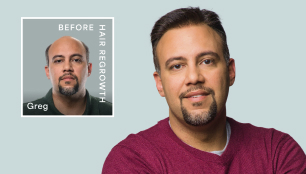
This is the part most clinics leave out, and it is where Dr. Dudas was most direct. Some patients reach the realization, sometimes after a physician confirms it, that they do not have enough donor hair to reach the goal they came in with. At that point, the options are an abbreviated goal or a different approach entirely.
He framed the alternative to honesty starkly. Coercing someone into a transplant that was never the right option leaves them with a poor result they should never have had. Avoiding that outcome at the outset is, in his words, really key.
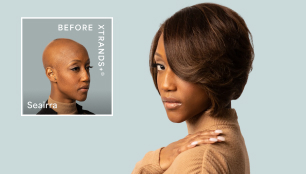
The alternative is the non-surgical route. Xtrands+ is a custom hair replacement solution matched to a client’s own colour and texture, and Dr. Dudas says he routinely tells patients they should not have surgery because he has seen outstanding results, and a far better service to that patient than a mediocre, sparse transplant that does not cover the areas they wanted covered.
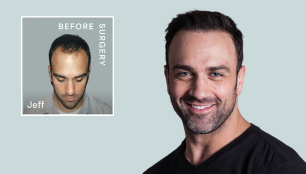
The webinar host, Jeff Elzeny of HairClub, offered his own account. Years ago, he went for a consultation and was told he was not a candidate, with a family history of significant thinning and loss on top. He became an Xtrands+ client instead and has now been one for more than twenty years, describing it as one of the best decisions he made about his hair.
There is also a middle path, and it is the one Dr. Dudas called a favourite. BioGraft combines an FUE or FUT transplant at the front with Xtrands+ behind it. For a patient with limited donor supply, that means real growing hair in the hairline zone, the area most patients are most anxious about, integrated with a system that delivers the coverage a transplant alone could not reach. He described it as the best of both worlds, and added that he thinks Bosley HairClub may be one of the only practices globally able to offer that combination, because the resources sit under one roof.
The same logic applies to small, high-visibility areas. Receded temporal points are a good example: a limited-donor patient will never have enough supply to fix everything, but temporal points need relatively few grafts, so a targeted transplant there can be done without depleting the donor zone. The density has to be discussed in advance, but the trade-off is favourable.
What a Transplant Costs, and Why Nobody Can Quote You an Average
Cost and graft count are the same conversation, because price accounts for the number of grafts performed. Someone who needs a small amount of work along the hairline or a simple recession filled in is in an entirely different bracket from someone seeking full coverage who may need two procedures. The range is wide enough that even an average figure would mislead more than it informs.
The practical route is a consultation where a physician and a counselor work through the specific situation together. The physician and patient align on what is needed to reach the goal, and the counselor guides the financial side from there. HairClub has introduced a financing program with a starting point of $129.
Price is not the only comparison worth making. Dr. Dudas suggests weighing the reputation of the practice, the clinic, and the doctor, and treating reviews as a realistic signal of standing. Confirm the doctor understands hairline design and knows how to avoid over-harvesting, because those problems are difficult and sometimes impossible to correct afterward. And look at the ethics of the company itself.
On that last point, he cited the Bosley Guarantee, under which a graft that does not grow is replaced at no charge, provided the patient has adequate donor hair and certain conditions are met. Not every practice works that way; some take the position that not every surgery works out and a second one is the patient’s problem.
Frequently Asked Questions
Is FUE better than FUT?
Neither is better. The two differ only in how grafts are harvested, and the result is equivalent once the grafts are placed. FUE leaves small dot scars and usually requires shaving; FUT leaves a fine linear scar but can yield more total grafts across a lifetime for patients who will need several procedures.
How long does it take to see hair transplant results?
About twelve months. Growth arrives gradually rather than all at once, and many patients see relatively little at the six-month mark. That stretch is normal and is not a sign that the procedure failed.
Does a hair transplant hurt?
Most patients report far less discomfort than they expected. The procedure is performed under local anesthesia in the office, usually with oral medication to help the patient relax.
Will a hair transplant stop my hair loss?
Can women have hair transplants?
Do hair transplants leave a scar?
Yes, both techniques leave some scarring. FUT leaves a fine linear scar that a short to medium hairstyle covers. FUE leaves tiny dot scars that stubble camouflages. The ISHRS is explicit that no hair transplant is genuinely scarless.
What are my options if I do not have enough donor hair?
Non-surgical hair replacement such as Xtrands+ can deliver coverage a limited-donor transplant cannot. BioGraft combines a transplanted hairline with Xtrands+ behind it, and scalp micropigmentation is a further option for the appearance of density.
Every one of these answers changes once someone examines your scalp. If you want to know what your donor supply actually supports, book a complimentary consultation.