
| Quick Reference: Hair Regrowth Methods and Treatments for Men at a Glance | ||
|---|---|---|
| Method | Best for | Time to judge results |
| Minoxidil (topical) | Early thinning, slowing loss, new growth | 3 to 6 months |
| Finasteride (oral, Rx) | Stopping loss at the DHT source | 3 to 6 months |
| PRP therapy (in-office) | Early thinning, as an add-on | A course of sessions |
| Laser therapy (LLLT) | Drug-free support, at home or in-center | Ongoing use, months |
| Essential oils | Scalp support alongside treatment | Ongoing use |
| Want all of these matched to your biology and combined in one supervised plan? See HairClub Rx, covered below. | ||
Hair loss often starts earlier than men expect. According to the American Hair Loss Association, about two-thirds of American men experience noticeable hair loss by age 35. Roughly 85 percent show significant thinning by age 50.
The reassuring part is that male pattern baldness is common and, for many men, treatable. With FDA-approved medications, in-office therapies, and consistent scalp care, you may be able to slow shedding and regrow some of what you have lost, especially if you start early. This guide walks through five proven hair regrowth treatments for men: how each one works, what results are realistic, and how to combine them into a plan that fits your stage of hair loss.
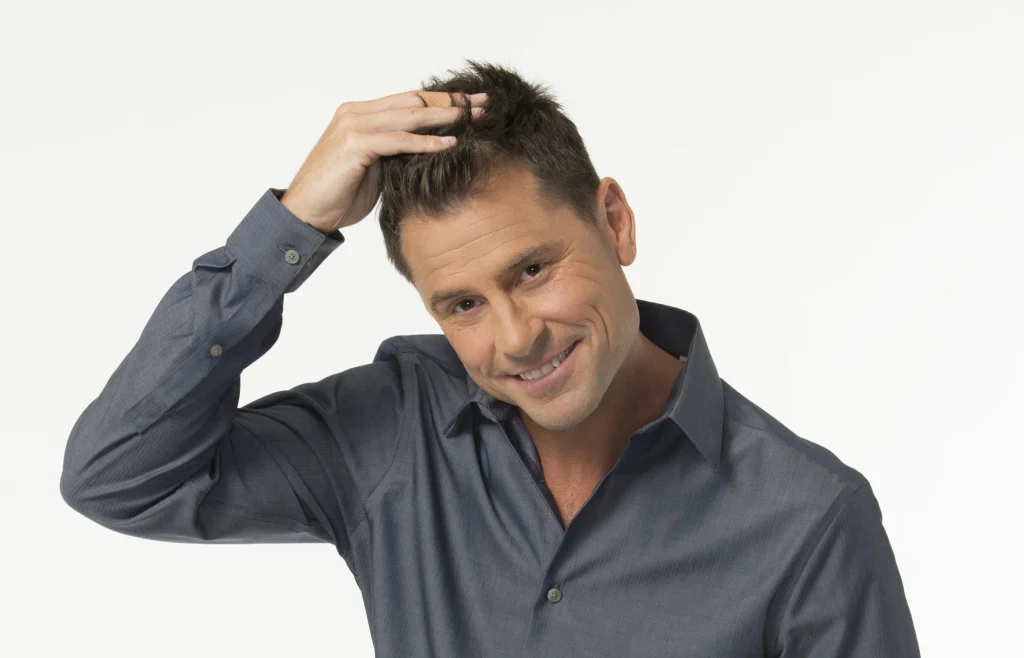
Topical Treatments for Men: The Power of Minoxidil
Minoxidil is one of only two treatments the FDA has approved for male pattern hair loss. It began as an oral blood-pressure drug in the late 1970s, and doctors noticed that patients were growing extra hair. By the late 1980s, it reached the market as a topical solution known as Rogaine.
How Minoxidil Works
Minoxidil is applied directly to the scalp, usually twice a day. It works by widening blood vessels in the scalp, which improves blood flow and helps deliver oxygen and nutrients to the follicle. This extends the growth phase of the hair cycle and can help reactivate dormant follicles. In clinical studies, roughly four in ten men saw new growth after several months of consistent use, and many more slowed their rate of loss. Want the full breakdown? Learn how minoxidil works, its benefits, and what to expect here.
Application Methods and What To Expect
Topical minoxidil is most effective on androgenetic alopecia, also called male pattern baldness, where it can slow thinning and restore some coverage at the crown. When you first start, you may notice a brief increase in shedding. That is usually a sign the treatment is pushing weaker hairs out to make room for stronger regrowth. Minoxidil comes as a liquid solution or as a foam. The liquid spreads easily but contains propylene glycol, which can irritate some scalps. The minoxidil foam skips that ingredient and tends to be gentler.
Potential Side Effects
The most common side effects are scalp irritation, dryness, and flaking. Less often, men notice unwanted facial hair from accidental transfer. Switching to the foam, or applying to fully dry skin, usually reduces irritation.
Maximizing Effectiveness
To get the most from minoxidil:
- Apply to a dry scalp and stay consistent, twice a day
- Give it at least three to six months before judging results
- Do not stop suddenly unless you have adverse effects, since gains reverse once you quit
- Pair it with a healthy hair care routine, like a gentle shampoo and regular scalp massage, to keep the skin in good condition
Minoxidil suits men with early thinning who want a treatment with a long track record. With consistency and expert guidance, it can reduce loss and stimulate some regrowth.
Oral Medications: Finasteride and DHT
If minoxidil works on the scalp surface, finasteride works at the hormonal source. Finasteride, sold under the brand name Propecia, is the second FDA-approved treatment for male pattern baldness, and it is available by prescription only.
How Finasteride Works
Male pattern baldness is driven largely by dihydrotestosterone, or DHT, a hormone made from testosterone that shrinks follicles and shortens the growth cycle until hair stops emerging. Finasteride blocks the enzyme that converts testosterone into DHT, which lowers DHT levels and, by removing the trigger, can halt this type of hair loss.
In many men, it also supports regrowth and fuller hair. The American Academy of Dermatology notes that finasteride and minoxidil are the mainstays of treatment for male pattern hair loss, and that both work best when started early. Most users see less shedding within three to six months, with fuller results closer to the twelve-month mark. In long-term studies, the majority of men maintained or improved their hair density with continued use.
Potential Side Effects
Finasteride is generally well tolerated, but side effects can include reduced sex drive, erectile difficulties, and mood changes. These are reported in a small percentage of men and often ease over time or after stopping the medication, though a subset report longer-lasting effects. Because it affects hormones, finasteride is prescribed and monitored by a licensed provider who can adjust the plan if side effects appear.
Maximizing Effectiveness
Finasteride works best in the early to middle stages of hair loss and depends on daily, long-term use, since benefits fade within a year of stopping. Paired with topical minoxidil, it becomes one of the most effective combinations available, because the two treat hair loss through different mechanisms.
Platelet-Rich Plasma (PRP) Therapy
For men who want to go beyond topical and oral options, platelet-rich plasma, or PRP, is an in-office treatment that uses your own blood to support follicle health.
How PRP Works
A provider draws a small amount of your blood and spins it in a centrifuge to concentrate the platelets. That platelet-rich plasma is then injected into the scalp, where its growth factors are intended to improve blood supply, support cell regeneration, and strengthen existing hair follicles.
Effectiveness and Benefits
PRP tends to work best as part of a wider plan rather than on its own. Typical benefits:
- Added thickness and density in thinning areas
- Suited to early-stage hair loss or as a complement to medication
- Minimally invasive with little downtime
Results build over a course of sessions and need maintenance to sustain.
Low-Level Laser Therapy: A Drug-Free Option
For men who prefer a medication-free route, low-level laser therapy, or LLLT, uses red light wavelengths to stimulate the scalp. It is painless and drug-free, and it can be combined with other treatments to support overall regrowth.
How LLLT Works
LLLT delivers low-intensity red light energy to the scalp, which is thought to improve circulation and extend the growth phase of the hair cycle. Over time, this can help revitalize weakened follicles and support thicker, healthier hair. Several at-home laser devices are clinically proven and FDA-cleared for this use.
At-Home vs. Professional Treatments
You can buy laser combs, caps, and helmets for home use a few times a week, which makes consistency easy. In-center sessions typically use higher-intensity equipment with professional oversight, which can help you see results faster and stay on track.
Natural Remedies: Essential Oils for Scalp Support
If you want a natural, at-home starting point, certain plant oils may support circulation and natural hair growth by improving your scalp environment. They are not a cure, but they can complement proven treatments.
Top Hair Regrowth Oils for Men
- Rosemary oil: some small studies suggest it may support circulation to the follicles, with effects compared to low-dose minoxidil
- Peppermint oil: may increase blood flow to the scalp
- Tea tree oil: helps reduce dandruff and scalp inflammation, improving the environment for healthy hair
How To Use Essential Oils Safely
- Dilute with a carrier oil such as coconut or jojoba before applying
- Massage into the skin for a few minutes to aid absorption
- Use consistently, and patch-test first to rule out irritation
Essential oils will not deliver a full head of hair on their own, but they may improve conditions at the roots and help other treatments do their job.
A Personalized Hair Regrowth Program: HairClub RX
Each method above can work on its own, but the strongest results usually come from combining treatments and matching them to your biology. That is the idea behind HairClub RX, a personalized, science-driven hair loss program that brings several proven methods into one guided plan.
Instead of guessing which product to try, HairClub RX starts with a simple cheek swab DNA sample. A specialized lab analyzes the results to help determine which active ingredients and delivery methods may give you the best response. Based on that, a licensed telehealth provider reviews your medical history and, if appropriate, prescribes a custom compounded medication that can combine ingredients such as minoxidil and finasteride in a single formula tailored to you.
The program also includes daily supplements, a sulfate-free and paraffin-free shampoo, conditioner, and elixir, in-center therapy sessions, and an optional laser cap that uses the same low-level laser therapy described above.
How the Program Works
- Book a free consultation and visit your nearest HairClub center
- Provide a DNA sample with a quick cheek swab; results take about 14 business days
- Meet with a telehealth provider who reviews your history and DNA-based recommendation
- Receive your compounded medication, supplements, and optional laser cap
- Return for baseline measurement, hands-on scalp analysis, and quarterly progress tracking
How It Compares to Online-Only Options
Online-only services mail a one-size product and offer support through a chatbot or call center. HairClub RX pairs DNA-guided prescriptions with in-person, hands-on support from a Certified Hair Loss Specialist who measures your hair density and scalp condition, sets a baseline, and tracks your progress over time. Clients also have access to a full range of surgical and non-surgical treatments for hair loss, including hair transplant surgery through affiliated physicians of Bosley Medical Group, so your plan can adapt as your needs change. Many clients see visible improvement within three to six months, and it can take up to twelve months for the full effect. As with any treatment, results may vary.
HairClub RX is available at participating locations. The DNA test used in the program was developed by GX Sciences and has not been cleared or approved by the FDA. Individual pharmaceutical ingredients in a compounded prescription may be FDA-approved, but the compounded combination is not FDA-approved, and the FDA does not evaluate the safety or effectiveness of compounded drugs. A licensed provider determines whether treatment is appropriate for you.
To find out whether HairClub RX fits your hair loss and your goals, book a complimentary consultation.
Choosing the Right Hair Regrowth Solution for You
In the three twelve-month trials, reported side effects considered drug-related occurred at low rates. The placebo comparison is the part that makes them interpretable.
The best approach depends on your stage of hair loss, your lifestyle, and your preferences. Here is a simple way to think about it:
- Proven medical options: minoxidil and finasteride are FDA-approved, widely used, and strongest when started early
- In-office support: PRP and laser therapy offer non-surgical ways to reinforce a medication plan
- Natural support: essential oils and good scalp care can complement the rest
- Personalized and combined: HairClub RX matches treatments to your DNA and brings them together under medical supervision
Consistency matters more than any single product. Most treatments need three to six months of steady use before you can judge them, and combining methods, such as minoxidil with finasteride or medication with laser therapy, usually beats relying on one alone. A dermatologist or hair loss specialist can review your scalp and recommend which combination fits your hair restoration goals.
Frequently Asked Questions
What is the best hair regrowth treatment for men?
For most men, the two most effective options are the FDA-approved medications minoxidil and finasteride, especially when used together and started early. The best choice depends on your stage of hair loss and how your body responds, which is why a personalized plan, guided by a professional or by DNA-based testing, tends to outperform any single product.
How long does it take to regrow hair?
Most treatments need at least three to six months of consistent use before results show, with fuller improvement often closer to twelve months. Hair grows slowly, so patience and consistency are essential.
Can men regrow hair that has already been lost?
It depends on the follicle. Where follicles are thinning but still active, treatments like minoxidil and finasteride can regrow hair. Where follicles have been dormant for years, regrowth is less likely, which is why starting early gives you the best chance.
Do you need a prescription for hair loss treatment?
Minoxidil is available over the counter. Finasteride and compounded medications, such as those in HairClub RX, require a prescription from a licensed provider who reviews your health history first.
Are hair regrowth treatments safe?
The FDA-approved medications are considered safe for most men when used as directed, though side effects can occur and are worth discussing with a provider. Be cautious with unregulated products sold online. Compounded products and prescription treatments are safest when supervised by a licensed medical professional.
What is the difference between hair regrowth and hair replacement?
Hair regrowth stimulates your own follicles using treatments like medication, laser therapy, and clinically proven ingredients. Hair replacement uses non-surgical systems to add instant fullness. Many men combine approaches depending on their goals.
Take the next step
Ready to take control of your hair loss? Schedule a free consultation with HairClub for a hands-on hair and scalp analysis and a plan built around your goals. Book your appointment today.