
Cowlicks can be one of the most stubborn styling challenges to deal with. No matter how much you brush or how many products you use, that one section of hair just refuses to stay in place. Whether you’re dealing with a cowlick at your hairline, crown, or nape, understanding why it forms can help you figure out the best way to manage it.
In this guide, we’ll break down the science behind cowlicks, share styling tips, and look at professional options, including how HairClub’s hair restoration solutions can help when a cowlick is made more noticeable by thinning hair.
Key Takeaways
- Cowlicks are genetic: they come from the angle at which a hair follicle sits beneath the scalp, and that angle is set at birth.
- They show up most often at the hairline, crown, and nape, and each location calls for a different styling approach.
- A cowlick cannot be removed, but blow-drying technique, the right haircut, and the right product can make it far less noticeable.
- Cowlicks often become more visible as hair thins, particularly at the crown, which is one of the more common early signs people notice.
- When thinning is the real driver, HairClub’s hair transplant, laser hair therapy, and scalp micropigmentation options are worth discussing with a specialist.
What Is a Cowlick?
A cowlick is a section of hair that grows in a different direction from the surrounding strands, creating a swirl, lift, or tuft that often resists styling. Cowlicks can stand out from the rest of the hair and can be especially hard to tame in shorter hairstyles.
Cowlicks are common and can show up in different areas of the scalp, most often:
- Hairline cowlicks: can make styling bangs difficult, often causing hair to part or lift in an unintended direction.
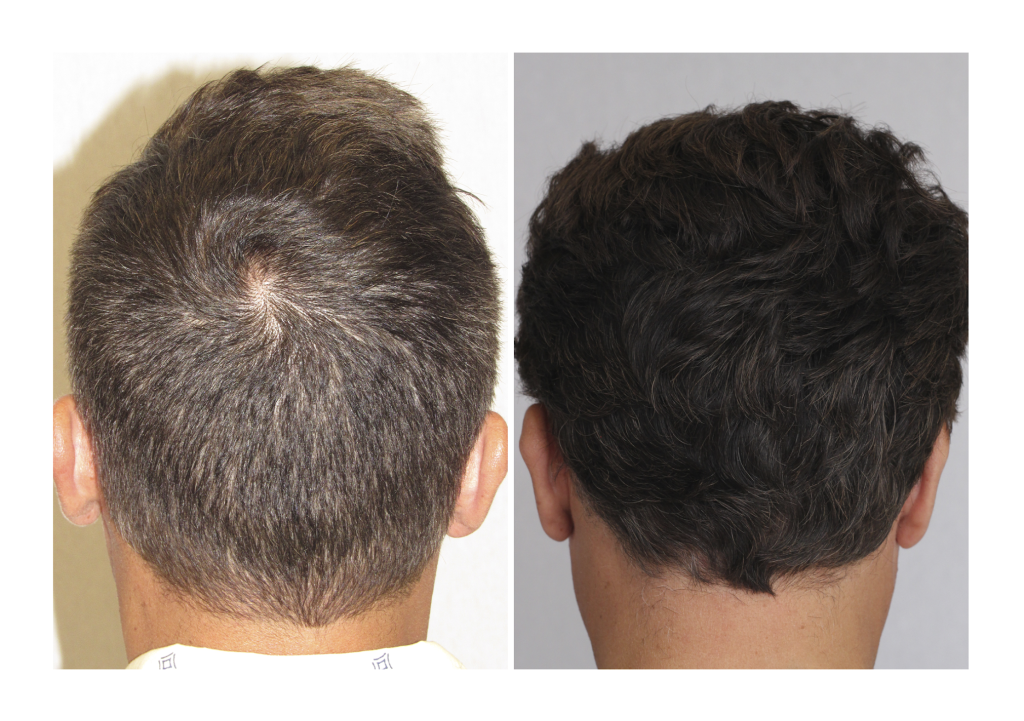
- Crown cowlicks: can create a noticeable whirl or spiky look at the highest point of the scalp, especially with short hair.
- Nape cowlicks: appear at the back of the neck and can cause hair to flip outward in short hairstyles.
What Causes Cowlicks?
Cowlicks are largely hereditary: if one or both parents have a cowlick, there’s a good chance you will too. This comes down to the growth pattern of hair follicles, which is set at birth. A cowlick, or hair whorl, forms because of the angle at which a follicle sits beneath the scalp, which causes the hair to emerge at an angle rather than straight up.
Cowlicks can appear in any hair type, but fine, straight hair tends to show them more, since it lacks the weight to hold the hair down. Curly or coarse hair can help mask a cowlick by naturally blending different growth directions.
Cowlicks can also become more noticeable as hair thins and density drops. This is common in men experiencing male pattern hair loss, where a cowlick at the crown becomes more pronounced as the surrounding hair thins.
How to Style and Manage Cowlick Hair
Cowlicks are a natural, permanent part of how hair grows, but they can be managed well with the right technique, cut, and products.
1. Blow-Drying Techniques
- Blow-dry against the cowlick’s natural direction, using a round or flat brush to apply gentle tension while directing airflow the opposite way. This helps train the hair to lie flat.
- Use a nozzle attachment to focus airflow on the stubborn section and prevent hair from sticking up.
- Finish with cool air (or the cool-shot button) to help set the style and reduce frizz.
2. Haircuts That Work With a Cowlick
The right haircut can make a cowlick far less noticeable. A few options by location:
- Hairline cowlicks: a side part that works with the cowlick’s natural lift, and textured or curtain bangs instead of a blunt fringe.
- Crown cowlicks: layered cuts that blend the swirl into the rest of the hair, added texture at the crown for a tousled look, or a buzz cut for those comfortable going very short.
- Nape cowlicks: slightly longer length at the nape to add weight, or a tapered or feathered cut that blends the area rather than leaving a visible flip.
3. Products That Help
- Matte pomades and waxes: strong hold for short to medium hair.
- Styling creams and serums: help tame longer hair without weighing it down or looking greasy.
- Flexible-hold hairspray: a light mist can help keep a cowlick in place without a stiff feel.
Hair thickening fibers: a fiber-based product can build up the look of density around a cowlick, which reduces the appearance of separation or gaps.
Cowlicks: Myths vs. Facts
Can a cowlick be permanently removed?
No. A cowlick comes from the direction a hair follicle grows, which is set by genetics. Styling and professional treatments can make it less noticeable, but they don’t change the follicle’s underlying growth pattern.
Does a cowlick grow out over time?
Not on its own. Longer hair can help weigh a cowlick down, which makes it easier to manage, but the cowlick itself doesn’t disappear with time.
Will cutting it short get rid of a cowlick?
No. Even shaving or cutting the area very short doesn’t change the follicle’s growth direction, so it will grow back the same way.
Can relaxers or perms help?
Chemical treatments such as relaxers can temporarily change the hair’s texture and pattern, including at a cowlick. Results vary by hair type, so it’s worth asking a stylist whether this is a good fit before trying it.
Can a cowlick be a sign of hair loss?
A cowlick doesn’t cause hair loss, but it can become more noticeable as hair around it thins, which is why some people first notice thinning at the crown because of it.
HairClub's Options for a Cowlick Made More Noticeable by Thinning
When a cowlick stands out more because of hair thinning or loss, it’s worth having it evaluated. A few options a HairClub specialist may discuss:
Hair Transplant
A hair transplant redistributes existing follicles to create a fuller, more natural pattern in an area that has thinned, which can help a cowlick stand out less. It’s a surgical procedure, and results vary by person, so this is a conversation to have directly with a physician about whether it fits your situation.
Low-Level Laser Therapy (LLLT)
HairClub’s laser hair therapy is designed to support existing follicles around a cowlick, which may help the area blend in better as hair fills in. Results vary and typically take consistent use over time.
Scalp Micropigmentation (SMP)
HairClub’s scalp micropigmentation service is a non-surgical option that adds pigment to the scalp, which can reduce the appearance of exposed scalp within a cowlick for some people.
If a cowlick is affecting your confidence or becoming more noticeable because of thinning hair, a free consultation with a HairClub specialist can help you understand what’s actually going on and what options make sense.
Book a free consultation with a Certified Hair Loss Specialist to talk through what’s behind your cowlick and what, if anything, is worth doing about it. No pressure, just a clear picture of your options.
Frequently Asked Questions
What causes a cowlick?
A cowlick comes from the angle at which a hair follicle sits beneath the scalp, which is set by genetics at birth. It causes hair to grow out at an angle instead of straight, creating a swirl or lift.
Can a cowlick be permanently removed?
No. Styling, cuts, and professional treatments can make a cowlick far less noticeable, but the underlying follicle direction doesn’t change.
Why is my cowlick more noticeable than it used to be?
Cowlicks often become more visible as hair thins, since there’s less surrounding hair to blend the swirl in. If that’s happening, it’s worth having your hair and scalp evaluated.
What's the best haircut for a crown cowlick?
Layered cuts that blend the swirl into the surrounding hair, or added texture at the crown for a tousled look, both tend to work well. A buzz cut is an option for those comfortable going very short.
Can a cowlick be a sign of hair loss?
A cowlick itself doesn’t cause hair loss, but it can become more prominent as hair around it thins, which is why it’s sometimes the first thing people notice.