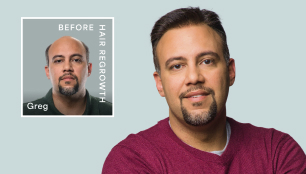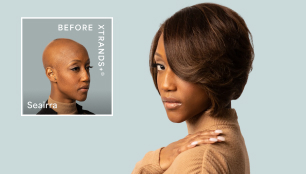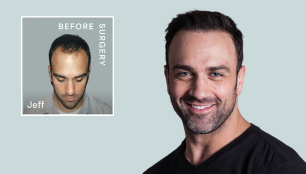



A hair transplant is a minimally invasive outpatient procedure, and most patients are back to their regular routine within a day or two. But when will you actually see results?
Hair transplant recovery itself typically takes just a few days. Most patients start noticing regrowth around 4 to 6 months after the procedure, with fuller results by around 9 to 12 months.
If you’re considering a hair transplant, it helps to know what the procedure involves, what recovery looks like, and what happens month by month afterward. Here’s the full timeline: before your transplant, during the procedure, and after.
Key Takeaways
- A hair transplant is typically a one-day outpatient procedure done under local anesthesia; most patients drive themselves home the same day.
- Initial recovery is quick: mild swelling, tenderness, or itchiness in the first few days is common, and most people return to non-strenuous work within a day or two.
- Transplanted hairs shed within the first few weeks. That’s expected and doesn’t mean the graft failed; regrowth typically begins around month 4 to 6.
- Most patients see roughly 60% of new growth appear between months 4 and 9, with fuller results generally visible around 9 to 12 months.
- Cost depends mainly on the number of grafts needed, which is why a personalized consultation matters more than any general price range.
Before Your Hair Transplant: Consultation, Prep, and Cost
Free Hair Transplant Consultation
During a free consultation, a HairClub hair restoration specialist will do a scalp and hair analysis, assess your hair loss, and answer your questions. You’ll also find out whether a hair transplant is a fit for your situation.
If a transplant looks like a good option, the specialist will estimate the number of grafts you’d likely need, along with a price estimate and financing options.
No pressure, no commitment. Just a chance to understand your stage of hair loss and which options make sense for you.
How to Prepare for a Hair Transplant
- Scalp massage: 15 to 20-minute head massages daily in the weeks before the procedure can help enhance scalp elasticity and stimulate follicles.
- Medications: with your primary care physician’s approval, avoid blood thinners, including over-the-counter options like aspirin and ibuprofen. Bring a list of your current medications, prescription and OTC, along with the date and time of your last dose.
- Sun protection: limit sun exposure in the days beforehand. If you need to be outside, a full-coverage hat helps avoid irritation.
- Hair care: shampoo the night before or morning of your procedure, but skip hairspray, gel, or other sticky products.
- FUT patients: hair should be about half an inch or longer.
- FUE patients: hair is typically cut in a “fade” style to prep the donor area; if you don’t already have one, it can be done for you before the procedure.
Preparation varies person to person, and you’ll get a personalized plan during your consultation with a HairClub specialist.
How Much Does a Hair Transplant Cost?
Cost depends mainly on the number of grafts needed, which in turn depends on your hair loss pattern, hair density, and personal goals.
A HairClub specialist can walk through accurate pricing and financing options during a free consultation.
During Your Hair Transplant: What to Expect on Procedure Day
How Do Hair Transplants Work?
A hair transplant takes place in a medical facility or surgical center. It’s a one-day outpatient procedure, typically performed under local anesthesia, and most patients are able to drive themselves home afterward.
Healthy, growing follicles are taken from a donor area, usually the back or sides of the scalp, and transplanted into areas that have thinned or lost hair. Over time, those grafts grow natural hair.
There are two main techniques for collecting follicles: follicular unit transplantation (FUT) and follicular unit extraction (FUE).
- FUT: the physician removes a single thin strip of scalp from the back of the head, then isolates and implants the individual grafts.
- FUE: grafts are removed individually from the back of the head through small incisions that typically heal within 1 to 2 days and leave no linear scar, generally a faster-healing technique.
Your physician will help determine which technique fits your situation.
What to Expect on the Day of Your Procedure
A hair transplant is a same-day outpatient procedure, though the exact length varies with the number of grafts involved and can run several hours.
Most centers let you watch a movie or show, read, or listen to something during the procedure, and typically provide lunch and snacks.
After Your Hair Transplant: Growth and Recovery
Hair Transplant Timeline: Month by Month
One day after surgery
- Bosley Hair Club offers free post-op aftercare for life, so you’re in good hands after your procedure.
- A check-up and hair wash at the office is typically recommended. Many patients can return to work, as long as it doesn’t involve physical activity. The donor and recipient areas are just starting to heal and need the ointment from your post-operative kit; avoid heavy sun exposure and check with your physician before using your own hair care products for the first few weeks.
Two days after surgery
- Some patients develop minor forehead swelling that can last a few days. Your physician can advise on medication and ways to manage it.
Two weeks after surgery
- The short transplanted hair shafts often start shedding. This is a normal part of the growth cycle, the follicle grafts underneath are still healthy, and new hair typically begins regrowing after a dormancy period of around 4 to 5 months.
One month after surgery
- The line between transplanted and native hair areas has usually faded by this point.
- Most patients can resume their pre-surgery exercise routine, including swimming.
- Shedding can continue up to a month out, and new growth usually isn’t visible yet. That’s expected. New growth is typically only a few months away.
- Ask your physician when you can reintroduce your usual hair care products.
Three months after surgery
- Small pimples can form where follicles were inserted, a sign new hair shafts are working toward the surface. A warm compress can help. Not everyone gets these, and their absence doesn’t mean hair isn’t growing; check in with your physician with any questions.
Four to nine months after surgery
- New growth typically becomes visible during this window, with roughly 60% of new hair showing by the end of it.
- New hairs usually start baby-fine and thicken over time.
- Occasional pimples can still appear and should fade on their own; a warm compress can help if they’re uncomfortable.
Around 12 months after surgery
- This is typically when transplanted hair is fully grown in.
- It’s a good time for a follow-up with your physician to review results and ask any remaining questions.
Is Hair Transplant Recovery Painful?
Tenderness, itchiness, redness, numbness, or minor pain in the weeks after a transplant are common, though most patients report only minor symptoms after the first day or two.
Some patients use over-the-counter anti-inflammatories such as aspirin, ibuprofen, or naproxen for mild symptoms. The best way to minimize discomfort and support healing is to follow your physician’s post-op instructions closely.
Most patients recover quickly from this outpatient procedure and see full results within about 12 months. Many continue to see their transplanted hair grow well beyond that point, though outcomes vary by person and by how hair loss progresses over time.
If you’re weighing hair loss solutions, a free consultation with a HairClub specialist is a good place to start. They can walk you through what stage of hair loss you’re at and which options, surgical or non-surgical, make the most sense for your goals.
Frequently Asked Questions
How long does hair transplant recovery take?
Initial recovery is typically a matter of days: most patients return to non-strenuous activity within a day or two, with mild swelling or tenderness settling within about a week.
When will I see my hair transplant results?
Regrowth usually starts around 4 to 6 months after the procedure, with roughly 60% of new hair visible by months 4 to 9, and fuller results typically showing by 9 to 12 months.
Is it normal for transplanted hair to fall out?
Yes. Transplanted hair often sheds within the first few weeks. This is a normal part of the growth cycle, the follicles underneath remain healthy, and new hair typically regrows after a dormancy period.
Is hair transplant recovery painful?
Most patients report only minor tenderness, itchiness, or discomfort in the first day or two, manageable with over-the-counter anti-inflammatories and your physician’s post-op instructions.
What's the difference between FUT and FUE?
FUT removes a single strip of scalp to harvest grafts in one session; FUE removes grafts individually through small incisions that heal quickly with no linear scar. Your physician can help determine which fits your situation.