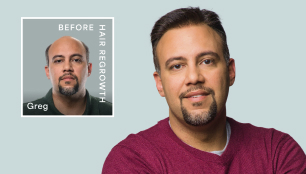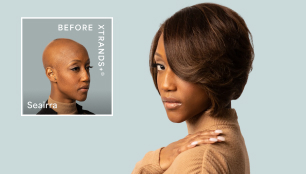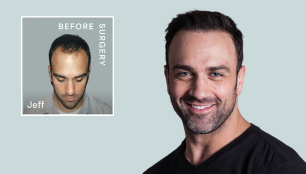



If you’re looking for a straightforward, FDA-approved, accessible solution, minoxidil may be the right hair loss solution for you. But before you place that first order, read on to learn more about this topical hair loss treatment.
Here at Bosley HairClub, we offer a variety of clinically proven, affordable solutions that treat hair loss and promote hair growth, including minoxidil or generic Rogaine. But our primary goal is to find the solution that is right for you. Schedule a free consultation with a hair restoration expert for a personalized hair analysis and custom treatment plan.
What Is Minoxidil and How Does it Work?
Minoxidil is the generic name for the active ingredient in Rogaine. This highly effective, over-the-counter hair loss treatment has been clinically proven to stimulate hair growth in men and women.
So, how does minoxidil work? When applied topically, minoxidil directly stimulates the scalp and follicles, delivering essential nutrients to the hair follicles. This process can lead to denser, healthier hair and can help prevent future hair loss.
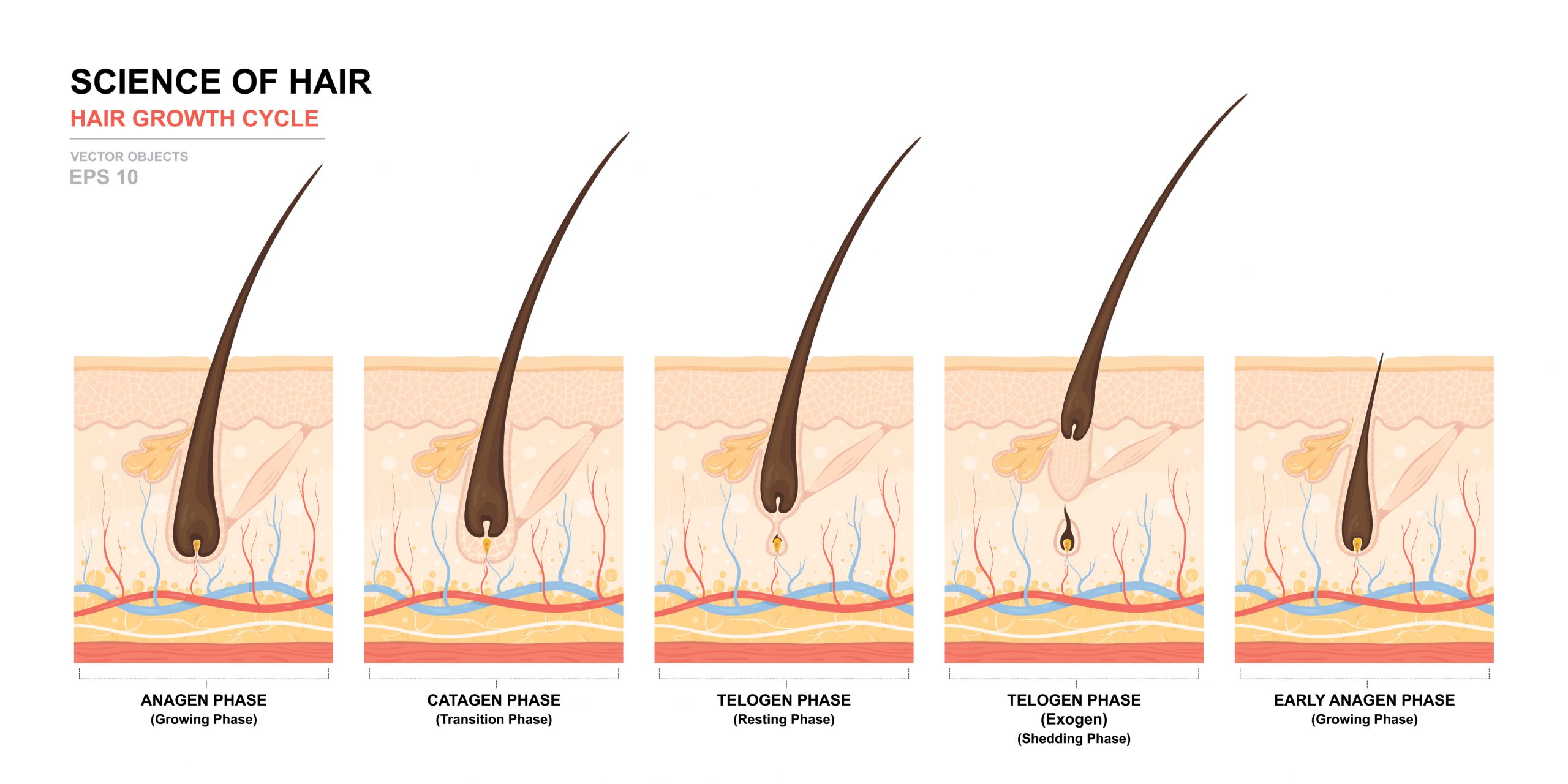
Minoxidil also works by stimulating and prolonging the hair’s natural growth phase, which can increase the diameter of existing hair follicles and inhibit additional hair loss.
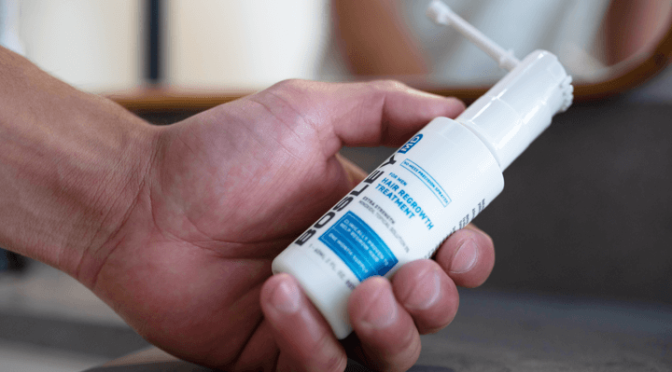
Topical minoxidil is available over-the-counter. Minoxidil is also available as a oral medication by prescription via BosleyRx, either by itself or as a combination pill with spironolactone or finasteride.
Minoxidil started as an oral medication for high blood pressure. During clinical use, researchers noticed patients were growing hair in unexpected places. That observation eventually led to a topical formulation aimed specifically at the scalp, and one of the most-studied treatments for hair loss available today.
Topical minoxidil is FDA-approved for treating androgenetic alopecia, the most common form of hereditary hair loss in both men and women. The mechanism of action of minoxidil centers on vasodilation: minoxidil widens blood vessels in the scalp, improving circulation to the hair follicle. This extends the anagen (growth) phase of the hair cycle, keeping more hairs in active growth for longer.
A key part of how minoxidil promotes hair growth is through its conversion to its biologically active form. The metabolite of minoxidil called minoxidil sulfate is produced by the enzyme sulfotransferase in scalp tissue. People with higher concentrations of this enzyme tend to respond better, which is a significant reason why the effects of minoxidil vary between individuals even at the same dose.
Topical vs. Oral Minoxidil: Side-by-Side
Both forms address hair loss, but they work differently in practice.
Topical Minoxidil: The Established Option
The topical minoxidil solution is what most people picture when they hear the name. Applied once or twice daily directly to the scalp, topical application targets the area of loss locally. Topical minoxidil 5% is the standard strength for men. The 2% topical solution was historically more common for women, though the 5% foam is now widely used by women as well.
The main limitation: it works only where you apply it, and covering larger scalp regions evenly takes discipline. Consistency with daily topical application matters a lot.
Low-Dose Oral Minoxidil: The Growing Option
Low-dose oral minoxidil for hair loss has gained significant attention. Rather than topical application, oral administration delivers minoxidil through the bloodstream, meaning it reaches all hair follicles at once, not just where a product was applied.
Some clinical data suggests oral minoxidil may produce results comparable, and in some measures, superior to topical minoxidil, particularly in global hair coverage and total hair density.
That said, daily oral minoxidil is still used off-label for hair loss; it’s not FDA-approved specifically for that indication. Starting oral minoxidil should always involve a licensed medical provider who reviews your medical history and monitors your response over time.
Can Minoxidil Really Slow Hair Loss?
Yes! Minoxidil results are typically visible within 3-4 months.
Minoxidil is particularly effective for men under 40 that have been balding for less than five years because it stimulates growth in miniaturizing follicles.
Numerous clinical studies show that minoxidil can reduce hair loss and even promote new hair growth in some cases. German dermatologists conducted a one-year study with 984 men with male pattern baldness. These researchers found that using a 5% minoxidil topical solution reduced hair loss during washing by 50%, and 62% of participants noticed a reduction in overall hair loss.
Other studies show that supplementing minoxidil with finasteride enhances treatment effectiveness in men even more.
What minoxidil doesn’t do: it can’t regrow hair where follicles have fully stopped functioning. It’s most effective earlier in the hair loss process. And it requires ongoing use; stopping minoxidil therapy typically means the hair loss it was managing returns within a few months.
Timeline: How Long Before You See Results?
Most people using minoxidil notice early signs of reduced hair shedding and initial hair regrowth around the three- to four-month mark. Meaningful improvements in hair length, hair counts, and overall density are usually visible between six and twelve months of consistent use.
One thing worth knowing upfront: some people notice a temporary increase in hair shedding shortly after starting minoxidil. This is a recognized phase of the hair cycle shift, follicles transition out of the resting phase into active growth, which can push existing hairs out first. It’s usually short-lived and not a sign that the treatment isn’t working.
Can Women Use Minoxidil?
Yes, minoxidil is FDA-cleared for female use. Bosley HairClub offers the following minoxidil treatments specially formulated for women:
- 2% topical minoxidil for women
- 5% topical minoxidil for women
- a combo pill of minoxidil and spironolactone
- a minoxidil + spironolactone serum
Related: Hair Loss Medications for Women
Is Minoxidil Right for Your Type of Hair Loss?
Minoxidil has the strongest evidence base for androgenetic alopecia, male and female pattern hereditary hair loss. It’s less effective for hair disorders caused by autoimmune conditions like alopecia areata, acute stress-induced shedding, scarring alopecia, or nutritional deficiencies. For those types of hair loss, minoxidil may still play a supporting role, but addressing the underlying cause comes first.
Timing also matters. Minoxidil promotes hair regrowth most effectively when follicles are still active but underperforming. It has limited impact on areas where follicles have been dormant for a long time. That’s why getting a proper evaluation before choosing a form or a dose of minoxidil matters more than most people realize.
Are There Any Side Effects of Minoxidil?
Minoxidil side effects are generally short-term, minor, and happen in the area where it’s applied. The most common side effects are initial hair shedding, scalp irritation, and itchiness. In some cases, unwanted hair growth can occur in other areas.
In very rare cases, topical minoxidil may cause systemic side effects, including chest pain, a rapid heartbeat, fainting, or dizziness. These systemic side effects are slightly more likely with oral minoxidil, but still very rare.
Common Side Effects of Topical Minoxidil
The common side effects of topical minoxidil are mostly local. Scalp dryness, irritation, or flaking are the most frequently reported. Older minoxidil solutions containing propylene glycol sometimes triggered contact dermatitis; the foam formulation has largely addressed that. Some women using topical minoxidil also notice unwanted facial hair growth near application areas.
Adverse Effects of Oral Minoxidil
Minoxidil side effects from oral use are different because they’re systemic. The most common adverse effect of low-dose oral minoxidil is excessive hair growth on the body (hypertrichosis), the medication reaches follicles everywhere. Some people also experience headache, fluid retention in the hands and feet or a generalized increase in overall weight, a slightly faster heart rate, or feeling dizzy/lightheaded with a decrease in blood pressure when starting oral minoxidil therapy.
These effects are less common at very low doses and often stabilize over time. Working with a licensed provider who monitors your response to low-dose oral minoxidil for hair matters, particularly if you have any cardiovascular history. Minoxidil may be a great tool, but it works best under proper medical guidance.
How Do I Use Minoxidil?
If you are utilizing a topical minoxidil solution, massage your solution directly into the scalp two times per day for optimal results.
Men may use the 5% minoxidil foam twice a day while women should only apply once a day.
Applying minoxidil at least two hours before bedtime allows the scalp to dry fully, which can help prevent minoxidil from being spread to another part of your body as you sleep.
Prescription oral minoxidil should be taken as directed as a once-daily pill.
Will Minoxidil Stain My Clothing?
Yes, topical minoxidil can stain clothing. If staining is a major concern for you, consider switching to oral minoxidil or altering your morning routine. Apply minoxidil early and let it dry fully before getting dressed to keep your favorite ballcap or shirt stain-free.
Oral minoxidil does not stain clothing.
Do I Need to Do Anything Special While Washing and Drying My Hair?
Keep that morning routine the way it is—wash and towel off your hair as you normally would. Once you’ve hopped out of the shower, you can apply topical minoxidil while your hair is damp, but remember that minoxidil should never be applied while hair is soaking wet.
Can I Use a Hair Dryer with Minoxidil?
Absolutely! For best results, we recommend waiting 20-30 minutes after application, then using your hair dryer’s lowest speed setting and the cold shot button (if your model has one). Point the hair dryer at your hair itself rather than your scalp.
Can I Keep Using My Favorite Styling Products?
We get it—once you find a styling product that gets your hair looking just right, you don’t want to give it up. The good news is that minoxidil works with most styling products. The important thing is to make sure the product is applied to the hair and not your scalp. Be sure to apply topical minoxidil before your styling products. And, remember, you cannot wet your hair for 4 hours after applying minoxidil.
No need to switch up your styling routine if using oral minoxidil.
How Long Do I Need to Use Minoxidil?
Minoxidil must be used continuously even after you observe the desired results. If you quit applying minoxidil, hair loss and thinning will return to where you would have been if you had not been using the medication within three months.
Combining Minoxidil With Other Hair Loss Treatments
Minoxidil alone rarely delivers the best long-term outcomes. Most people who see strong, sustained results use it alongside treatments that address the underlying cause of their hair loss — not just the symptoms.
Finasteride and Minoxidil
Finasteride and minoxidil are often paired for male-pattern hair loss. Finasteride blocks DHT production, the hormone that drives the miniaturization of the hair follicles over time. Minoxidil targets the hair follicle growth cycle directly. Together, they combat hair loss from two different angles.
Minoxidil and Spironolactone
Minoxidil and spironolactone is a well-established combination for women dealing with hormonal hair loss. Spironolactone blocks androgen receptors that drive hormone-related thinning. Paired with minoxidil to stimulate hair growth at the follicle level, this combination targets both the cause and the cycle of female pattern hair loss. It’s frequently used in custom compounded prescriptions for women.
Minoxidil After a Hair Transplant
Some providers recommend continuing minoxidil treatment after a hair transplant to protect non-transplanted hair and help preserve overall results. This isn’t universal, but it’s a conversation worth having with your surgical team if you’re managing ongoing hereditary hair loss alongside recovery.
Do I Need a Prescription for Minoxidil?
Topical minoxidil doesn’t require a prescription. The FDA has approved minoxidil as an over-the-counter medication, meaning it is safe and effective when you follow the directions on the label and as directed by your health care professional. Order minoxidil online here.
Oral minoxidil does require a prescription. If you’re considering oral minoxidil, schedule a free hair loss consultation here or visit BosleyRx.com for an evaluation with a medical professional.
Related: What Hair Loss Medication Do I Need?: All About Finasteride (Propecia), Minoxidil (Rogaine), + More
Bosley HairClub’s Personalized Hair Loss Solutions – Minoxidil & More
Still not sure which hair loss solution is best for you? Schedule a free hair loss consultation to learn about Bosley HairClub’s wide array of hair loss solutions, including minoxidil. A Bosley HairClub hair loss expert will give you a personalized hair and scalp analysis, answer any questions you may have, and create a custom hair restoration plan for your needs and budget.
Schedule your consultation today.
HairClub Solutions That May Include Minoxidil
For many people, the challenge with minoxidil isn’t whether it works in general; it’s whether it’s right for their specific biology, at the right dose, in the right form, paired with the right supporting treatments. HairClub offers a range of non-surgical and surgical1 solutions built around that exact problem.
HairClub RX: DNA-Personalized Hair Loss Treatment
HairClub RX is a comprehensive, science-driven program that starts with a cheek swab DNA6 test. The DNA sample is analyzed in a specialized lab to identify which active ingredients and delivery methods are likely to produce the best therapeutic response for a specific individual. Rather than a standard off-the-shelf regimen, the program uses genetic evidence to shape treatment.
As part of the HairClub RX program, a telehealth9 provider may prescribe minoxidil as one of the potential active ingredients in a customized, compounded prescription, alongside other clinically used options, including finasteride, dutasteride, spironolactone, tretinoin, and others. The specific dose of minoxidil and combination of supporting ingredients is reviewed and approved by a licensed telehealth provider based on DNA results and medical history. Compounded prescriptions through HairClub RX may contain up to 12 active ingredients matched to an individual’s biology, not a one-size-fits-all formula.
On top of the prescription, HairClub RX includes daily vegan supplements, sulfate-free and paraffin-free hair care products, in-center hair therapy sessions, and quarterly progress tracking with a HairClub Certified Hair Loss Specialist. The comprehensive program is built around the understanding that consistently effective treatment for hair loss usually requires more than one component working together.
Progress is measured at baseline and reassessed every quarter using a high-magnification hair and scalp analysis tool that tracks density, width, and scalp condition over time. Licensed telehealth providers review health history and may renew or adjust the prescription every three months based on how things are progressing.
Other HairClub Non-Surgical Options
Beyond HairClub RX, HairClub offers a range of non-surgical solutions for people at different stages of hair loss. The Xtrands+® hair system is a custom, non-surgical hair replacement option for those who want immediate coverage. HairClub SMP™ (scalp micropigmentation) is a non-surgical option that creates the appearance of hair density at the scalp level. A specialist can help determine which combination of solutions fits your goals, stage of loss, and lifestyle.
For those who are candidates for surgical intervention, hair transplantation is available through HairClub’s affiliate medical group. No hair transplant procedure is performed until a patient has been evaluated and accepted for treatment by a physician. Results may vary.